News Analysis
White Paper
Why Enterprise AI Fails at Scale
The Trump administration has quietly overhauled nuclear safety rules and shared revised standards with reactor developers without releasing them to the public, according to documents obtained by NPR.
The changes, made over the fall and winter inside the Department of Energy (DOE), dramatically reduce long-standing safety, security and environmental requirements governing nuclear reactors. The revisions will accelerate the construction of a new generation of experimental nuclear plants, part of a high-profile effort to bring at least three reactors online by July 4, 2026.
The push to accelerate new reactor approvals comes amid the growing energy demand from artificial intelligence infrastructure.
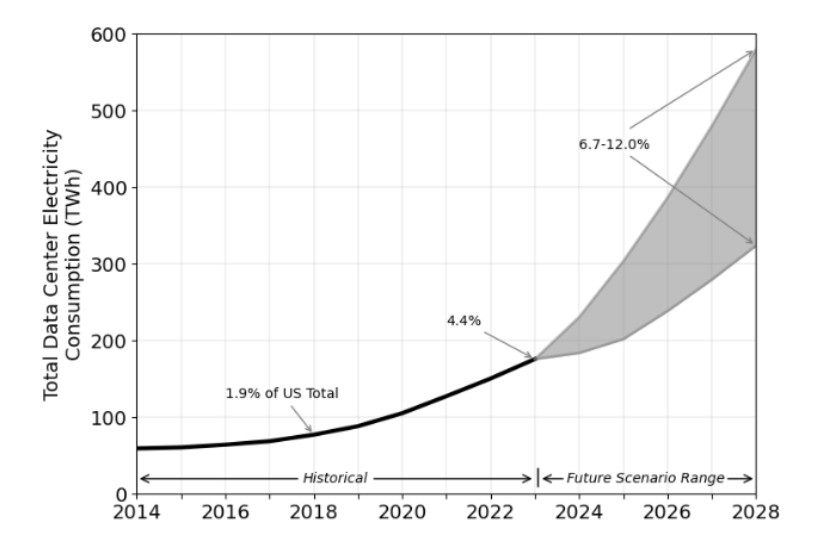
Backers of the new generation of small modular reactors — including major technology companies such as Amazon, Google and Meta — have publicly said they want nuclear energy to supply cheap, reliable power for AI systems. Those companies are investing heavily in reactors that could one day support energy-intensive data centers and large-scale computing workloads.
Outside experts say the secrecy surrounding the rewrites — and the scope of the rollbacks — could undermine public trust in nuclear energy at a critical moment for the industry.
The revisions apply to DOE "orders," internal directives that govern nearly every aspect of reactor operations, including:
An analysis by NPR found that more than 750 pages were cut from earlier versions of the same rules, leaving roughly one-third of the original content. Hundreds of pages of detailed requirements — especially those related to security and environmental protection — were eliminated or replaced with far looser language.
While changes to federal regulations typically require public notice and comment, DOE orders can be rewritten internally without any public process. Historically, those orders were still made public through a DOE database. That practice has not been followed here.
Related Article: Why AI Data Centers Are Turning to Nuclear Power
The rule changes are closely tied to a new Reactor Pilot Program launched by executive order last May.
Under the order, DOE must approve at least three experimental reactors and achieve nuclear "criticality" — the point at which a reactor sustains a nuclear chain reaction — by July 4, 2026. That left the department just over a year to review, approve and oversee the construction of multiple untested designs.
Former DOE and nuclear officials describe the timeline as unprecedented.
"To say that it's aggressive is a pretty big understatement," Kathryn Huff, a former head of DOE's Office of Nuclear Energy, told NPR. She noted that research reactors typically take at least two years to build once construction begins.
Rather than offering funding, DOE pitched the program to industry as a faster regulatory pathway — one that avoids the Nuclear Regulatory Commission's lengthy and public review process.
"Our job is to make sure that the government is no longer a barrier," a DOE lawyer told industry executives during a recorded meeting last June.
The urgency behind the Reactor Pilot Program is closely tied to growing interest in nuclear power as a backbone for AI infrastructure. Small modular reactors are being promoted as a way to provide continuous, carbon-free electricity for data centers running large AI models — workloads that require enormous and uninterrupted power.
Several of the companies backing these reactor designs, including Amazon, Google and Meta, have pointed to nuclear energy as a long-term solution for powering AI systems. That demand has helped fuel billions of dollars in private and public investment into experimental reactors — and added pressure on regulators to shorten approval timelines.
For developers racing to prove their designs, the DOE’s promise of a faster authorization pathway offers something the traditional regulatory system does not: speed.
The new orders remove or weaken several long-standing nuclear safety principles. Among the most significant changes:
Supporters argue the changes reduce costs and administrative burden. Critics say they increase risk.
"They're taking a wrecking ball to the system of nuclear safety and security oversight," Edwin Lyman of the Union of Concerned Scientists told NPR.
The rollback of safety requirements takes on added significance given the reactors’ intended role in powering AI infrastructure. Unlike traditional research reactors, these designs are being developed with commercial deployment in mind — potentially near large computing facilities that operate continuously and at massive scale. Any failure or accident could have implications not just for reactor sites but for surrounding communities and critical digital infrastructure.
Related Article: AI's Voracious Appetite for Land, Water and Power Is Your Next Big Business Risk
Language governing environmental safeguards was also significantly weakened.
| Area | Old Standard | New Standard |
|---|---|---|
| Groundwater | Protection required | "Consideration" of avoiding contamination |
| Sewer discharges | Prohibited | "Should be avoided" |
| Environmental impact | Mandatory protections | Minimize impacts "if practical" |
Monitoring, documentation and reporting requirements were reduced as well.
The most dramatic cuts appear in the area of reactor security.
Seven security directives totaling more than 500 pages were consolidated into a single 23-page order. Removed requirements include:
Critics warn the changes could be especially risky because some new reactor designs use higher levels of enriched uranium, potentially increasing their attractiveness as theft targets.
"The general requirements let companies write their own ticket as far as security goes," said Lyman.
Under the new system, roughly 30 DOE experts — supported by about a dozen staff on loan from the Nuclear Regulatory Commission — are reviewing 11 reactor designs from 10 private companies.
Each company is also assigned a "Concierge Team" to help ensure rapid approval. According to an internal memo obtained by NPR, these teams report directly to the secretary of energy, raising concerns about pressure to speed reviews.
Meanwhile, DOE has signaled it may go further. Last week, it proposed excluding some worker safety standards — including rules on respiratory protection and welding — from the reactor program. Unlike the orders, that proposal was made public because it affects federal regulations.
Related Article: AI Training Is Moving Beyond Data Centers
In a previous statement, the DOE said it is "committed to the highest standards of safety" in nuclear research and development.
Still, former regulators and safety experts say the lack of transparency may do lasting damage.
"If it's possible to share with the companies at this point, then there's a really important question as to why it's not public," Huff said.
Past nuclear accidents and secrecy, experts note, have fueled public resistance to nuclear power for decades. As the US pushes to revive the industry on an accelerated timeline, critics argue that trust — not speed — may be the hardest requirement to meet.
Michelle Hawley is an experienced journalist who specializes in reporting on the impact of technology on society. As editorial director at Simpler Media Group, she oversees the day-to-day operations of VKTR, covering the world of enterprise AI and managing a network of contributing writers. She's also the host of CMSWire's CMO Circle and co-host of CMSWire's CX Decoded. With an MFA in creative writing and background in both news and marketing, she offers unique insights on the topics of tech disruption, corporate responsibility, changing AI legislation and more. She currently resides in Pennsylvania with her husband and two dogs. Connect with Michelle Hawley: 
