News Analysis
White Paper
Why Enterprise AI Fails at Scale

Yann LeCun, a central figure in AI research and longtime leader of Meta’s AI efforts, did not exit the company quietly.
As he stepped away from his leadership role, LeCun publicly criticized Meta’s AI direction, questioning its strategic priorities and warning that the business risked falling behind competitors by emphasizing short-term commercial deployment over foundational research.
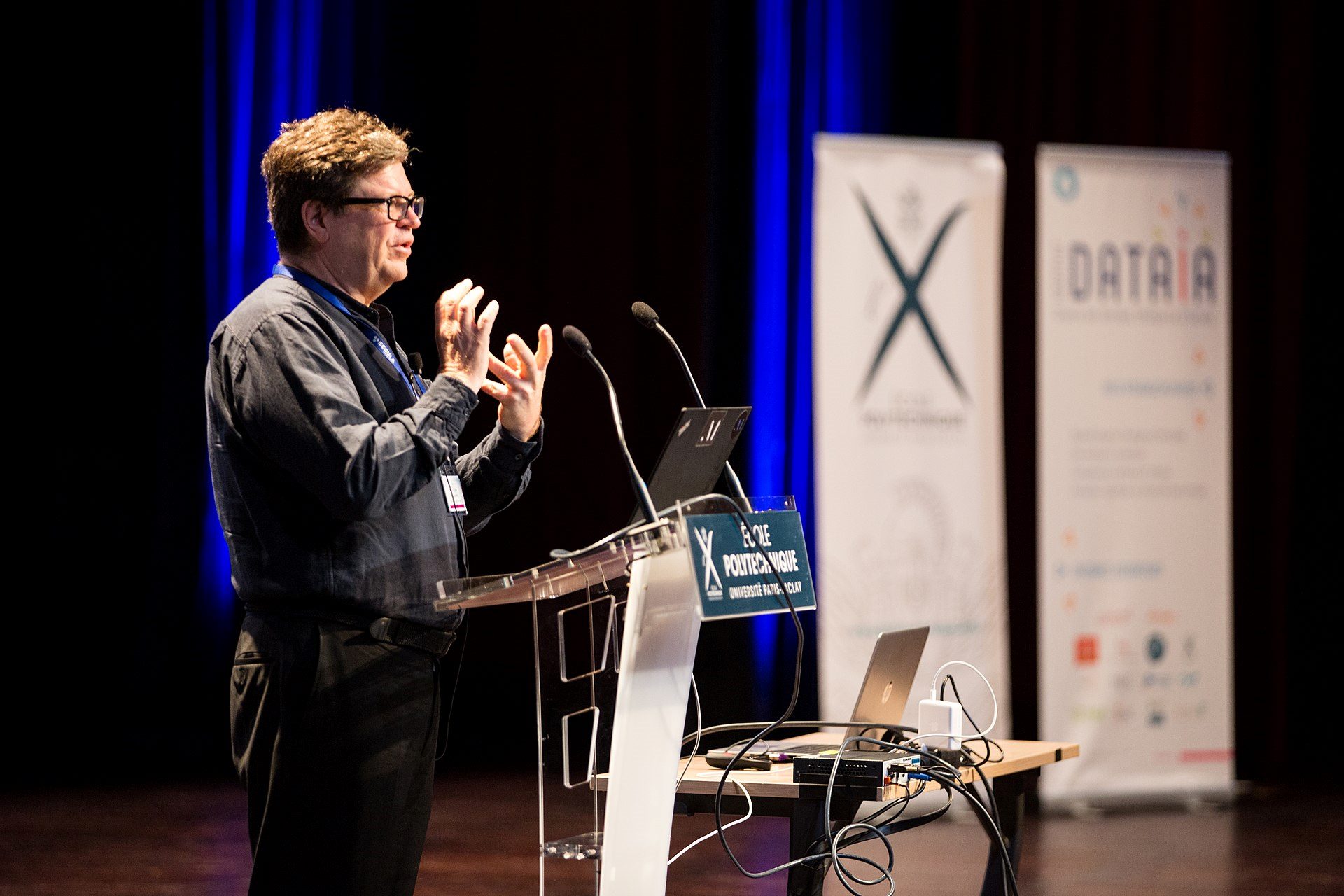
"The whole Silicon Valley AI industry went into a single-minded direction that was incompatible with my vision," LeCun wrote on LinkedIn.
His remarks add fresh tension to Meta’s complicated AI narrative, raising questions about how the business balances open research, commercial pressure and long-term innovation at a moment when AI leadership is becoming a defining competitive edge.
LeCun is widely regarded as one of the foundational figures of modern artificial intelligence. A Turing Award winner, he helped pioneer convolutional neural networks, which became a cornerstone of computer vision and later influenced a broad range of deep learning systems. More recently, LeCun has been a vocal advocate for self-supervised learning as a path toward more general, data-efficient AI systems — an alternative to the heavy reliance on labeled data that dominates today’s large language model (LLM) training approaches.
At Meta, LeCun served as chief AI scientist and led the business’s fundamental AI research efforts for more than a decade. Under his leadership, Meta became one of the few large technology businesses to consistently release research openly, even as competition around AI capabilities intensified.
Unlike executives tied directly to revenue or product roadmaps, LeCun has historically operated as a long-horizon thinker, often pushing against short-term optimization in favor of foundational advances. His critiques resonate beyond Meta itself, reflecting broader tensions across the AI industry around commercialization pressure, research independence and the risk of sacrificing long-term innovation for near-term gains.
Related Article: Meta Launches 'Meta Compute' for AI Data Centers
Publicly, LeCun's transition was touted as a natural evolution rather than a clean break. LeCun has remained active in research and public discourse, but without the same formal authority inside Meta’s AI leadership structure, a framing that suggests continuity on paper even as influence shifts behind the scenes.
The timing, however, is difficult to separate from Meta’s current AI moment. The company is under pressure to demonstrate competitive relevance amid rapid advances from peers, while also translating research into viable products at scale.
LeCun’s departure from a formal leadership role comes at a point when those tradeoffs are becoming more pronounced. His subsequent public criticisms land not as retrospective commentary, but as contemporaneous signals from someone who helped shape Meta’s AI identity and now appears less aligned with where it's headed.
In the days surrounding his transition away from a leadership role, LeCun used public forums and social media to express dissatisfaction with how AI strategy decisions were being made at Meta.
Yann LeCun says the AI industry is completely LLM-pilled, with everyone digging in the same direction and stealing each other's engineers
— Haider. (@slow_developer) January 23, 2026
"i left Meta because they also became LLM-pilled"
We cannot build true agentic systems without the ability to predict the consequences of… pic.twitter.com/rZJvZGmHAo
LeCun’s most pointed criticism focused on the industry’s growing dependence on large language models as the primary path forward for AI. LLMs, he has argued, while useful for certain tasks, are fundamentally limited and unlikely to lead to true machine intelligence. In interviews and public commentary, LeCun has described current LLM-centric approaches as a potential dead end, warning that scaling models trained largely on text do not address deeper issues around reasoning, world modeling and understanding.
In a recent interview with the Financial Times, LeCun took aim at Meta's leadership reorganization following underwhelming benchmark results for its latest Llama models. He suggested that the restructuring undermined confidence in the existing research organization and indicated a shift away from long-term scientific rigor.
LeCun was especially critical of the appointment of Alexandr Wang to lead Meta’s AI efforts, describing Wang as “young” and “inexperienced,” arguing that he had “no experience with research or how you practice research.” LeCun also implied that new leadership valued product velocity over foundational inquiry.
A recurring theme in LeCun’s criticism was what he described as an overemphasis on short-term product outcomes at the expense of foundational research. Prioritizing rapid deployment and competitive optics, he warned, risked sidelining the long-horizon work needed to advance AI in more meaningful ways, particularly in areas such as self-supervised learning and reasoning systems.
He also pointed to growing risk aversion within leadership ranks, arguing that reluctance to pursue uncertain or unconventional research paths could limit Meta’s ability to differentiate itself over time.
In addition to his critiques of Meta’s AI leadership and organizational decisions, LeCun candidly told MIT Technology Review that he “kind of hated being a director,” and preferred working as a visionary scientist rather than managing teams. His strength, he said, lies in pioneering what comes next in AI rather than overseeing execution.
Related Article: The Scaling of AI Foundation Models: Progress or Plateau?
In parallel with LeCun’s departure from a formal leadership role, Meta has visibly accelerated its AI investments and public positioning.
The tech giant recently launched a major infrastructure initiative called Meta Compute, aimed at building out dedicated AI datacenter capacity at scale. CEO Mark Zuckerberg said the company plans to construct “tens of gigawatts this decade, and hundreds of gigawatts or more over time.”

Other recent moves from Meta include:
While Meta’s messaging stresses execution and momentum, LeCun questioned whether those priorities leave sufficient room for long-term, foundational work that may not yield immediate product wins.
The tension between long-term AI research and short-term product delivery is not unique to Meta. Large AI research labs have long operated under different incentives than product-focused businesses. Research teams are rewarded for originality and foundational advances, while product teams are measured by speed, reliability and market impact. As AI moves from experimental to central to business strategy, those priorities increasingly collide.
This tension is a catalyst for LeCun's newest venture: Advanced Machine Intelligence (AMI) Labs, is company positioned around world models. "The goal of the startup is to bring about the next big revolution in AI: systems that understand the physical world, have persistent memory, can reason and can plan complex action sequences," said LeCun.
LeCun stressed that AMI Labs aims to be an open-source, globally oriented research hub that is neither tied to the US nor China, countering what he sees as a narrowing of innovation paths around dominant LLM frameworks.
"As I envision it," said LeCun, "AMI will have far-ranging applications in many sectors of the economy, some of which overlap with Meta’s commercial interests, but many of which do not."
Related Article: Open Innovation: Fueling AI That's Responsibly Developed and Useful
While few senior researchers have weighed in directly on Meta’s internal dynamics, LeCun’s criticisms have circulated widely among AI practitioners and academics, largely because they echo concerns that have been mounting quietly across the field. What makes the remarks notable is not their novelty, but that they were voiced publicly by a researcher of his stature.
Discussions around LeCun’s exit have also played out on social media and in independent tech communities. Some have framed his departure as emblematic of an “AI cartel” or “AI cult,” where a narrow set of industry players and model types dominate research narratives and funding, sidelining alternative approaches and dissenting voices.
As AI becomes central to competitive positioning, the gap between research-driven and product-driven leadership models is widening. Senior AI figures are being asked not only to advance the state of the art, but to justify how that work translates into near-term advantage. The result is leadership roles that are more constrained and, in some cases, less appealing to researchers accustomed to greater autonomy.
Scott Clark is a seasoned journalist based in Columbus, Ohio, who has made a name for himself covering the ever-evolving landscape of customer experience, marketing and technology. He has over 20 years of experience covering Information Technology and 27 years as a web developer. His coverage ranges across customer experience, AI, social media marketing, voice of customer, diversity & inclusion and more. Scott is a strong advocate for customer experience and corporate responsibility, bringing together statistics, facts, and insights from leading thought leaders to provide informative and thought-provoking articles. Connect with Scott Clark: 