Editorial
White Paper
Why Enterprise AI Fails at Scale

You’re spending millions on consultants. You’re holding endless meetings to build the perfect AI roadmap. You’re worried about training programs and adoption rates.
And while you’re doing all that, a new generation is walking into your company and quietly getting on with it.
The most powerful force shaping your AI future is not the technology. It's the young professionals who are stepping into the workforce with a level of AI fluency that most senior leaders can't comprehend. They aren't impressed by your slide decks. And they certainly aren't intimidated by the tools. They treat AI the way our generation treated the internet: a natural, obvious extension of how work gets done. They are the AI-natives.
This isn't just about a new set of skills. It is a cultural change that most organizations are unprepared for.
The old model of corporate learning is dead. You used to design a training program, roll it out over three to six months and hope people paid attention. This new generation doesn't work that way.
They learn AI the way they learned everything else: hands-on. They don't wait for permission.
They open a tool, try things, break things and figure out how to make it work for them. They find a bottleneck in their own workflow and build a small agent to fix it over the weekend. This creates a new kind of employee who can solve problems and build solutions faster than your traditional IT department can even approve a project.
Your rigid corporate structures are a cage to them. While you are debating policy, they are already building the future in a browser tab.
Related Article: Best Free AI Tools in 2026: Top Picks for Writing, Design, Productivity and More
This generation has no nostalgia for the old way of doing things. They will not tolerate the clunky, outdated systems that you've learned to live with. They expect automation. They expect intelligent tools. They expect the software they use at work to be as smart and fast as the tools they use in their personal lives.
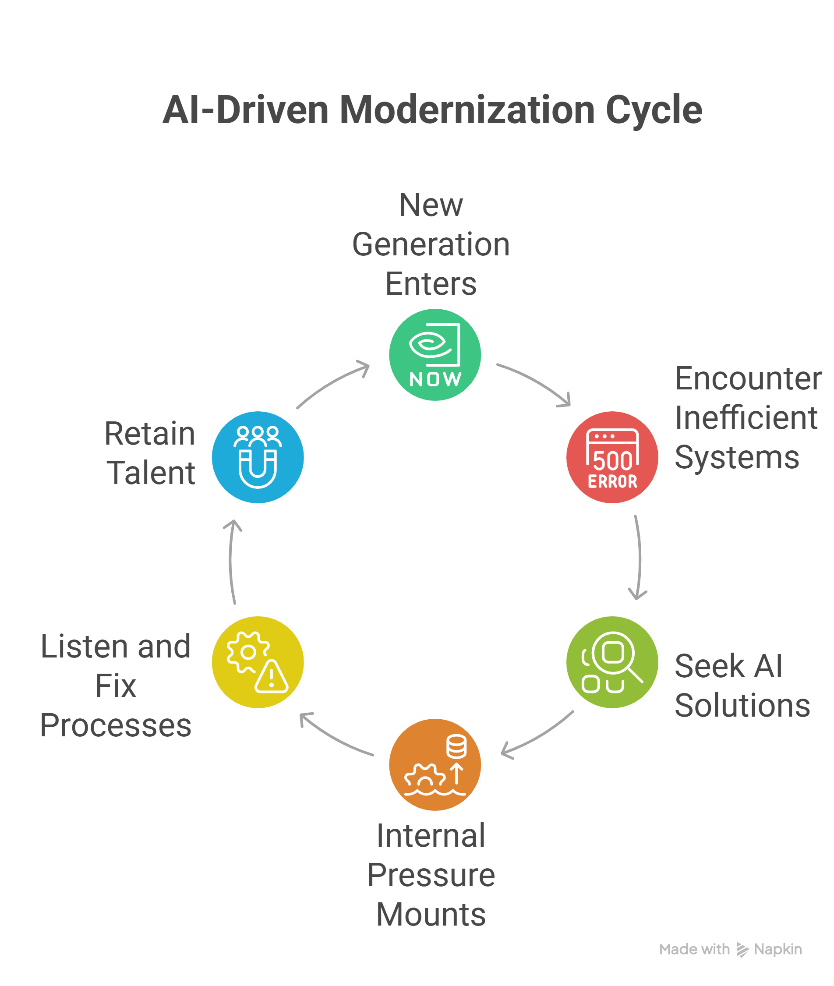
When they see a process that is slow, manual and inefficient, they don't just complain about it. They see it as a problem to be solved with an AI. This will create a constant, internal pressure on your organization to modernize.
The choice is simple. You can either listen to them and fix your broken processes, or you can watch them leave for a company that will. The war for talent is no longer just about salary; it’s about providing an environment where smart people can do their best work without being held back by dumb systems.
Leaders are obsessed with hiring expensive, senior AI experts with decades of experience. But that's looking in the rearview mirror. The next wave of internal AI experts won't be defined by their long resumes. They will be defined by their mindset.
These young professionals will build your company's internal playbooks for using AI. They will be the ones who redesign your workflows from the ground up. They will be the ones who challenge the old assumptions about what is possible. Their lack of experience in "the way we've always done things" is not a weakness; it is their single greatest strength.
You are probably trying to hire your future Chief AI Officer from the outside. The truth is, you probably already employed them as an intern last summer.
Related Article: 10 Top AI Jobs and Salaries
This is not a technology problem. It’s a management problem. Your job is not to "manage" this new generation. Your job is to get out of their way.
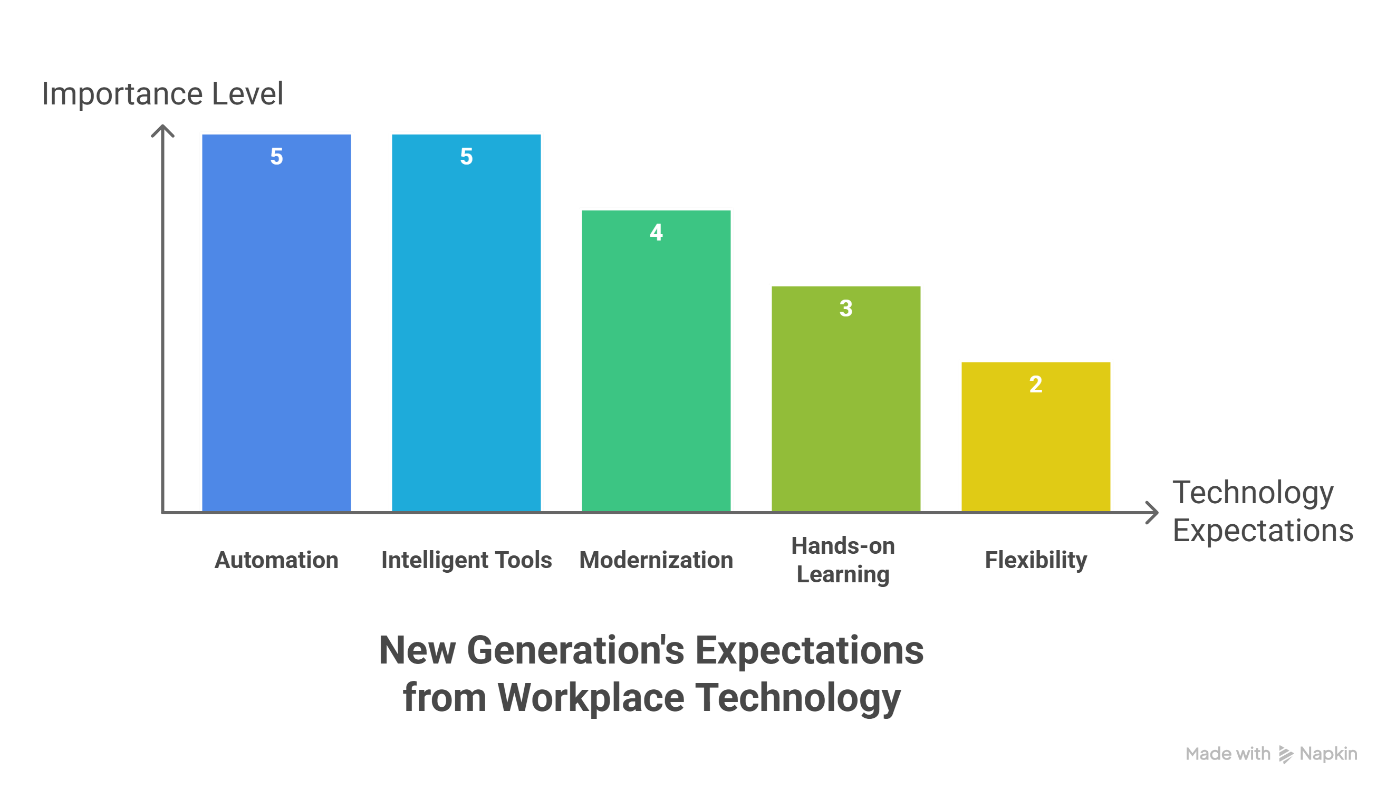
It requires a shift in how we think about expertise. For a century, know-how was scarce. It was accumulated over a long career and held by a few senior people at the top. AI is turning that model on its head. Now, a 22-year-old with a laptop can have more creative leverage than a senior vice president with a staff of fifty.
The real challenge for leaders is to have the humility to listen to them. You have to create a system that lets their hands-on, experimental approach flourish, even when it makes your org chart look messy. Because these young professionals aren't just a new demographic. They are a preview of what your entire company must become to survive.
For any leader concerned about the next generation, or if you have a son, daughter or nephew — as I do — or anyone worried about their graduate’s job prospects, this should be a source of immense hope. The old entry-level jobs, the ones that required years of doing repetitive, low-value work, are disappearing. In their place is a new entry point grounded in creativity and the ability to solve problems using these new tools.
This isn't a future where young people are shut out; it's a future where their innate fluency with technology gives them a more direct path to meaningful, high-impact work than any previous generation. They are not behind. They are built for what comes next.
 Learn how you can join our contributor community.
Dr. David Priede, Ph. D., is the director of operations, advanced technologies and research at Biolife Health Center and is dedicated to catalyzing progress and fostering healthcare innovation. Connect with David Priede: 