Feature
White Paper
Why Enterprise AI Fails at Scale
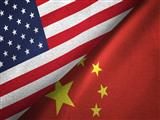
Artificial intelligence is no longer just the next big thing in tech or a source of competitive advantage — it’s become the new currency of global power, the ultimate yardstick of national strength and economic potential. Nowhere is this more evident than in the diverging strategies of the world’s two AI superpowers: the United States and China.
As the US pursues the holy grail of artificial general intelligence (AGI) with relentless ambition, China is quietly embedding AI into the fabric of everyday life, transforming industries from agriculture to public health. Which strategy is winning — and what does it mean for the future of innovation, economic dominance and society at large?
The race to build and deploy advanced AI systems has evolved into a new kind of arms race — one that could redefine global power for decades to come. DeepMind CEO Demis Hassabis recently said AGI could arrive in “maybe the next five to ten years, possibly the lower end of that,” and that its impact might be "10 times bigger than the Industrial Revolution, and maybe 10 times faster." That’s not just hyperbole; it’s a warning and a challenge.
At stake is much more than who can create the smartest algorithms or the fastest chips. AI now stands at the center of competition for economic dominance, military advantage and cultural influence. It touches everything from GDP growth and national security to the social fabric of everyday life. For the first time since the end of the Cold War, we’re witnessing the emergence of a genuine “techno-superpower” contest — one that will be shaped by two radically different approaches.
""The winner of the technology war is going to win all wars."
- Ray Dalio
Investor & Bridgewater Founder
On one side is the United States, whose AI philosophy is rooted in open innovation, free markets and a loose patchwork of regulations. On the other side is China, where top-down state planning, massive government investment and sweeping data collection drive a uniquely centralized AI strategy. Each model brings its own strengths and risks — and each is already reshaping global alliances, supply chains and the rules of digital engagement.
However, this isn’t just a competition of ideas or business models; it has become a defining front in a much broader contest for global influence and security.
Ray Dalio, legendary investor and founder of Bridgewater, recently warned that the ongoing technology conflict between the US and China is more than just economic posturing — it’s the front line of a new great power struggle, one that will define not only national security but the trajectory of the global economy and the values that shape society. As Dalio emphasized, "The winner of the technology war is going to win all wars."
Related Article: China’s AI Paradox: Can Centralized Control Outpace Western Innovation?
Unlike the free-market, decentralized approach seen in the US, China’s AI ambitions are guided by a top-down model that blends state-led planning with private-sector execution. At the heart of this approach are sweeping five-year plans — each setting explicit national targets for AI research, deployment and talent development. The Chinese government treats AI not just as a set of technologies, but as a foundational “infrastructure layer” for transforming its entire economy.
This centralized vision is visible in the way China has woven AI into almost every sector. National policies encourage the use of AI in practical, high-impact domains:
China’s public sector has become a laboratory for AI-powered surveillance — most visibly in its ubiquitous facial recognition systems, traffic management solutions and citywide sensor networks. In manufacturing, AI-driven automation lines and predictive maintenance are now the norm, helping the Chinese industry maintain its competitive edge.
China’s State Council plans to integrate AI applications across 90% of its economy by 2030
The benefits of this model are hard to ignore. Centralized data governance enables rapid scale and deployment, allowing China to implement new technologies across vast regions with remarkable speed. This state-aligned ecosystem also gives the government tools to direct investment toward national priorities, such as critical infrastructure, food security and military modernization.
However, the same factors that accelerate adoption can also become barriers. Innovation in China’s AI sector often faces bottlenecks from rigid bureaucratic oversight and limited transparency, making it difficult for truly disruptive ideas to take root outside government-sanctioned channels. Global partners, meanwhile, remain wary of China’s surveillance-first approach and the opacity surrounding its data practices — challenges that contribute to ongoing mistrust and complicate international cooperation.
In 2025, China’s State Council set a target to integrate AI applications across 90% of its economy by 2030. Yet many analysts remain skeptical: as the Carnegie Endowment noted, scaling AI at such a pace faces major hurdles, including:
Although China’s pragmatic, infrastructure-driven AI strategy has delivered remarkable scale and speed, it is not without tradeoffs. As both a proving ground and a cautionary tale, China’s approach highlights the possibilities — and limits — of state-led AI transformation.
America’s AI strategy has taken shape through a very different lens — one that champions entrepreneurial energy, open competition and a willingness to take risks in pursuit of technological breakthroughs. In contrast to China’s centralized, state-driven model, the US relies on a patchwork of private investment, academic research and a vibrant startup culture where disruption is often the goal, not the exception. It’s an environment that is defined by the motto “move fast and break things,” where the pursuit of AGI has become both the North Star and a rallying cry.
Amid fierce competition, American leaders have emphasized the need for continued investment and global talent attraction to maintain an innovation edge, acknowledging that China has significantly narrowed the gap.
According to Pennsylvania Senator Dave McCormick, "we should be deeply worried" about China's AI dominance. “They’ve closed the gap in a number of areas.” McCormick emphasized that the US must invest aggressively and remain a magnet for global talent if it hopes to retain leadership in AI.
Leading this charge are US-based pioneers such as OpenAI, DeepMind (owned by Google), Meta and Anthropic — businesses that have turned AGI from a far-off theory into a tangible engineering ambition. The US ecosystem has become a magnet for global talent, thanks in part to world-renowned universities, abundant venture capital and a business environment that rewards outsized bets. This culture has enabled rapid-fire advances in both proprietary and open source models, from OpenAI’s GPT-4o and Google’s Gemini to Meta’s Llama and Anthropic’s Claude. Open sourcing foundational models, in particular, has proven to be an accelerant — inviting thousands of independent developers and researchers to build upon, customize and pressure-test new capabilities at scale.
Related Article: Trump Unveils Massive AI Strategy: ‘We Will Not Allow Any Foreign Nation to Beat Us’
US tech leaders, meanwhile, remain optimistic about the country’s ability to drive the next era of AI innovation.
“We are only at the beginning of a massive ten-year cycle of AI development and infrastructure expansion. Within five years, AI will tackle challenges once deemed unsolvable," said Lisa Su, CEO at AMD. Su noted that continued investment and focus will keep the US at the forefront of AI progress as the field matures.
Sam Altman, CEO of OpenAI, has become one of the most vocal champions of this ambition, recently stating, “We are now confident we know how to build AGI as it’s usually understood. We believe that, in 2025, we may see the first AI agents ‘join the workforce’ and materially change the output of companies.” For Altman and his peers, the pursuit doesn’t end at AGI; it extends to what he calls “superintelligence in the true sense of the word” — a future in which today’s most advanced models are only the starting point.
This drive is supported by a willingness to “push a lot of compute” into experimentation, reflecting a distinctly American approach that favors scaling resources and iterative breakthroughs to accelerate progress. The result is an ecosystem where moonshot ambitions are paired with the brute force of massive compute power, all in pursuit of building machines that can fundamentally reshape the economy.
The strengths of this approach are evident in the pace and scope of US-led AI innovation. The country continues to produce many of the world’s most advanced models and attracts the lion’s share of AI funding and top-tier researchers. Flexibility, openness and a competitive marketplace have turned the US into an engine for big, headline-grabbing breakthroughs.
But the same forces that fuel innovation also create new risks. Fragmented, often lagging AI regulation makes it difficult to set universal standards for safety, privacy or ethical use. The “winner takes all” mentality, amplified by intense market competition, can leave smaller players — and sometimes whole segments of society — behind. And without a unified national AI strategy (though the US has proposed a federal AI law), coordination among industry, academia and government can be uneven at best.
The US model has become synonymous with agility and ambition, but as the global stakes of AI continue to rise, questions remain about whether a market-first approach can balance speed with responsibility — and if it can deliver the kind of shared prosperity and security that this new era demands.
Neither China nor the US's AI strategy is without limits. China’s strength in fast, large-scale implementation can come at the expense of creativity, AI transparency and international trust. The US system, meanwhile, sometimes struggles to convert research breakthroughs into broad, reliable benefits — fragmented regulation and “winner takes all” dynamics risk concentrating power and leaving basic infrastructure needs unmet.
Interestingly, these two philosophies are not as static as they might seem. In recent years, the US has begun to reckon with the need for more coordinated AI policy, from federal task forces to sweeping regulatory proposals. China, for its part, has shown signs of selectively embracing open innovation — experimenting with open-source models and attracting foreign researchers, even while retaining tight control over key infrastructure and data.
This evolving environment sets up a fundamental question: which strategy is better positioned to create real-world value? China’s so-called “90% economy” model emphasizes practical deployments that lift the average, while US companies chase AGI and headline-grabbing advances that could redefine what’s possible. In practice, the world may need both approaches: robust, reliable AI to address everyday problems and blue-sky ambition to unlock new frontiers.
While the US tech sector often dominates headlines with bold claims about AGI and transformative breakthroughs, there is growing internal debate about safety, ethics and what responsible progress should look like.
Definitions of AGI remain fluid, and even leading voices regularly caution against hype and premature deployment. On the other side, China’s rapid scaling brings its own concerns — critics argue that a top-down approach may prioritize deployment over careful assessment of societal risks or long-term viability.
Even highly respected industry voices have warned that the US’s current lead is far from secure, especially as China accelerates its AI development. “US lead isn’t guaranteed; China’s model of AI deployment and open access in some areas gives it advantage,” AI pioneer Andrew Ng posted on X.
There is now a path for China to surpass the U.S. in AI. Even though the U.S. is still ahead, China has tremendous momentum with its vibrant open-weights model ecosystem and aggressive moves in semiconductor design and manufacturing. In the startup world, we know momentum…
— Andrew Ng (@AndrewYNg) July 31, 2025
Ng suggested that the US must avoid complacency and continue to innovate and adapt if it wants to avoid falling behind.
Beneath all of this runs the risk — and the opportunity — of global polarization. AI competition could harden into a kind of technological “cold war,” fragmenting supply chains, standards and even the internet itself. But there’s also the potential for cross-pollination: collaborative research, shared safety protocols and mutual learning that benefits not just superpowers, but the world in general.
Ultimately, neither AI strategy is complete on its own. China’s bold targets would benefit from a greater focus on practical infrastructure and a willingness to adapt strategy when on-the-ground realities diverge from central planning — something the US’s more iterative, decentralized approach sometimes handles more nimbly.
Conversely, the US could look to China’s success in driving rapid, coordinated change across entire sectors as it seeks to scale AI deployments beyond the experimental stage.
Ethics and human rights are at the heart of these tensions. Can either system deliver AI that is not just powerful, but also safe, accountable and broadly beneficial?
China’s ability to coordinate and scale can drive dramatic societal change, but it also demands vigilance to ensure human rights are not sidelined. The US excels at creativity and disruption, yet it faces a reckoning over equity, bias and the social costs of its “move fast” strategies.
The rise of AI has become a national security issue as much as a technology one. US political leaders are increasingly framing AI leadership as a matter of policy urgency. “From this day forward, it’ll be a policy of the United States to do whatever it takes to lead the world in artificial intelligence,” stated US President Donald Trump.
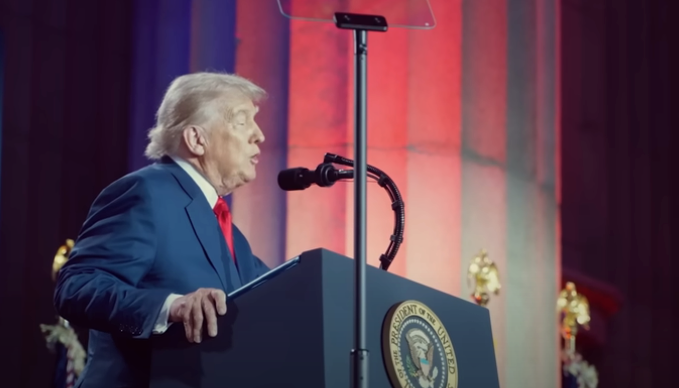
Trump argued that leading in AI is now a central policy objective for the US, reflecting its critical importance in the context of global rivalry.
Both countries have something to learn from the other. China could benefit from a stronger culture of transparency and independent oversight, while the US might look to China’s ability to align AI development with national priorities and long-term infrastructure goals. Ultimately, a hybrid path — one that draws on the strengths of both models — may offer the best chance of building AI that serves humanity as a whole.
As the next decade unfolds, the choices made by these two superpowers will help determine not only who leads in AI, but what kind of future the technology will create for everyone.
Related Article: Government and Tech Firms Confront New AI-Driven Bio Risks
The global AI race is changing what it means to be a superpower. China’s top-down push brings AI into daily life at massive scale, while the US bets on bold breakthroughs and open innovation. But both approaches have blind spots.
As each country adapts, the real test will be who can blend rapid progress with real-world responsibility. In the end, the future of AI won’t just be shaped by technology, but by the choices these nations make — and those choices will most certainly impact all of us.
Scott Clark is a seasoned journalist based in Columbus, Ohio, who has made a name for himself covering the ever-evolving landscape of customer experience, marketing and technology. He has over 20 years of experience covering Information Technology and 27 years as a web developer. His coverage ranges across customer experience, AI, social media marketing, voice of customer, diversity & inclusion and more. Scott is a strong advocate for customer experience and corporate responsibility, bringing together statistics, facts, and insights from leading thought leaders to provide informative and thought-provoking articles. Connect with Scott Clark: 