News Analysis
White Paper
Why Enterprise AI Fails at Scale

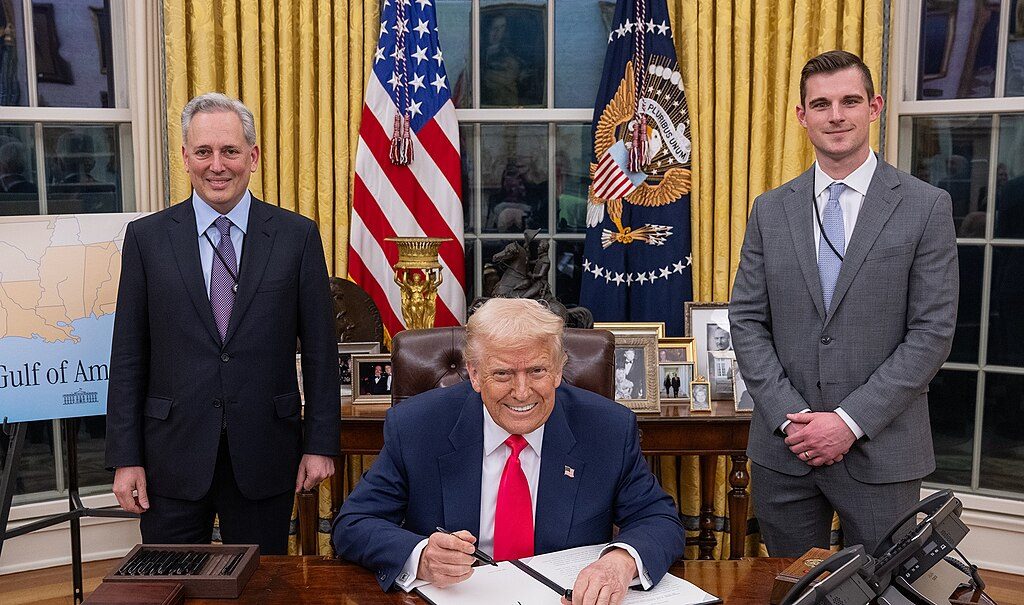
President Donald Trump has signed an executive order on December 11 limiting states' ability to regulate artificial intelligence, an action experts say is almost certain to wind up in court.
“To win, United States AI companies must be free to innovate without cumbersome regulation,” reads the executive order. However, according to the document, "excessive" state regulations thwart this goal. This new executive order aims to circumvent three distinct challenges:
The executive order calls for “a minimally burdensome national standard” that the Administration will develop with Congress. It also requires:
The executive order is largely similar to the rumored one that’s been floating around for several weeks, with the exception of a new section listing state AI laws that will not be challenged, including ones that cover:
The executive order also directs the Special Advisor for AI and Crypto — David Sacks, who has been criticized for conflicts of interest — and the Assistant to the President for Science and Technology — Michael Kratsios, who worked with Sacks on the AI Action Plan — to draft legislation creating a unified federal AI policy that overrides conflicting state laws. (A previous draft of the order had assigned this task to the Special Advisor and the Director of Legislative Affairs.)
Related Article: Trump Unveils Massive AI Strategy: ‘We Will Not Allow Any Foreign Nation to Beat Us’
Congress has thus far not passed a federal bill regulating AI. In May, the House passed a 10-year moratorium on state AI regulations as part of the so-called Big Beautiful Bill. Sen. Ted Cruz rewrote it for the Senate, including a provision tying state AI regulations to federal broadband funding. However, many people opposed both versions of the bill, and the Senate voted in favor of an amendment to strip it from the Big Beautiful Bill on July 1 by an overwhelming 99-1 majority.
Congressional representatives had also considered including the state AI provision in the National Defense Authorization Act, but decided earlier this week not to do so.
"There must be only One Rulebook if we are going to continue to lead in AI," President Trump wrote earlier this week on Truth Social, the social media network of which he is the majority owner. When asked for details, the White House Press Office referred to the Truth Social post.
“The President appears to be trying to do by executive fiat what the Congress has failed to do through legislation,” said Matthew Ferraro, a partner in the law firm of Crowell & Moring.
Proponents of such a moratorium said it was difficult for companies to comply with the increasing number of AI regulations imposed by the states. In addition, organizations — such as the venture capital firm Andreessen Horowitz — have claimed that some state AI laws violate the dormant Commerce Clause, which restricts states from enacting laws that have effects outside their borders.
On the other hand, multiple states have enacted laws regulating a number of other areas, such as general data privacy and identifiable health data, according to Crowell & Moring, which released an analysis of the drafted executive order in November.
“Patchwork regulatory frameworks can be difficult for national companies to accommodate. But companies do so in other areas,” said partner Linda Malek. “Compliance with multiple standards is not only possible but routine.”
As far as whether state AI laws violate the Commerce Clause, that’s a matter for the courts to decide, Ferraro said.
“Whether or not a state law violates the US Constitution’s commerce clause is a difficult, circumstance-specific question. A court would have to look at the particulars of the state law and consider whether federal action preempts the state law, and whether that purported preemption fits within the constitutional bounds that protect state sovereignty.”
Related Article: Did AI Czar David Sacks Really Divest? New AI Investment Raises Ethics Questions
Court is likely where this is all going to end up, according to Ferraro. “An Executive Order along the lines of what the President has advocated for and similar to a draft EO that was circulated in late November would likely face substantial legal challenges. The EO would not have the force of law, and it would not be self-executing, requiring further action from federal agencies to achieve its ends.”
In addition, because the EO is predicated on administrative rules, it would be harder to enforce, Ferraro said. “Courts are usually reluctant to invalidate state laws based merely on a regulation, as opposed to a proper law." That is, one passed by Congress, he explained.
If Congress were to adopt a federal law preempting state AI lawmaking, he added, it could face legal challenges by the state or impacted parties — but it would likely stand on firmer footing than an executive order.
"The administration frames this as protecting American values against Chinese-style centralized control. Then don't use China's methods to get there."
- Russ Wilcox
CEO, Artifexai & Chair of the AI Council, Lives Amplified
Moreover, this issue isn’t the typical red state/blue state dichotomy, with conservative politicians such as Florida Governor Ron DeSantis also supporting states’ rights to enact AI regulation.
“The irony is painful,” said Russ Wilcox, CEO of Artifexai and chair of the AI Council for Lives Amplified. “The administration frames this as protecting American values against Chinese-style centralized control. Then don't use China's methods to get there.”
The problem is not whether states should regulate AI, but that federal and state governments have two perspectives, Wilcox said. “The federal interest is competitiveness. When Washington looks at AI, it sees China. It sees a race for technological dominance that will determine who sets global standards for the next century.”
On the other hand, the state interest is protection, said Wilcox. “When an algorithm denies someone a loan, a job or healthcare, the state attorney general's phone rings. From the state perspective, if the federal government won't protect citizens, states will. That's what states have always done under their police powers. These aren't wrong priorities. They're different jobs.”
The US should be doing both, according to Wilcox. “The solution would be building mechanisms that let each level do its job,” he said, such as:
Yet that's harder than executive orders — it requires Congress to actually legislate, which requires legislators who understand what they're legislating.
Meanwhile, it is likely that legal challenges to the executive order will use the Tenth Amendment to the US Constitution as a basis, said Ferraro.
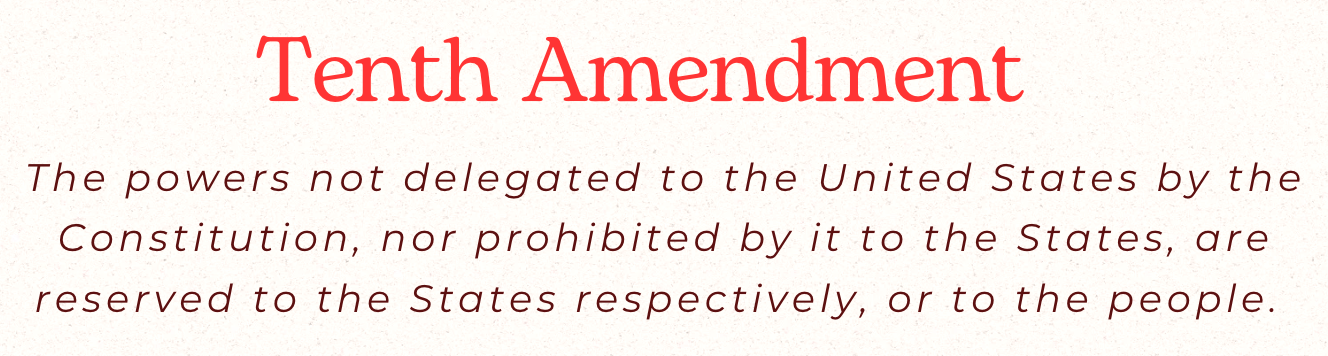
“Any litigation brought because of the EO... will likely turn on an application of the Tenth Amendment and related federal preemption jurisprudence," noted Ferraro.
In the meantime, state AI regulations will likely continue, he said, even during the awaiting settlement of any federal government suit against states. The contested state and federal landscape will also continue to impose shifting regulatory burdens on companies developing and deploying AI systems.
"The President cannot wish away the complex mosaic of state laws with the stroke of his pen, as much as he might want to do so.”
Sharon Fisher has written for magazines, newspapers and websites throughout the computer and business industry for more than 40 years and is also the author of "Riding the Internet Highway" as well as chapters in several other books. She holds a bachelor’s degree in computer science from Rensselaer Polytechnic Institute and a master’s degree in public administration from Boise State University. She has been a digital nomad since 2020 and lived in 18 countries so far. Connect with Sharon Fisher: 