News
White Paper
Why Enterprise AI Fails at Scale

CoreWeave has cemented its position as the go-to GPU cloud for AI-native companies, adding Perplexity to a client roster that already includes OpenAI and Meta.
The company announced on March 4, 2026, that it entered a multi-year strategic partnership with Perplexity to support the AI company's inference workloads on CoreWeave Cloud. The agreement also includes piloting new services across both organizations.
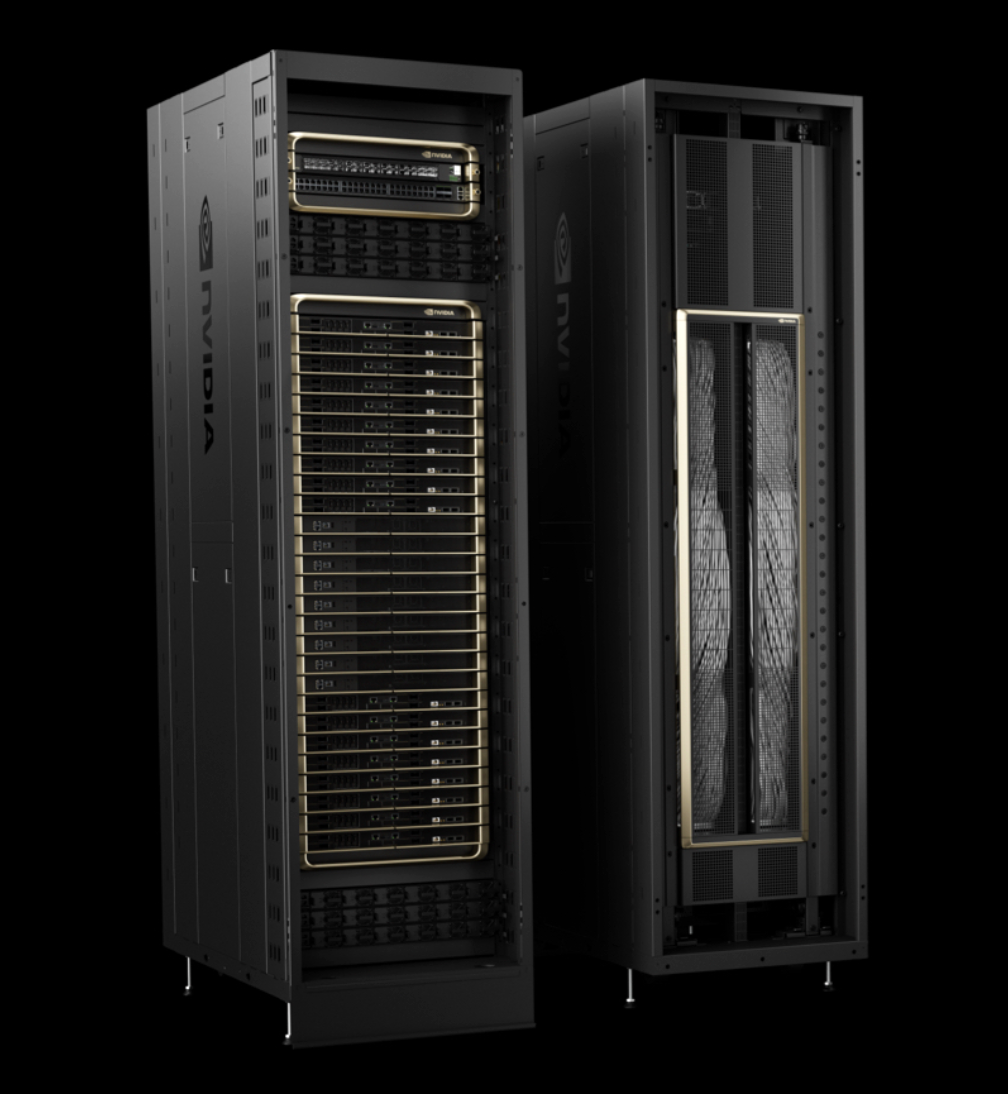
Under the deal, Perplexity will power its next-generation AI inference workloads using dedicated NVIDIA GB200 NVL72-powered clusters. The infrastructure aims to keep pace with Perplexity's rapid growth and the requirements of its Sonar and Search API ecosystem.
CoreWeave will also deploy Perplexity Enterprise Max across its organization, giving employees the ability to search the web and internal knowledge, run multi-step research and work with advanced AI models.
"CoreWeave is an essential partner in our efforts to optimize our infrastructure and the models we use to provide Perplexity users across industries with the strongest AI tools and agents on the market."
- Dmitry Shevelenko
Chief Business Officer, Perplexity
Perplexity has begun deploying inference workloads on CoreWeave’s platform as part of the partnership’s initial rollout. The deployment combines specialized GPU infrastructure, orchestration services and model-management tools designed to support high-volume AI inference.
| Infrastructure Component | Role in the Deployment |
|---|---|
| NVIDIA GB200 NVL72 clusters | Dedicated GPU infrastructure for inference workloads |
| CoreWeave Kubernetes Service | Managed orchestration for AI workload deployment |
| W&B Models integration | Model training, fine-tuning and management tools |
| Perplexity Enterprise Max | Web and internal knowledge search with AI models |
CoreWeave executed an aggressive growth strategy throughout 2025 and early 2026, anchored by its $9 billion all-stock acquisition of Core Scientific in June 2025. The deal delivered approximately 1.3 gigawatts of gross power capacity across 10 US data centers plus over 1 GW of expansion capacity.
On the partnership front, the company secured a $14.2 billion agreement with Meta in September 2025 to supply cloud and AI compute infrastructure through 2031. Plus, CoreWeave's relationship with OpenAI expanded through three successive agreements totaling $22.4 billion, including an additional $6.5 billion cloud contract in September.
The company completed a successful IPO in March 2025, raising $1.5 billion in the largest US tech IPO since 2021. It subsequently acquired MLOps platform Weights & Biases for roughly $1.7 billion.
Despite closing 2025 with $5.13 billion in revenue and a $66.8 billion backlog, February earnings revealed a $1.17 billion net loss for 2025.
Specialized GPU cloud infrastructure has become essential for enterprises deploying production-grade AI systems that demand low latency and operational efficiency.
Cloud providers like CoreWeave offer managed Kubernetes services alongside on-demand Nvidia GPU access, designed for flexibility and cost efficiency in AI agents and machine learning workloads.
CoreWeave, founded in 2017, provides high-performance GPU compute infrastructure for AI-first organizations, research labs and creative studios. The company offers bare-metal GPU and CPU compute nodes, AI-optimized storage, networking and managed services such as Kubernetes. Its platform serves AI research labs, model builders and enterprises with large-scale training data needs.
Michelle Hawley is an experienced journalist who specializes in reporting on the impact of technology on society. As editorial director at Simpler Media Group, she oversees the day-to-day operations of VKTR, covering the world of enterprise AI and managing a network of contributing writers. She's also the host of CMSWire's CMO Circle and co-host of CMSWire's CX Decoded. With an MFA in creative writing and background in both news and marketing, she offers unique insights on the topics of tech disruption, corporate responsibility, changing AI legislation and more. She currently resides in Pennsylvania with her husband and two dogs. Connect with Michelle Hawley: 
