Editorial
White Paper
Why Enterprise AI Fails at Scale
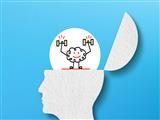
A new year means US employers are resolving to get fitter, sleep more or finally tame their inboxes. The smarter move is to add one more resolution to the list: build cognitive fitness with AI for yourself and your team.
AI has shifted from pilot projects to an everyday teammate for knowledge workers, and 2025 surveys show employees are adopting it faster than many leaders realize.
Yet most organizations still treat AI as a way to save time, not as a "mental gym" that can train sharper attention, better judgment and more adaptable problem-solving.
The new opportunity is to turn everyday human–AI collaboration into deliberate cognitive training: using AI to stretch how people think, not just speed up what they already do.
Related Article: Your Science Fair Is Over. It's Time to Build the AI Factory
Recent neuroscience research reinforces a basic point: our brains rewire through repeated, meaningful practice in changing environments, not one-off information dumps.
In parallel, new reviews of AI-driven adaptive learning show that systems can manage cognitive load, and because they can adjust difficulty in real time, they significantly boost learning efficacy. The key condition is they need to be designed around how people actually process information.
AI can either support that training — by setting the right level of challenge and feedback — or quietly undermine it by letting people glide through tasks on autopilot, as Brian W. Stone, associate professor at Boise State University, explained.
Think about a manager who has spent years as the go-to person for "how we do things around here," taking a constant stream of "quick questions" from the team.
She trains a private AI agent in the company’s secure environment on policies, examples and past decisions so that people can self-serve solid answers. That frees her up for coaching and strategy.
Each interaction with that agent is a small mental gym rep: staff must ask better questions, weigh the AI’s suggestions against real-world context and decide what actually fits.
Leaders gain two wins at once: the organization’s tacit knowledge is captured, and people get more chances to practice judgment instead of waiting in line for answers.
Emerging evidence points to a real downside: using AI as a shortcut can blunt thinking skills if people avoid the hard parts of their work. Studies summarized by cognitive psychologists in 2025 show that when students rely on AI to draft or fix their work, they may get better-looking outputs. However, they may gain little in underlying knowledge and become overconfident in what they think they know.
There is a similar risk in the workplace: if employees mostly copy-paste AI-generated content into decks, emails or code without questioning it, they skip the very "reps" that build long-term skill.
Over time, that can erode critical thinking, situational awareness and the habit of checking assumptions — especially dangerous in roles dealing with safety, compliance or high-stakes customer decisions.
Seen through a cognitive fitness lens, "easy mode" AI is like using a treadmill that moves your legs for you: you feel like you have exercised, but your muscles are not doing the work.
Leaders who want resilient teams need to design AI use so that people still have to:
Related Article: AI Hallucinations Nearly Double — Here’s Why They're Getting Worse, Not Better
Human-AI collaboration can also support workers who are neurodivergent or who live with disabilities in ways that lift both performance and confidence.
For example, a building surveyor with dyslexia might use AI to sharpen and clarify written reports and emails — dictating notes, asking the AI to suggest clearer phrasing, then reviewing and choosing the version that best matches intent. AI is not replacing expertise; it is acting as a thinking partner and language coach. The tech helps lower the friction of written communication, so the worker can focus more of their cognitive energy on technical judgment and problem-solving.
Many employees who are deaf or hard of hearing now use real-time captioning and AI transcription to keep up in fast-paced meetings. The same tools can help colleagues whose first language is not English focus on listening and contributing, not just trying to keep up with the conversation.
Others use word prediction, read-back, and text-to-speech tools to cut through reading and writing barriers. More of their energy goes into solving problems, not wrestling with the interface.
Inclusive use cases like these show how the mental gym can be open to all workers. AI can adapt to different cognitive profiles and needs instead of forcing everyone into a single way of working.
Australian research groups working on human-AI collaboration and adaptive interfaces echo this point: the systems that succeed are those built around real users in real settings, not just idealized "average" workers.
For US employers, this is a reminder that the best AI deployments start with close observation of how different people actually do the job — and then use AI to scaffold, not steamroll, those patterns.
Researchers and practitioners are increasingly talking about symbiotic AI and hybrid human-AI intelligence. These systems are built to amplify human capabilities instead of simply automating tasks.
This means putting human cognition at the center of AI design. You ask what kinds of thinking a job really requires, then configure AI tools to create the right mix of support and stretch.
Several 2025 initiatives emphasize AI that prompts people to explain or justify decisions, not just accept them.
For instance, "tools for thought" research in human-computer interaction highlights interfaces where AI suggests multiple options, asks the user to choose and encourages to reflect on why — turning each interaction into a small exercise in reasoning and metacognition.
Related Article: The Full Journey of AI-Powered Transformation: From Idea to Impact
McKinsey’s State of AI survey shows that most companies now use AI, but many are stuck in pilots or pockets where tools help a few enthusiasts rather than lifting the whole workforce.
Map key workflows — sales proposals, safety inspections, customer support, project reviews — and ask a simple question: in each one, is AI sharpening or dulling people’s thinking?
For example, use AI to generate alternative scenarios for an incident review, then ask teams to stress-test each one before deciding what to learn from it.
Or set up an AI-supported proposal process where the system drafts, but humans must critique, compare with past wins and losses and justify final choices.
Early 2025 adoption data suggests employees are already using gen AI more than many executives realize, often under the radar (AKA shadow AI).
Bring that into the open and coach it. Talk explicitly about good AI prompting, healthy skepticism and checking facts — especially for workers in roles where errors carry high consequences.
Crucially, include all workers in that conversation where practicable.
Physical fitness will still matter. But leaders who treat human-AI collaboration as deliberate cognitive training — grounded in brain science, inclusive by design and tied to real work — will build teams that stay sharper, more employable and ready for whatever AI throws at them next.
 Learn how you can join our contributor community.
Nicholas Wyman began his career as an award-winning chef, where he honed a unique blend of creativity and discipline. Transitioning from the culinary arts to the business world, Nick leveraged his leadership experience to become a globally recognized workforce practitioner. Connect with Nicholas Wyman: 