News Analysis
Guide
Is AI Making Your Organization More Productive or More Dependent?

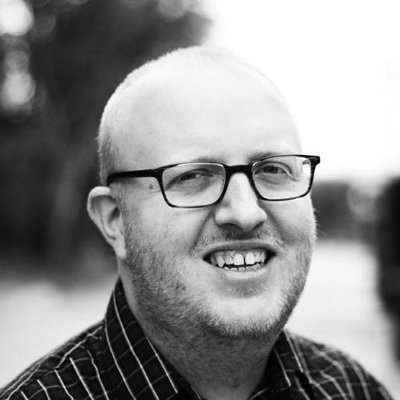
The headlines wrote themselves. Workday's chief technology officer left his C-suite seat to take an individual contributor role at Anthropic. Was it a step down or a recruiting play for an AI lab that just happens to be building HR software?
Workday stock, like many other big tech SaaS stocks, was already under pressure. Losing a CTO to a future competitor is another data point in the looming sea change in tech narrative.
It isn’t that simple, though.
The story behind Peter Bailis's move from Workday to Anthropic is more interesting and more useful than the version being reported. Read it closely and you get a builder who spent a year in the wrong seat, a new title that the coverage fundamentally misread, a competitive threat that's thinner than the sourcing supports, and a talent pattern that tells you something else entirely.
To understand why Bailis left, it helps to understand how he got there.
Bailis is a research-first engineer. He did his PhD at Berkeley in data systems, went on to Stanford as an assistant professor and co-led the DAWN project, focused on making machine learning applications practical at scale. He founded Sisu Data out of that research in 2018, raising over $128 million before selling to Snowflake in October 2023. After the acquisition, he joined Google Cloud in December 2023 as VP of Engineering, leading Looker and the company's AI for data analytics work, before joining Workday as CTO in May 2025.
The through-line is researcher, founder and applied AI builder. He was never a career enterprise software executive, he didn't come up managing large organizations and running multi-year roadmap cycles.
The Workday CTO seat, leading technology and architecture for a company with 18,000 employees and $8 billion in annual revenue, is an institutional management role and a difficult one at that. By definition, it puts a lot of distance between the person holding it and the actual work being done.
After 11 months, Bailis was gone.
In retrospect, this probably shouldn’t have been a surprise. Workday was mid-integration of multiple AI acquisitions, under new leadership after co-founder Aneel Bhusri returned as CEO in February 2026 to replace the outgoing Carl Eschenbach, and rolling out Agent Builder tools to customers while trying to hold together a sprawling product portfolio. That's not an environment built for the kind of work Bailis spent his career doing.
Anthropic is.
The framing of MTS — member of technical staff — as a step down for Bailis is the most persistent mistake in the coverage, and it shapes everything else about how the story is perceived.
People working in tech are often too focused on titles, to the point that it has invented roles like David Shing’s “Digital Prophet” moniker at AOL.
At Anthropic and OpenAI, MTS is the standard engineering designation across research and engineering roles, applied regardless of seniority or prior title. OpenAI president Greg Brockman has explained the structure publicly as a deliberate choice: the labs don't want to separate researchers and engineers into different organizational castes, and they don't want titles to track authority rather than contribution.
The result is a flat structure where MTS covers an enormous range. Base salaries at Anthropic run from roughly $300,000 to $405,000, with equity pushing total compensation well into seven figures for senior positions.
A former CTO moving to an MTS role at Anthropic is mostly about choosing a different organizational philosophy, one that keeps builders close to the actual work. For someone whose career is defined by proximity to hard problems, that might be the point.
Anthropic confirmed that Bailis will work on reinforcement learning (RL) engineering. That's a broad remit at a company where RL-based training techniques underpin model alignment and are applied to agent behavior.
The Information then reported that his arrival coincides with Anthropic's push into HR applications, citing Claude plugins for HR use cases and Anthropic job postings seeking engineers for "people products."
That's a real story, and it’s one that’s still developing. The coverage just ran further with it than the sourcing allows.
Anthropic confirmed RL engineering. Whether Bailis is working on anything HR-adjacent at Anthropic, or doing exactly what they said he's doing, isn't established by what's been reported. Eleven months, even at a vendor in as dominant a market position as Workday, is not long enough on its own to be a credible expert on people technology.
But that maybe shouldn’t be traditional tech’s concern.
Bailis is one instance of a recognizable directional shift: people who have spent time inside the incumbent software vendors and are choosing to build at the model layer rather than stay and defend the application layer.
Look at who else Anthropic has recruited: Paul Smith, Anthropic's chief commercial officer, came from ServiceNow and Salesforce. Bailis came from Google Cloud and Workday, with a decade of work building systems that sit directly underneath the problems Anthropic is now moving into. One from the go-to-market side, one from the technical side, both with deep enterprise software backgrounds.
It’s not just an executive challenge, either.
A 2025 SignalFire report found engineers at OpenAI were eight times more likely to leave for Anthropic than the reverse. At DeepMind, the ratio was nearly 11-to-1 in Anthropic's favor. Anthropic leads the AI industry in retention at 80% for employees hired over the last two years. That data captures the lab-to-lab talent flow, researchers and engineers moving toward the strongest research environment.
The lab-to-lab flow tells you that Anthropic is winning the research competition at the talent level. The enterprise-to-Anthropic flow tells you how Anthropic is building the institutional knowledge it needs to operate at the application layer. They need people who understand how enterprise software actually works from the inside, how those buyers think, and where the real friction is in deploying AI into HR, finance and legal workflows at scale.
The competitive threat to Workday from Anthropic is probably real. But this hire doesn't prove it, and the competitive threat angle isn't the most useful thing to take from the story anyway.
What’s more interesting is what the collective talent movement reveals about the gap between where AI is being marketed as happening and where it's actually being built.
Every major HR software vendor is selling AI transformation right now. Workday has been aggressive on this front. Some are building it in earnest. Others are wrapping existing functionality in generative AI language in the hopes that buyers won't look too closely at what's underneath.
If your vendor's AI story rests entirely on partnership integrations and plugin announcements rather than the caliber of people they're attracting and what those people are actually building, it’s worth considering how fragile that product roadmap might be. Especially if these builders ever decide to release at the product level.
The story of Peter Bailis leaving Workday for Anthropic is less about one executive's career move and more about which organizations are creating the conditions where serious builders want to work, and which ones are watching them go.
Editor's Note: What other moves has big tech been making to strengthen their AI offerings?

Lance Haun is a leadership and technology columnist for Reworked. He has spent nearly 20 years researching and writing about HR, work and technology.