News Analysis
Guide
Is AI Making Your Organization More Productive or More Dependent?
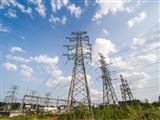

According to the International Energy Agency, global electricity demand is forecast to increase at an average annual rate of 3.6% between 2026 and 2030 based on rising consumption from industry, electric vehicles, air conditioning — and data centers.
“Worldwide electricity demand grew by 3% year-on-year in 2025,” the report noted. “This followed growth of 4.4% in 2024, when intense heat waves and strong industrial activity in many regions boosted electricity use. Looking ahead, annual demand growth over the next five years is set to be 50% higher on average compared with the average across the previous decade.”
While not all of the increase is attributable to data centers, they’re an easy target. Consumers who are already cash-strapped see higher rates in their utility bills, hear about new data centers being built and make the connection, whether or not it’s accurate.
Take Lake Tahoe. Located on the border between California and northern Nevada, the 49,000-member community recently learned that the utility that has been supplying its power, NV Energy, will no longer be able to do so, and they are blaming the data centers that have been sprouting up in the Reno area.
Yet, the root cause predates most of the data centers. NV Energy sold its California electric assets to Lake Tahoe’s Liberty Utilities, which services the region, in 2009, and agreed to keep supplying power temporarily, according to Fortune. That arrangement was extended in 2015, again in 2020, and again in 2025 — each time because Liberty had not yet secured an independent supply.
The problem, though, is that because consumers attribute their rising electricity costs to AI and data centers, they’re also blocking data centers themselves. In response to the Lake Tahoe situation, for example, the city of Reno imposed a moratorium on the construction of data centers for 30 days, with council members voting on June 1 on whether to extend it further.
Related Article: As AI Strains Resources, Data Centers Look Beyond the Surface
While many data centers now include generating facilities such as solar power and even nuclear power plants, they don’t necessarily protect consumers from rising costs.
That’s because there’s more to power than generating it. You also have to get it where it needs to go, which means transmission facilities such as substations, transmission lines and power poles, including all the installation and maintenance work required. Not only does that cost money, but siting all that infrastructure takes years — even longer than the regulatory and permitting process required for the generation facilities themselves, let alone the data centers.
“Building a data center takes 18 to 24 months,” AI software vendor Vertical Data wrote in a LinkedIn post. “Connecting it to the grid can take four to five years. Building new transmission lines can take seven to twelve years.”
“Not surprisingly, Congress has done nothing."
- Ari Peskoe
Director of the Electricity Law Initiative, Harvard Law School
Consequently, consumers in some regions have found themselves on the hook for millions of dollars to pay for the transmission upgrades data centers require. In the 13-state Mid-Atlantic region supported by PJM Interconnection, a regional transmission organization that contracts each year for capacity power in its region, the 63 million people in the region faced a $14.7 billion charge in summer 2005, with projections that families might have to pay up to $70 more per month by 2028.
In response, the Federal Energy Regulatory Commission (FERC) is working with PJM to lessen consumer costs by reducing the amount of transmission upgrades needed to serve the data center, which also saves time, said Ari Peskoe, director of the Electricity Law Initiative at Harvard Law School, and co-author of "Extracting Profits from the Public." Moreover, PJM is changing its capacity auction process to better isolate ratepayers from data center costs, he added.
Streamlining the permitting process for transmission lines would save money as well as time, but would also give residents less control over where transmission lines and substations would go. “Timelines can be particularly long when the project traverses federal land or impacts federally regulated interests, such as rivers and wetlands,” Peskoe said. “The challenge here is to allow robust public participation in major infrastructure decisions while also not letting the process get bogged down in procedure and lawsuits. I don’t have an off-the-shelf solution.”
But while some states and Congress had talked about passing laws to protect consumers from data center power costs, not much has happened. “Not surprisingly, Congress has done nothing,” Peskoe said.
In March, several major data center operators made headlines when President Donald Trump issued the Ratepayer Protection Pledge proclamation, promising that data centers would not increase household electricity costs for American citizens. “Instead, these companies will build, bring or buy the new generation resources and electricity needed to satisfy their energy demands, and pay for all new power delivery infrastructure upgrades to service their data centers,” the proclamation noted.
In particular, data centers pledged they would pay power rates and infrastructure costs regardless of whether they actually used the electricity, and would also invest in local communities and coordinate with grid operators to contribute to a more reliable grid.
Signatories to the proclamation included seven companies: Amazon, Google, Meta, Microsoft, OpenAI, Oracle and xAI.
The question is to what extent the seven companies can be held to the pledge, whether other suppliers would comply and how much it actually helps consumers. Signatories did not appear eager to expound on their support of the pledge, with only Oracle and Microsoft responding, both pointing plans the companies had already published in January regarding protecting consumers from rising energy costs.
Microsoft, for example, said it would ask utilities and public commissions to set rates high enough to cover the electricity costs for its data centers, including infrastructure costs such as transmission. “When our data center expansion requires improvements in transmission and substation capabilities, we will continue our existing practices by paying for these improvements,” Brad Smith, Microsoft's vice chairman and president, wrote.
Similarly, Oracle said it would pay for any grid upgrades its data centers required. As Josh Pitcock, Oracle's senior vice president, wrote, “We’re funding new onsite transmission lines, battery storage and dedicated substations to maintain energy reliability and ensure these costs are not passed on to ratepayers."
Related Article: AI's Voracious Appetite for Land, Water and Power Is Your Next Big Business Risk
But observers like Peskoe were not sanguine.
“The ratepayer protection pledge is a press release,” he said. “It’s meaningless unless reflected in contracts and tariffs approved by utility regulators.” And utilities, particularly ones that operate as a monopoly, may be loath to do so, he said. “The traditional utility business model, which socializes the costs of infrastructure development, is the cause of the problem, and many utilities are slow to change cost allocation approaches."
The next potential change is scheduled for June, when FERC is scheduled to issue a formal response to a Department of Energy October request that FERC assert jurisdiction over data center interconnections.
“In light of the unprecedented current and expected growth of large loads seeking to interconnect to the transmission system, and to provide open access and nondiscriminatory access to the transmission system, it has become necessary to standardize interconnection procedures and agreements for such loads, including those seeking to share a point of interconnection with new or existing generation facilities (hybrid facilities),” noted the October request signed by Secretary of Energy Chris Wright.
“States generally have oversight over such agreements, so DOE’s proposal has received sharp pushback from states and utilities,” Peskoe said. The likely date is mid-June at FERC’s monthly open meeting, he said.