Feature
Guide
Is AI Making Your Organization More Productive or More Dependent?

For years, artificial intelligence in healthcare was largely viewed as a tool for analyzing scans, automating paperwork and assisting clinicians with routine tasks. That perception is rapidly changing.
A new generation of AI systems is demonstrating an ability to reason through complex medical problems, identify rare diseases that have eluded specialists for years and assist physicians with increasingly sophisticated clinical decisions. Recent advances from researchers at Boston Children's Hospital, OpenAI and other medical AI initiatives suggest healthcare may be entering a new phase where AI evolves from a supportive assistant into an active collaborator in diagnosis, treatment planning and patient care.
Artificial intelligence has been used in healthcare for years, but most early applications focused on narrow tasks. AI systems helped radiologists analyze medical images, supported diagnostic workflows and automated administrative work such as coding, documentation and scheduling. These tools improved efficiency, but they generally functioned as assistants rather than active participants in the decision-making process.
Healthcare AI is evolving from narrow-purpose tools toward systems capable of reasoning, investigation and clinical workflow support.
| Stage | Primary Role |
|---|---|
| Imaging Analysis | Identify abnormalities in scans and medical images |
| Administrative Automation | Documentation, coding and scheduling assistance |
| Clinical Decision Support | Provide recommendations and risk assessments |
| Reasoning Models | Analyze multiple sources of clinical information |
| Agentic Medical AI | Support investigations and multi-step clinical workflows |
Today, AI systems have become capable of reasoning across multiple sources of medical information rather than performing isolated tasks. Unlike earlier tools that were designed for a specific purpose, newer models can evaluate information from multiple sources, including medical histories, laboratory results, physician notes and scientific literature. This allows them to identify patterns, generate diagnostic hypotheses and assist medical personnel with more complex questions.
Jeremy Lawson, founder and CEO of Salynt, AI-powered 3D visualization company, believes the biggest advance is systems that are capable of connecting fragmented clinical information into a more complete picture for physicians.
"For years, AI mostly read a single scan or drafted documentation. What's changing is its ability to pull together scattered information and surface what actually matters clinically, which is the real day-to-day work,” said Lawson. “The gap that still needs to be closed is trust. Clinicians need systems that are transparent about how they reach a conclusion, validated on real patient populations and that fit the workflow they already use instead of adding another screen to check."
This has generated growing interest in agentic AI, in which systems can perform multi-step tasks, gather relevant information and help physicians work through complicated diagnostic or treatment decisions. Rather than simply responding to a query, these systems can assist throughout a broader clinical workflow.
According to cardiologist and digital health researcher Eric Topol, founder and director of the Scripps Research Translational Institute, healthcare may be entering a new phase in which AI evolves from a tool that automates routine work into one that helps clinicians manage complex medical information. While concerns around accuracy, oversight and regulation remain, the technology is moving closer to the clinical reasoning processes that are the basis of modern medicine.
As healthcare systems face physician shortages, aging populations and a growing body of medical knowledge, AI's value may come from helping clinicians make faster, better-informed decisions rather than simply reducing paperwork.
One of the most promising applications of advanced medical AI is rare disease diagnosis. Patients with rare conditions often spend years consulting specialists, undergoing tests and searching for answers before receiving an accurate diagnosis. Because many rare diseases share symptoms with more common conditions, identifying the underlying cause can be extraordinarily difficult.
A recent collaboration between Boston Children's Hospital and OpenAI illustrates how AI may help accelerate that process. Researchers applied advanced reasoning models to 376 previously unsolved rare disease cases. According to the project, the AI-assisted investigation helped identify 18 new diagnoses, providing answers for patients whose conditions had remained unexplained despite extensive medical evaluation.
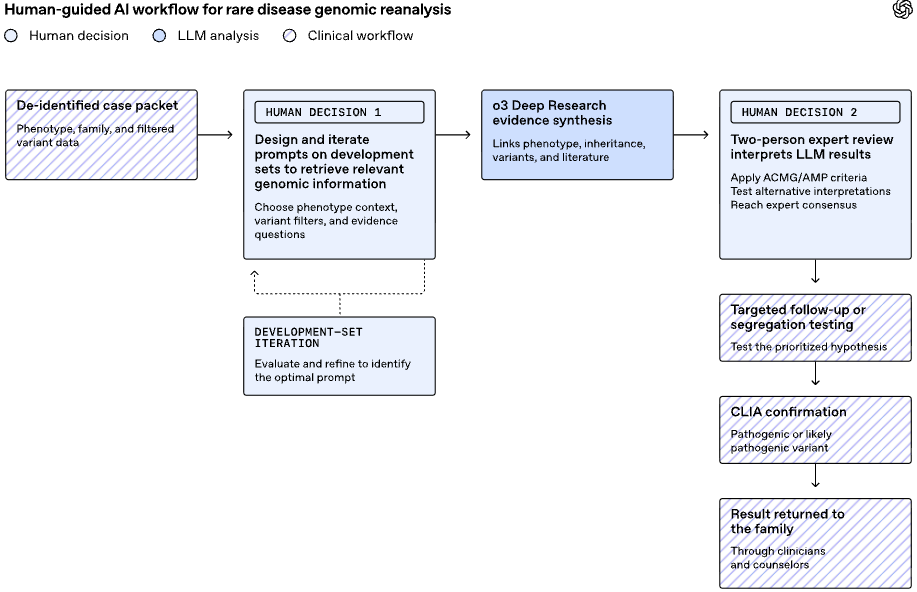
The system did not replace physicians. Instead, it functioned as a research and reasoning assistant, reviewing patient histories, genetic information, clinical findings and medical literature to generate potential diagnostic pathways. Human experts then evaluated those findings through established clinical processes.
The significance of the project extends beyond the number of diagnoses that were identified. It demonstrates AI's ability to synthesize large volumes of medical information and identify connections that might otherwise be overlooked. For the medical personnel who are confronting difficult cases, this capability could help reduce the time that is required to investigate potential causes and evaluate treatment options.
For patients and families, the implications are even more meaningful. Rare disease advocates often describe the search for a diagnosis as a years-long diagnostic odyssey. While AI is unlikely to eliminate that challenge entirely, advances like these suggest it may help shorten the journey and provide answers more quickly for patients who are facing some of medicine's most complex conditions.
The recent advances in medical AI are not simply the result of larger datasets or faster computing power. These systems are capable of reasoning through complex problems across multiple steps rather than performing a single, narrowly defined task.
Traditional healthcare AI was often designed to answer specific questions, such as whether an image contained signs of disease or whether a patient met certain risk criteria. Emerging agentic AI systems operate differently. They can gather information from multiple sources, evaluate competing possibilities, identify missing information and adjust their approach as new data becomes available.
In a medical setting, this could include reviewing a patient's history, examining laboratory results, searching relevant medical literature and generating a series of diagnostic hypotheses. Rather than simply responding to a prompt, the system can assist with portions of a broader clinical investigation.
According to Topol, some of the most promising developments involve medical AI agents that can support clinicians throughout the diagnostic process. These systems may eventually help coordinate tasks, synthesize information from disparate sources and uncover relevant findings that might otherwise require hours of manual research.
Another important capability is longitudinal analysis, allowing AI systems to examine how a patient's health changes over months or years rather than relying on a single snapshot in time. Physicians often need to understand how a patient's condition has evolved, and newer AI systems can evaluate trends across large volumes of clinical records to identify patterns that might otherwise go unnoticed.
The industry is also moving beyond general-purpose AI models toward systems that have been designed specifically for healthcare. Nvidia recently announced it is partnering with healthcare AI company Abridge to develop a foundation model trained on clinical conversations that will support documentation and clinical decision support.
The technology remains in its early stages, and significant questions remain around reliability, oversight and clinical accountability. Still, agentic AI raises an important possibility: instead of functioning solely as a medical reference tool, future AI systems may help manage portions of the investigative process itself, allowing medical personnel to spend less time gathering information and more time making informed decisions about patient care.
While rare disease diagnosis offers a compelling example of AI's potential, researchers believe the technology's long-term impact could extend far beyond solving medical mysteries. As AI systems become better at analyzing complex data and identifying patterns, they are beginning to influence other areas of healthcare, from treatment planning to preventive medicine.
Researchers expect AI to influence healthcare across diagnosis, treatment, prevention and medical research.
| Healthcare Application | Potential Impact |
|---|---|
| Rare Disease Diagnosis | Shorten time to diagnosis and identify overlooked conditions |
| Clinical Decision Support | Assist physicians with treatment evaluation and research |
| Drug Discovery | Accelerate identification of promising therapies |
| Disease Prediction | Identify health risks before symptoms become severe |
| Wearable Data Analysis | Enable continuous monitoring of patient health |
| Preventive Medicine | Support earlier intervention and disease prevention |
| Personalized Healthcare | Tailor care based on patient-specific characteristics |
One of the most immediate applications is clinical decision support. AI systems can help physicians evaluate treatment options, review research and identify factors that may influence patient outcomes. Rather than replacing medical judgment, these tools provide medical personnel with additional information that can support more informed decisions.
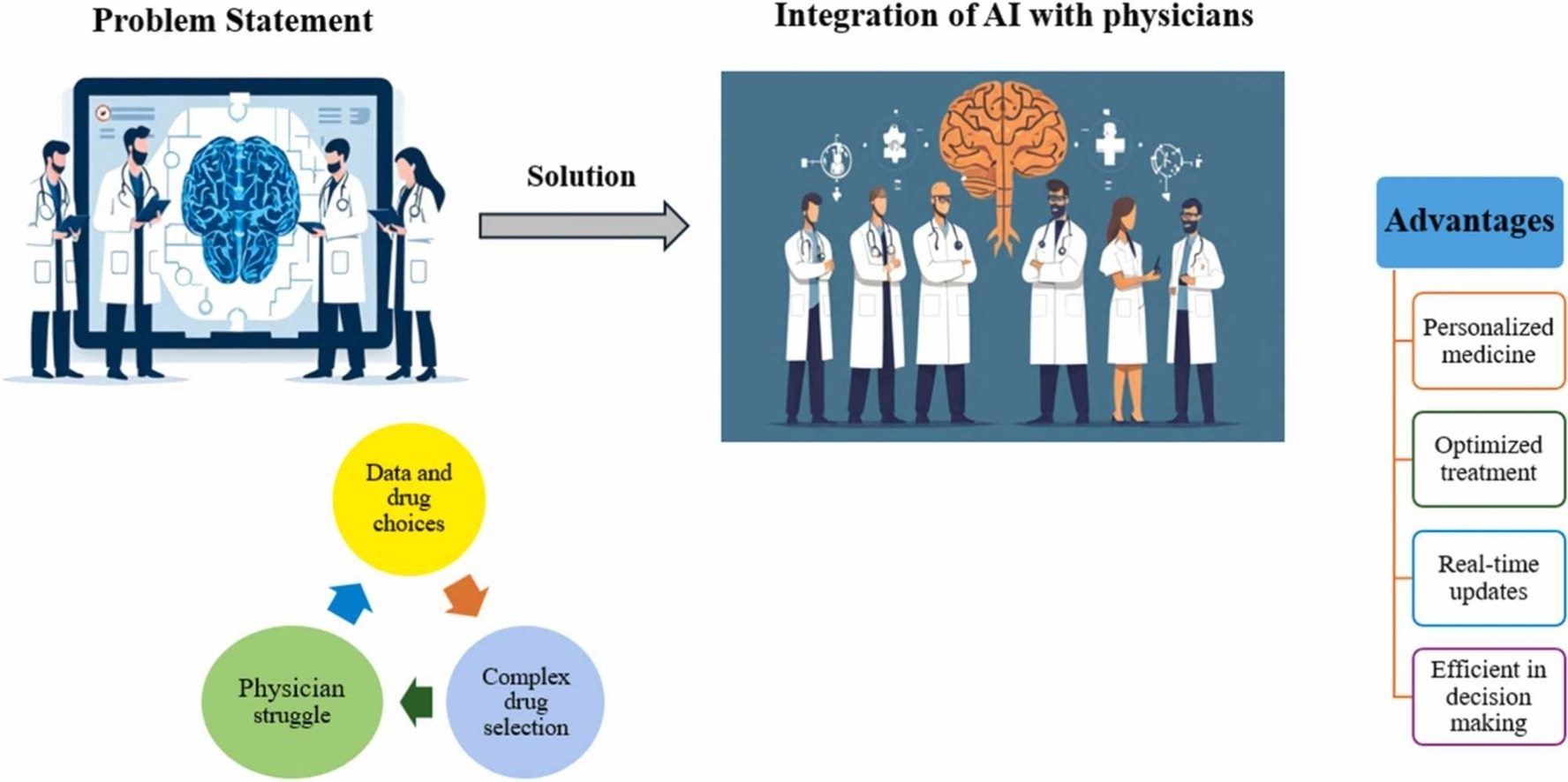
Researchers are also exploring AI's role in drug discovery, where machine learning (ML) models can analyze vast datasets to identify promising compounds and accelerate early-stage research. This could help reduce the time and cost that are required to develop new therapies for a range of diseases.
Another area attracting significant attention is predictive and preventive healthcare. By analyzing electronic health records, genetic information and data from wearable devices, AI systems may be able to identify disease risks before symptoms become severe. Researchers are already investigating how AI can help detect early indicators of conditions such as Alzheimer’s, Parkinson’s and cardiovascular disorders.
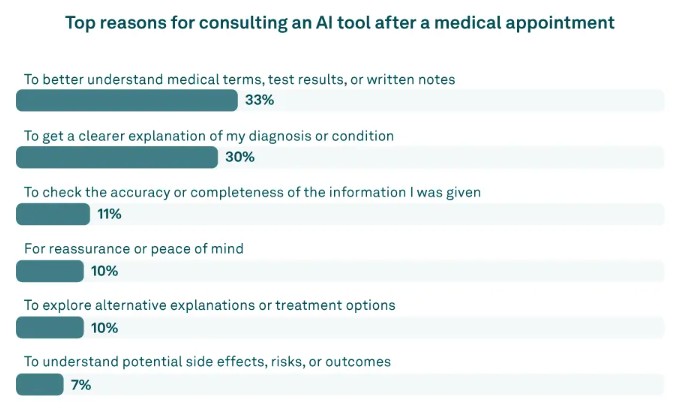
AI's influence is also extending beyond hospitals and physicians' offices. Patients are increasingly using generative AI to better understand diagnoses, interpret medical information and seek second opinions after appointments.
Recent research from Tebra suggests these tools are already changing how many people engage with healthcare. The report found that 69% of patients have used AI to obtain a second opinion, while 29% said information from an AI tool influenced whether they followed their healthcare provider's recommendations. At the same time, 79% said they do not tell their healthcare provider they consulted AI.
The growing use of wearable technology further expands these possibilities. Continuous streams of health data from smartwatches, sensors and other devices can provide insights that would be difficult to capture during occasional doctor visits. AI systems can analyze these data patterns, helping clinicians monitor patients over time and identify concerning changes earlier.

"AI can organize information and flag what's relevant, but the call — and the responsibility for it — belongs with the physician."
- Jeremy Lawson
Founder & CEO, Salynt
Despite the excitement surrounding medical AI, few experts believe physicians will become obsolete. While newer systems can reason through complex cases, analyze large volumes of information and generate diagnostic recommendations, they are still prone to errors and hallucinations that can have serious consequences in a clinical setting.
Questions of accountability also remain unresolved. If an AI system contributes to an incorrect diagnosis or treatment recommendation, responsibility ultimately falls on healthcare providers and institutions rather than the technology itself. Regulators are still developing frameworks for evaluating and governing AI systems that directly influence patient care, making physician oversight essential.
There are also important aspects of medicine that extend beyond diagnosis and data analysis. Patients often need reassurance, empathy and guidance when facing difficult medical decisions. Building trust, understanding individual circumstances and communicating complex information remain fundamentally human responsibilities.
Researchers also continue to warn that AI systems can reinforce existing social and cultural biases present in their training data. In healthcare, that raises concerns that models could unintentionally perpetuate disparities affecting diagnosis, treatment recommendations and patient interactions if they are not carefully evaluated across diverse patient populations.
This is one reason many healthcare leaders, including Topol, view AI as a tool for augmenting physicians rather than replacing them. The most promising future may be one in which AI handles portions of information gathering, analysis and clinical investigation, allowing doctors to spend more time focusing on patient care and decision-making.
Lawson also stressed that even as AI becomes more capable, the physician remains central to every clinical decision.
"AI can organize information and flag what's relevant, but the call — and the responsibility for it — belongs with the physician. The goal is to give clinicians more time to apply their expertise, not to replace it." Human expertise, accountability and compassion will remain essential, even as AI becomes a more active participant in modern medicine.
While today's AI-assisted medical systems primarily serve as diagnostic and research aids, future generations could become integrated members of the care team, helping physicians analyze information, coordinate investigations and identify treatment options.
One potential benefit is helping healthcare systems deliver more timely and personalized care. AI is unlikely to replace doctors, but it may help healthcare professionals manage larger patient populations by reducing administrative burdens and accelerating portions of the diagnostic process.
Lawson foresees the next major opportunity in combining diagnostic imaging with broader sources of clinical information, including patient risk profiles, hospital capacity and population health data. Bringing these data sources together, he believes, could shorten the path to diagnosis and reveal patterns that individual systems might miss.
Researchers also envision a future in which diseases are detected earlier and treatments become more personalized. By analyzing medical records, genetic information, wearable device data and other health indicators, AI systems could help identify risks before symptoms become severe and recommend interventions tailored to individual patients.
At the same time, significant questions remain. Healthcare organizations, regulators and technology providers must address issues involving accuracy, accountability, privacy and liability before AI can be trusted with broader clinical responsibilities. Establishing clear governance frameworks will be critical as these systems become more deeply embedded in patient care.