Feature
Guide
Is AI Making Your Organization More Productive or More Dependent?


Generative AI’s arrival transformed the technology landscape almost overnight. The launch of ChatGPT in late 2022 turned a long-developing technology into a mainstream business priority, forcing organizations across industries to formulate new strategies and re-allocate budgets.
Quantum computing, which uses quantum-mechanical phenomena such as superposition and entanglement to perform certain calculations, appears unlikely to follow the same trajectory despite years of investment and growing enterprise interest.
Experts say the technology is advancing steadily, and enterprises are already experimenting with real-world applications. Unlike GenAI, however, quantum computing is expected to emerge through a series of industry-specific breakthroughs rather than a single defining moment that captures public attention.
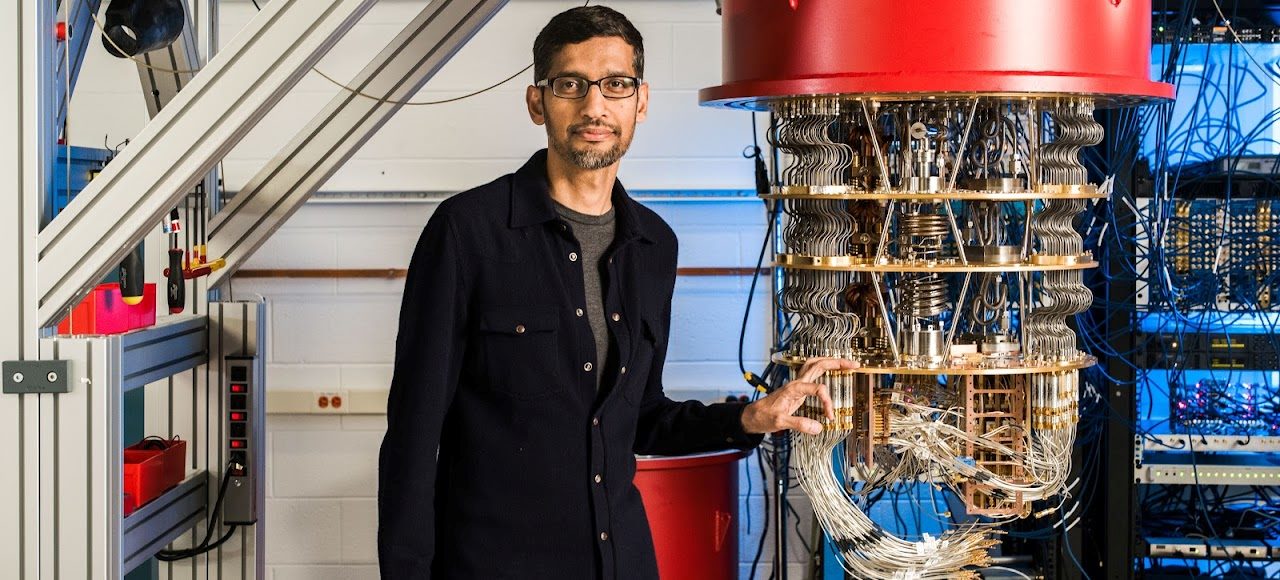
“I don’t really expect a ChatGPT kind of moment, because for that you must have a broader impact across a broader base,” said Gaurav Gupta, VP analyst at Gartner.
From his perspective, quantum computing could have a more transformational impact because of the types of use cases it may enable. “These could include understanding atomic molecular interactions, how molecules bind to each other, helping discovery of new materials, better fertilizers or drug discovery."
Instead of becoming a ubiquitous tool used by millions of knowledge workers, quantum computing is likely to remain focused on solving highly specialized business and scientific challenges.
Related Article: As Quantum Hardware Advances, the Real-World Stakes Are Getting Clearer
“Not everyone will have a problem that’s relevant to quantum computing.”
- Heather West
Sr. Research Manager, Global Quantum Lead, IDC
Part of the challenge lies in the technology itself: While GenAI became broadly accessible through a simple conversational interface, quantum computing is being developed for specific classes of computational problems that classical systems struggle to solve efficiently.
Heather West, senior research manager and global quantum computing research lead at IDC, said the industry is simultaneously developing several different types of quantum systems, each optimized for different workloads:
That diversity means there is unlikely to be a single breakthrough product that suddenly places quantum computing in the hands of everyday users. “We’re talking about a totally different animal,” West said. “Not everyone will have a problem that’s relevant to quantum computing.”
She contrasted the technology with ChatGPT, which immediately provided value to a broad audience for tasks such as writing, research and content generation. “It’s definitely not going to be that on day X, everybody in the world will be using a quantum computer."
That does not mean enterprises are standing still — organizations are investing in quantum initiatives to identify future use cases, develop internal expertise and gain experience with emerging platforms.
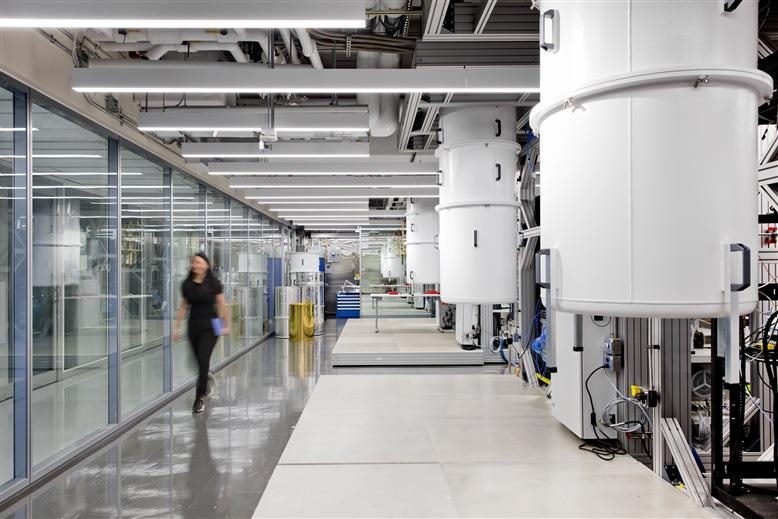
Among the industries most actively exploring quantum computing are:
Gupta explained that optimization was initially viewed as quantum computing’s primary commercial opportunity. “It will also be useful for a lot of optimization use cases, where you have to go through a number of iterations, a million iterations, and classical is just too slow. For example, in supply chain logistics problems, routing problems and financial portfolios.”
At the same time, researchers are exploring quantum computing’s potential to model complex molecular interactions that could accelerate drug development and materials discovery. Gupta said these capabilities could eventually unlock breakthroughs that remain impossible using conventional computing methods.
“It’s about what quantum can do which classical just cannot do,” he said.
Although vendors increasingly talk about “quantum advantage,” many of today’s achievements remain experimental demonstrations rather than production-scale business solutions.
“We have started hearing quantum vendors say that we are in this quantum advantage era,” Gupta said. “But that’s more at demonstration level.”
Current systems can demonstrate capabilities that exceed classical simulations in limited scenarios, but significant challenges remain around scaling, reliability and error correction. “You still require quantum computing to scale to a certain point so that you can actually solve a business problem,” Gupta said.

West emphasized that the industry’s challenge extends beyond hardware.
“For a very long time, a lot of the focus has been on the hardware specifically,” she noted. “Now we’re starting to see more development on the software side of things.”
As software platforms mature, enterprises are expected to gain access to easier-to-use development environments, reusable algorithms and higher-level interfaces that reduce the need for deep quantum expertise. That evolution could ultimately make quantum systems more accessible to business users, even if they never interact directly with the underlying technology.
Related Article: What Enterprise AI Experts Say Comes Before the Breakthrough
“Quantum computing’s future may ultimately be measured not by how many people use it, but by the problems it solves that classical computing never could.”
- Gaurav Guptar
VP analyst, Gartner
While widespread adoption may still be years away, Gupta and West argued that organizations should not wait for quantum computing to become fully mature before getting involved.
Many enterprises are already conducting experiments, training employees and evaluating where quantum capabilities could eventually create competitive advantages. West noted that IBM alone is working with more than 100 enterprises at various stages of quantum adoption and experimentation.
The goal today is less about immediate returns and more about preparedness.
Gupta expects fault-tolerant quantum systems to emerge around the end of the decade, creating opportunities for increasingly sophisticated applications over time.
When quantum computing finally delivers its defining breakthrough, it may not resemble ChatGPT at all. Instead of millions of users suddenly adopting a new tool, the technology’s impact could arrive through a breakthrough battery material, a novel drug discovery platform or a supply chain optimization capability that fundamentally changes how businesses operate.
“Quantum computing’s future may ultimately be measured not by how many people use it, but by the problems it solves that classical computing never could,” Gupta said.