News Analysis
Guide
Is AI Making Your Organization More Productive or More Dependent?


Jeff Bezos steps back into an operational leadership role as co-CEO of Project Prometheus, a new AI startup focused on building "AI for the physical economy."
The company has already raised billions, hired talent from OpenAI, DeepMind, Meta and other major research labs and is being co-led by former Google X executive Vik Bajaj.

While Prometheus employees operate under strict confidentiality agreements, Bezos has recently come out with some of the most concrete details on the startup to date: the company is developing AI tools that will help engineers design and manufacture physical products easier and faster.
Bezos has yet to delve into specifics, but says what Prometheus has accomplished so far is "really quite remarkable."
Prometheus does not yet maintain a public website, and the company has not acknowledged its long-term goals. Still, the AI startup appears to be building the kind of team typically seen inside advanced research labs. More than one hundred employees have reportedly joined from Meta, OpenAI, DeepMind and similar industry heavyweights.
The skill sets represented include computational science, robotics, AI systems engineering and real-world operations, all of which point toward a company designed for large industrial problems rather than digital products.
Related Article: OpenAI: Hallucinations Aren’t a Glitch — They’re a Feature
Despite continued secrecy, investor interest in Prometheus appears to be accelerating.
The startup initially launched in November of 2025 with $6.2 billion in funding.
By May 2026, Project Prometheus had reached a valuation of roughly $38 billion following an additional $10 billion in funding — a good indication of how aggressively investors are banking on AI systems designed for industrial and physical-world applications, despite the company’s limited public footprint.
Now, the company has raised an additional $12 billion, pushing the company's valuation to $41 billion. According to Bezos, this new funding round will help Prometheus acquire more compute. Investors in this latest round include Bezos, Arch Venture Partners, BlackRock, DST Global, Goldman Sachs and JPMorgan Chase.
Bezos and Bajaj are reportedly in talks to raise an additional $100 billion, which would allow the startup to invest in or acquire companies with technology Prometheus could benefit from.
“All societal wealth is driven by invention," Bezos told the NY Times. He pointed to the plow and the steam engine, which both increased wealth. “What Prometheus seeks to do is to offer a set of tools that dramatically accelerates that invention loop.”
The startup plans to create new engineering tools that can improve the design and manufacture of nearly any device, including computers, automobiles, spacecraft and other physical products. As such, Prometheus could support other Bezos-backed companies, including space tech company Blue Origin. In fact, David Limp, the CEO of Blue Origin, is part of the Prometheus board of directors.
"Any company that is building sophisticated devices — like rocket engines — would benefit greatly from this kind of technology," said Bezos.
Still, Bezos offered a measured response for Project Prometheus's future outlook, saying "There are many years of grinding ahead of us to fulfill the vision we have.”
When Project Prometheus was first announced, the first question many analysts asked was simple: Why would Jeff Bezos appoint himself as a full-time startup CEO after stepping away from Amazon?
Given his long history with logistics, automation and space technology, an AI effort focused on manufacturing is a logical direction for Bezos. He is also known for building systems that marry software with hardware, from Amazon’s warehouse robots and logistics infrastructure to the rockets at Blue Origin. Project Prometheus appears to be his attempt to bring that integrated thinking to the AI boom.

Bezos is joined by co-founder and co-chief executive Vik Bajaj, a physicist and chemist who previously worked alongside Google co-founder Sergey Brin at Google X, the research group known for projects like Wing and the self-driving technology that later became Waymo.
In 2015 Bajaj helped launch Verily, Alphabet’s life sciences research arm, and later co-founded Foresite Labs, which incubated startups focused on AI and data science. He recently stepped away from that role to focus full-time on Project Prometheus, according to multiple people familiar with the matter.
For Bezos, this is an opportunity to shape the next major phase of AI: Systems that move beyond conversational interfaces and begin operating within physical environments, industrial systems and autonomous workflows. This isn’t new for Bezos, who last year invested in Physical Intelligence, a startup that is applying AI to robots. He has often favored long-horizon projects, investing years before commercial payoff emerges, a pattern consistent with the early profile of Prometheus.
Prometheus is expected to explore large-scale, robotics-driven scientific experimentation similar to the approach taken by Periodic Labs, which is developing a Northern California facility where robots will conduct high-volume scientific trials to train AI on physical experimentation.
| Consumer-Focused AI | Physical-World AI |
|---|---|
| Chatbots and digital assistants | Industrial and operational systems |
| Text and conversational interaction | Interaction with physical environments |
| User engagement and productivity | Infrastructure optimization and automation |
| Software-centric deployment | Hardware and robotics integration |
| Low-risk conversational errors | Higher real-world safety risks |
| Cloud-based inference | Edge and embedded AI systems |
| Rapid consumer iteration cycles | Longer industrial testing and validation cycles |
While much of the current AI market remains focused on conversational interfaces and digital assistants, Project Prometheus appears aligned with a different category of AI development centered on operational systems, robotics and physical-world environments. While conversational AI remains the dominant public interface for generative AI, industrial systems, robotics and infrastructure automation may represent a far larger long-term economic opportunity.
Related Article: Moats or Myths? How OpenAI, Anthropic and Google Plan to Stay on Top
While most of the AI attention is still on chatbots, digital assistants and agentic systems, Prometheus appears to be targeting manufacturing, logistics, robotics and large-scale engineering, raising the technical bar far above traditional software AI. Even incremental improvements in these areas could produce huge economic effects across global supply chains and operational systems.
The startup's emergence comes as several new AI labs form outside Big Tech — often staffed by former researchers from OpenAI, Google and Meta — who are pursuing more specialized or long-term scientific work.
If Prometheus succeeds, it could influence how major industries adopt AI and reshape competitive dynamics among tech companies moving into automation, infrastructure and physical operations. That said, it still faces significant uncertainties. Building AI that operates in the physical world is a far harder technical challenge than developing software-based language models and brings far heavier regulatory oversight.
If chatbot interfaces become increasingly commoditized, competitive advantage may shift toward businesses capable of embedding AI into physical infrastructure, industrial systems and autonomous operational environments.
Recent reports suggest Bezos may also be exploring investments in industries that could benefit from advances in industrial AI and automation. If accurate, that would point to ambitions extending beyond AI development itself and toward broader influence over the sectors those technologies may transform.
Bezos himself has routinely framed AI as a foundational infrastructure layer rather than a standalone product category. In 2024, he described AI as “a horizontal enabling layer,” comparing it to electricity and computing because of its potential to influence nearly every industry and operational system.
The AI startup has shared few details, making it difficult to assess how its approach differs from other efforts in physical-world AI. Prometheus is still in its earliest phase, and its significance will depend on whether Bezos and Bajaj can turn an ambitious vision for industrial-scale AI into systems that work reliably outside controlled environments.
Traditional AI mostly operates on text, images and digital data — think ChatGPT. Physical-economy AI is more complicated, as it must handle:
Instead of reasoning via just language, physical AI needs to reason about materials, physics, systems engineering and real-time control.
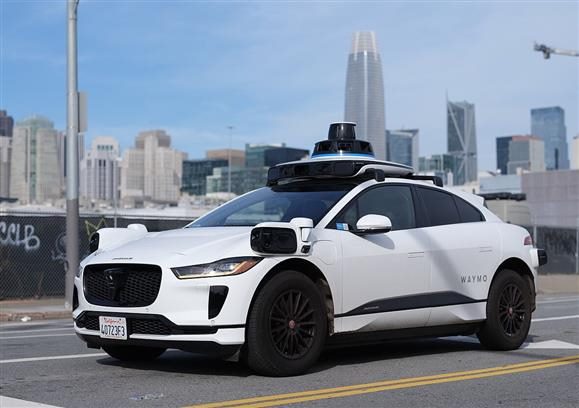
An example of physical-economy AI is Waymo's autonomous cars, which need to navigate unpredictable road conditions, route closures, traffic patterns, crossing pedestrians and more.
Two reasons:
The timing is right for labs like Prometheus to go after domains Big Tech has largely ignored.
Yes, but they’re fragmented. Competitors include:
No one has consolidated industrial AI into a unified research lab the way OpenAI consolidated generative AI, which is why Prometheus' strategy stands out.
Key risks include: