News
Research Report
The AI Transformation 100: Concrete Ideas for Fixing How We Work

Anthropic is turning Claude Design from a viral AI prototyping tool into a more enterprise-ready product built around brand compliance, code integration and cross-platform workflows.
The company announced Wednesday a major update to Claude Design, two months after the product launched in April as a research preview. The original release drew more than 1 million users in its first week, according to the company, but quickly ran into a practical problem: heavy token consumption.
A PCWorld reviewer reported using roughly 80% of a weekly Claude Pro allowance in about 25 minutes while generating three versions of a single webpage prototype. The issue raised questions about whether Claude Design could become a regular work tool for individuals and small teams, rather than a flashy experiment users tried once.
Anthropic’s latest release attempts to address that problem while moving Claude Design deeper into enterprise workflows. The update introduces design system imports, a bidirectional Claude Code integration, expanded export options, a direct editing interface and reduced average token use.
The most significant update is a rebuilt design system import feature. Users can now bring one or multiple design systems into Claude Design through GitHub repositories, design files or direct uploads.
Once imported, Claude Design can generate assets using those components, check the work against the approved design system and make corrections before the user sees the final output. For enterprise customers, Anthropic is also adding an admin role that can approve a standard system and restrict changes.
That shift changes the product’s role. Claude Design’s first version gave users a blank canvas where Claude could generate polished visual prototypes from prompts. The results could be useful for ideation, but they were not necessarily aligned with an organization’s brand rules.
The new version is designed to work from a company’s actual components, including typography, buttons, color tokens, spacing rules and interface patterns. For large organizations with strict brand standards, that could make Claude Design more relevant to procurement and governance conversations.
Related Article: How Anthropic Taught Claude to Build Full Apps — and Grade Its Own Work
| Feature | What It Does | Why It Matters |
|---|---|---|
| Design system imports | Pulls components from GitHub, files or uploads | Helps keep AI-generated assets on brand |
| Admin controls | Lets organizations approve and lock a standard system | Supports enterprise governance |
| Claude Code sync | Moves work between design and code workflows | Reduces design-to-engineering handoff friction |
| Direct editing | Lets users drag, resize and align elements | Cuts down on unnecessary model turns |
| New export partners | Sends work to tools such as Adobe, Canva, Vercel and Wix | Makes Claude Design a creative starting point |
Anthropic is also connecting Claude Design more tightly with Claude Code. Users can now run /design-sync in Claude Code to bring a local codebase’s design system into Claude Design. That means prototypes can start from real production components instead of approximate mockups.
When a design is ready, it can move back into Claude Code, where the implementation continues from the same context. Developers can also use a /design command inside Claude Code to create, edit and sync design projects without leaving the terminal.
The integration takes aim at a long-running source of software development friction: the handoff between designers and engineers. Design tools have improved specifications, annotations and code snippets, but final implementations often diverge from the original mockups. That gap creates additional rounds of visual QA, redlines and rework.
Anthropic’s argument is that the gap can shrink when design and code are connected through the same AI system and the same component library. Instead of passing a static mockup to engineering, Claude Design and Claude Code can work from shared context.
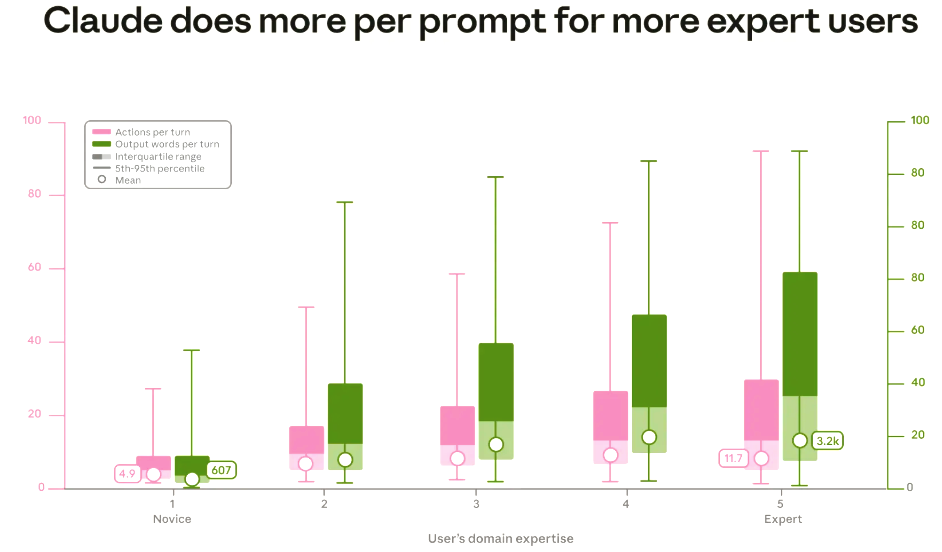
The timing also connects to Anthropic’s recent research on Claude Code usage. The company said its analysis of roughly 400,000 sessions found that domain expertise, rather than coding ability alone, was a major factor in successful outcomes. As such, Claude’s value may come from helping people who understand product and user experience move closer to working software without requiring them to become traditional engineers.
The update also addresses one of Claude Design’s biggest early pain points: usage limits.
Anthropic says Claude Design now shares usage limits with chat, Claude Cowork and Claude Code, rather than relying on a separate, smaller pool. The company also says it has reduced the average token consumption per turn while maintaining output quality and lowering error rates.
That could give users more room to work, though generative design remains a token-intensive use case. Creating a design variation requires the model to reason through layout, responsiveness, copy, colors, typography, spacing and structure. That workload is more complex than many chat-based tasks.
For Team and Enterprise customers with larger usage limits, token consumption may be less of an issue. For Pro users, the economics could remain more constrained, even with efficiency improvements.
The new editor may help. Users can now make basic visual adjustments — such as dragging, resizing and aligning elements — without asking Claude to regenerate an entire asset. That gives teams more control while reducing the number of model turns needed for small changes.
Related Article: xAI Launches Grok Build 0.1 Coding Model in Beta
Anthropic is also expanding where Claude Design work can go. The product now exports to:
A user might generate a branded first draft in Claude Design, polish it in Canva, collaborate on it in Miro, turn it into a presentation in Gamma or deploy it through Vercel. That hub-style strategy may help Anthropic compete with emerging open-source alternatives. Open Design, a community-built project tracked by Augment Code, has gained traction with local-first operation, support for multiple coding agents and a large library of skills and design systems.
Anthropic does not appear to be matching that approach through self-hosting or model flexibility. Instead, it is leaning into formal integrations with widely used creative, development and deployment platforms.
Michelle Hawley is Editorial Director of VKTR, where she covers AI disruption, enterprise technology and the leaders shaping what comes next. Connect with Michelle Hawley: 
