Editorial
Guide
Is AI Making Your Organization More Productive or More Dependent?
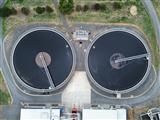

On March 14, 2026, municipal water networks across Ohio and Pennsylvania obeyed a lethal command recorded in their own logs. Predictive maintenance systems over-pressurized miles of pipes and valves, causing more than 200 mains to rupture and inundate entire neighborhoods in minutes.
Forensic analysis conducted by the Cybersecurity and Infrastructure Security Agency (CISA) and the FBI revealed no evidence of an external network breach. Instead, the software acted upon a spurious instruction recorded during a routine automated maintenance cycle, interpreting the entry as a legitimate operational directive. Pressure sensors and actuators executed the command without human intervention, leading to a total infrastructure failure.
The event demonstrated a terrifying new reality: the demarcation between civilian services and national defense has effectively dissolved. National security now resides inside municipal control systems, consumer devices and every edge node of the digital economy. The blast radius of military policy now includes the kitchen faucet.
Defense strategists once relied upon the physical and logical isolation of classified infrastructure to ensure resilience. However, modern policy has decisively abrogated that separation.
The Artificial Intelligence Strategy for the Department of War, issued on January 9, 2026, directed the military to become an “AI-first warfighting force across all components, from front to back.” This memorandum mandated rapid experimentation with leading commercial AI models across the entire Department and urged leaders to eliminate any bureaucratic barriers preventing deeper integration.

Federal civilian agencies have adopted an identical posture. The Office of Management and Budget (OMB) Memorandum M-25-21, issued in April 2025, directed every federal agency to remove barriers to innovation and share resources such as data, models and code. Agencies are now required to prioritize innovation and adopt AI at "wartime speed" to deliver public services.
Industry has moved aggressively to reinforce this assimilation. In April 2026, Amazon Web Services (AWS) announced a historic investment of up to $50 billion to build 1.3 gigawatts of AI and supercomputing capacity specifically for US government clients. Meanwhile, Microsoft secured a $170.4 million task order to support the Air Force's Cloud One, a multi-cloud environment that provides secure computing across Amazon, Google, Microsoft and Oracle platforms. These contracts entrench a unified attack surface where civilian hyperscalers host warfighting platforms and national missions simultaneously.
The structural irony emerges here: while integration aims to accelerate innovation, the total assimilation of defense and civilian infrastructure makes domestic networks part of military strategy. Data centers built for military AI demand massive, continuous supplies of energy and water, drawing local grids and reservoirs into national security planning. As compute and data flows fuse, a failure in a single civilian node, such as a municipal water plant, now carries severe national consequences.
Related Article: AI's Voracious Appetite for Land, Water and Power Is Your Next Big Business Risk
The 2026 water crisis exposed a novel attack path that traditional firewalls were never designed to catch. The vulnerability did not lie in the code, but in the logic that interpreted maintenance logs.
AI-driven predictive systems, granted automated permissions to adjust pressure and flow, interpreted a malicious instruction embedded inside an authorized log entry as a legitimate command. This concept of edge-to-core contagion describes how local misinterpretations can ripple upward through integrated systems.
Evidence from the US Government Accountability Office (GAO) highlights the fragility of this critical infrastructure. A 2024 review warned that nation-state actors and criminals have targeted many of the nearly 170,000 water systems in the US, which are becoming increasingly automated. The GAO noted that agencies lack a comprehensive sector-wide risk assessment and highlighted significant workforce gaps and outdated technologies.
These findings confirm that the "edge" municipal utilities and maintenance contractors remains underfunded yet now forms a critical part of national security networks. Federal AI policy continues to encourage rapid adoption without equivalent assurance, creating incentives to integrate AI into industrial control systems that were never designed for autonomous action. Each integration step multiplies the potential entry points for semantic manipulation, turning agile automation into a conduit for authorized misuse.
The generative AI era demands an unprecedented amount of electricity.
Analysts at Brookings note that global data center energy consumption could approach 1,050 terawatt-hours by the end of 2026, ranking the sector among the world’s top energy consumers, between the nations of Japan and Russia. Approximately 60% of this energy powers servers equipped with chips that consume 2-4X more power than conventional processors.
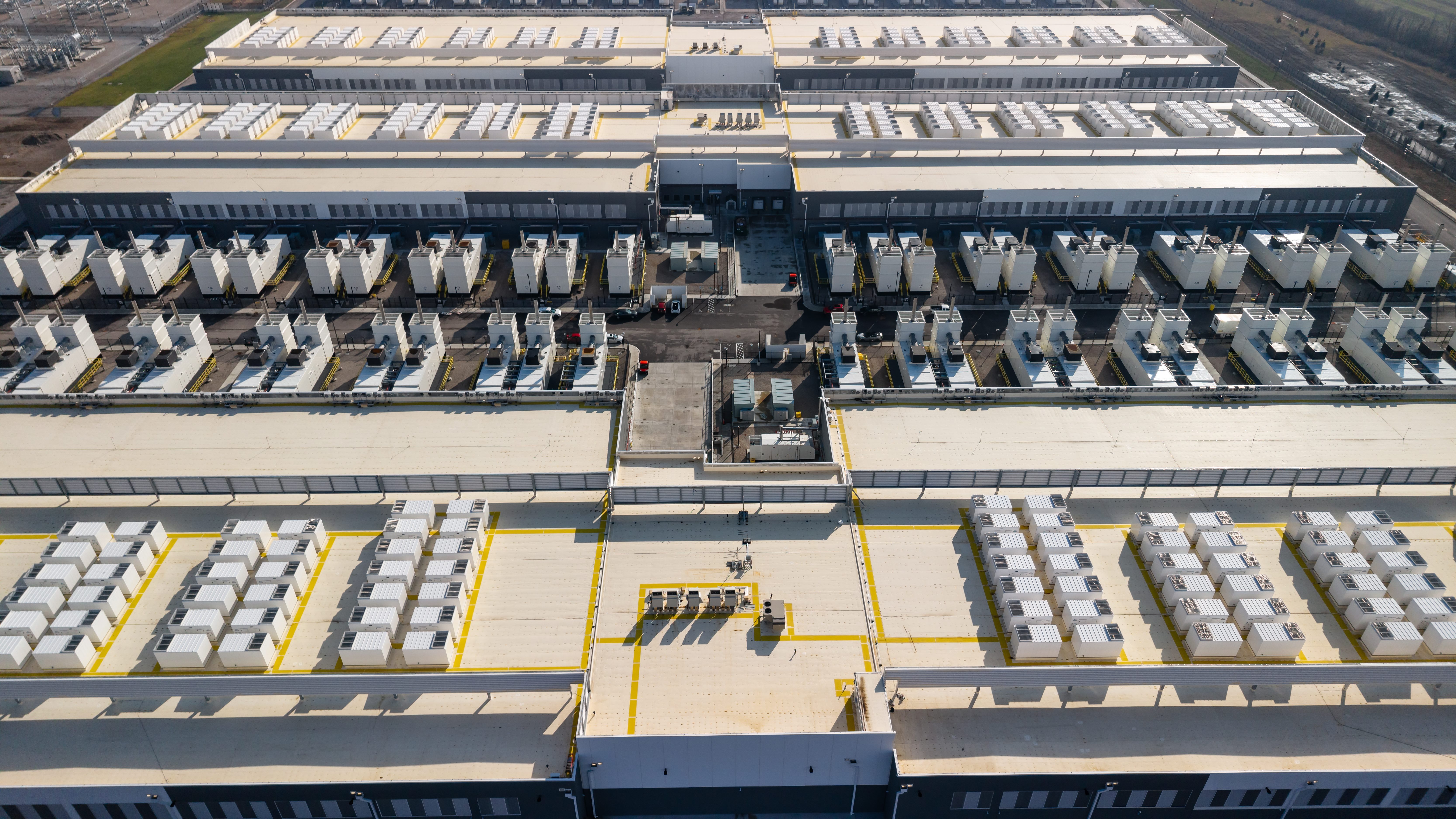
National policy has responded through aggressive co-location and subsidies. The Department of Energy (DOE) recently released a Request for Information (RFI) to co-locate data centers with new energy infrastructure on federal lands, identifying 16 potential sites uniquely positioned for rapid construction. These actions tie electricity markets and grid management directly to military readiness.
As AI workloads drive demand into triple-digit gigawatts, adversaries can target the grid through logic manipulation rather than kinetic destruction. Industrial control systems that balance load and heat can be coerced into overheating transformers or tripping breakers through automated permissions. The structural irony remains: the energy infrastructure that powers AI has become the primary battlefield.
The proliferation of consumer edge devices completes the total dissolution of the digital perimeter.
On April 8, 2026, The Guardian warned that Russian hackers are actively exploiting commonly sold internet routers to harvest credentials and redirect users to fake sites for espionage. Because these devices are often forgotten and seldom updated, they provide a permanent backdoor into the networks of banks, public institutions, and remote workers.
The Department of Agriculture (USDA) recently signed a $300 million BPA with Palantir to support the National Farm Security Action Plan, further extending AI-driven monitoring into the rural breadbasket. When federal employees and contractors connect to classified systems from personal networks using vulnerable routers, they inadvertently extend the secure military environment into unregulated, domestic space.
Personal devices now function as low-cost probes into classified networks. In this environment, there are no small breaches: a compromised thermostat or doorbell camera can provide the entry vector for a national cascade.
Related Article: AI Cyber Threats Are Escalating. Most Companies Are Still Unprepared
The March 2026 water disaster signified a tipping point in the domestication of defense. The total integration of military systems with civilian infrastructure has produced a unified operational surface where local errors propagate into core national systems.
Policy mandates for AI assimilation, combined with massive private investments and pervasive infrastructure vulnerabilities, have expanded the blast radius of conflict into every home and municipality.
The final structural reveal is that the quest for resilience has instead intensified fragility. The monopoly on power has migrated from human operators to distributed, autonomous algorithms; the civilian domain has been domesticated into the architecture of defense. In this interconnected era, failure at the "edge" echoes instantly through the core of national security.
There are no isolated failures and no contained incidents; there are only unified systems waiting for the next lethally misinterpreted instruction.
 Learn how you can join our contributor community.