News
Guide
Is AI Making Your Organization More Productive or More Dependent?

Maritime nuclear startup Bluecore Energy said Tuesday it raised $10 million in an oversubscribed pre-seed round to build small modular reactors (SMRs) on floating barges, targeting ports and nearby infrastructure, including AI data centers.
The round was led by Slauson & Co. Bluecore was founded seven months ago by Kofi Asante, a former Uber Freight executive. Additional investors include Harlem Capital, Precursor Ventures, Ripple co-founder Chris Larsen and actor Kevin Hart's HartBeat Ventures, along with several angel investors.
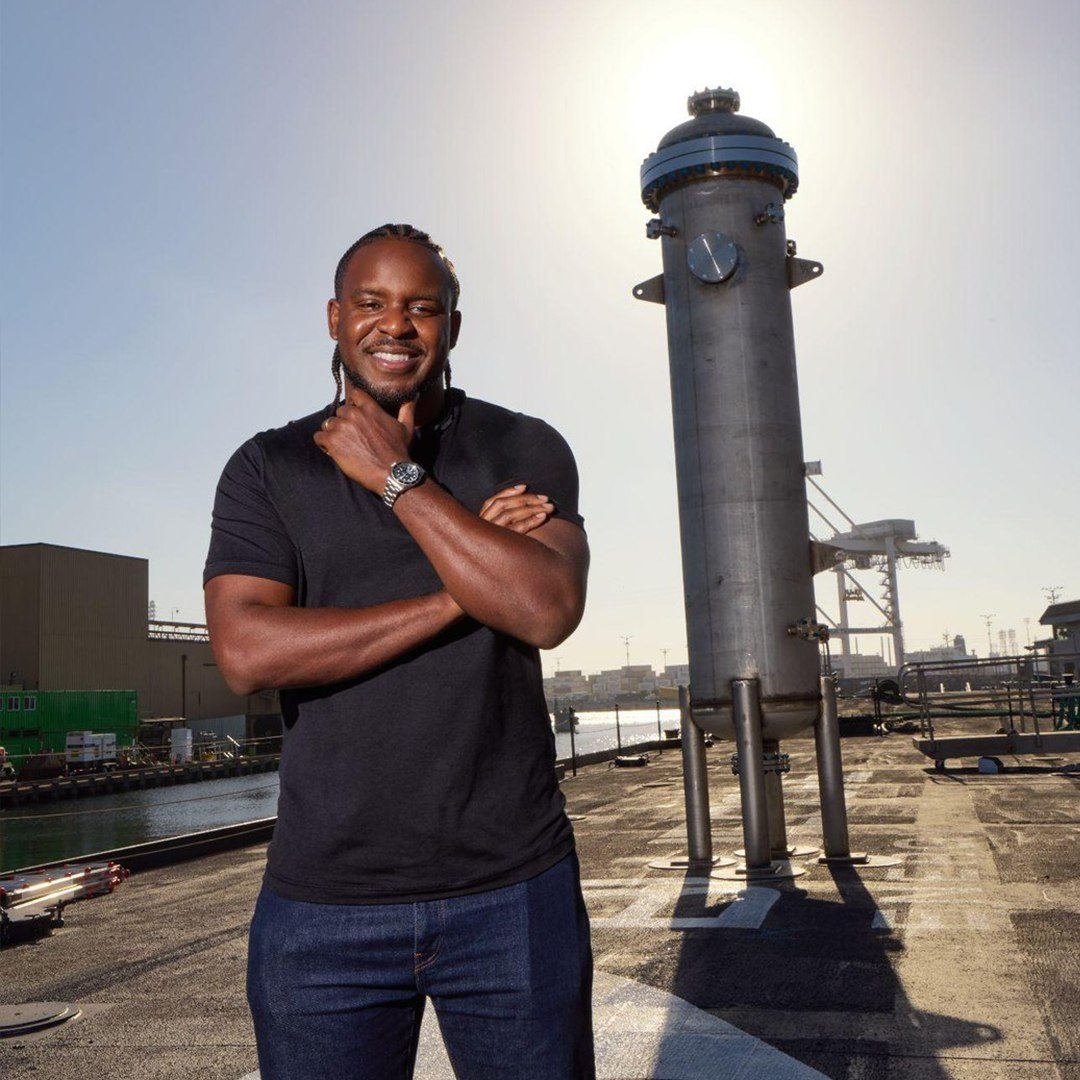
According to Asante, the barge-mounted reactors use a closed-loop, water-cooled system. Each barge is designed to power the equivalent of roughly 15,000 homes or scale to meet the energy needs of a major port. The barges can be relocated by ship, reducing transport-related emissions to zero.
"With a production line of small modular reactors that can be rapidly deployed on water, there is a pathway to provide clean energy to the majority of the country."
- Kofi Asante
Founder & CEO, Bluecore Energy
Bluecore is developing an initial 10-megawatt electric reactor designed to operate aboard a floating energy barge. Rather than requiring customers to wait years for new transmission lines or land-based generation facilities, the company plans to move the barge to a port or other waterfront location where power is needed.
The reactor is being designed to run for years on a single fuel load, potentially reducing the need for frequent refueling and supporting continuous power generation. Bluecore’s first application is stationary electricity production, but the company ultimately plans to adapt the same underlying technology for cargo ship propulsion.
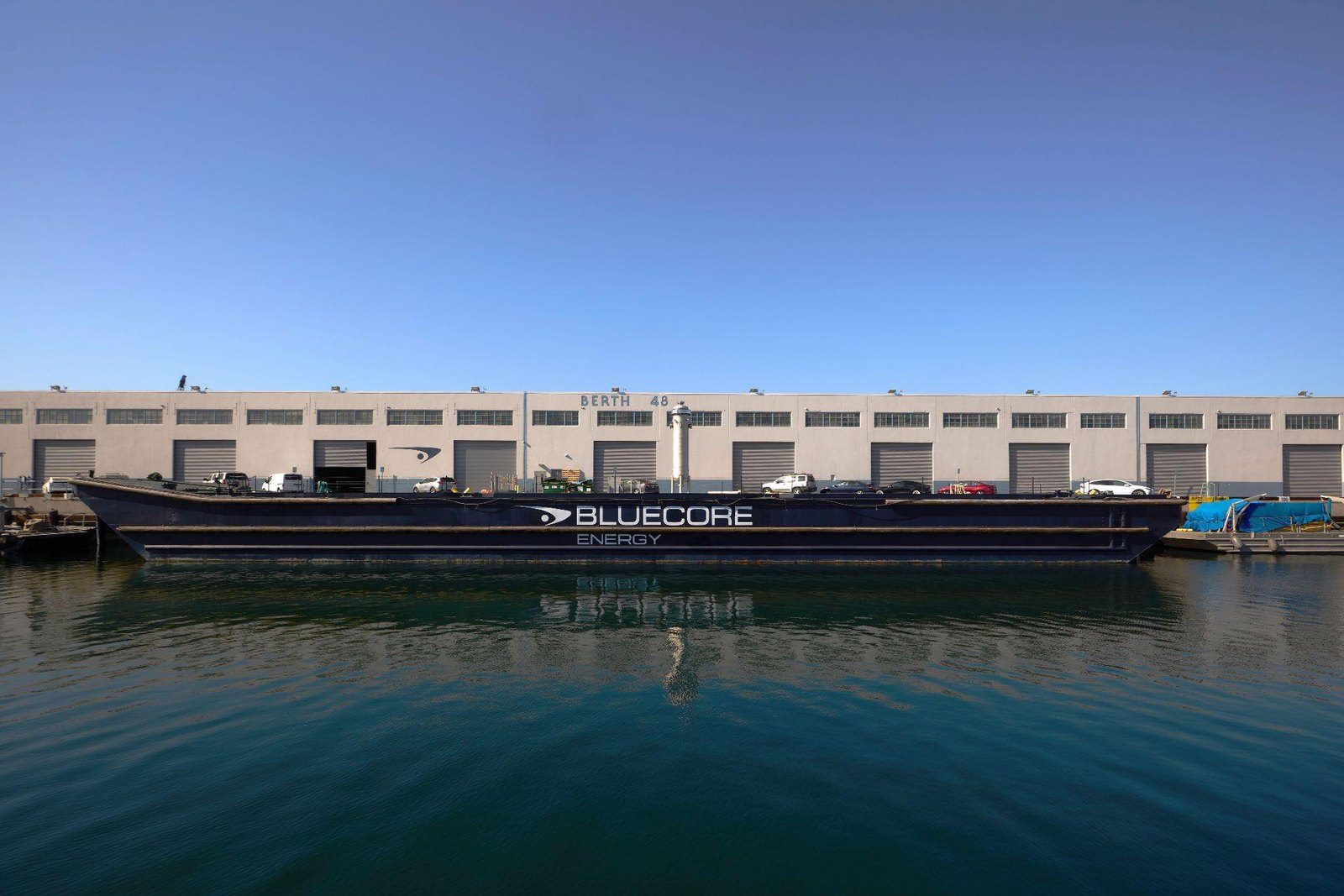
The company has already delivered its first barge and an electric test reactor to its Port of Long Beach headquarters, where it is developing components and working through engineering, regulatory, maritime classification and commercialization requirements.
Safety measures are being built around a defense-in-depth model rather than a single protective system. Bluecore said its current design includes multiple physical barriers between the nuclear fuel and the environment, redundant shutdown systems, passive safety features and water-based cooling.
Bluecore emerged “from stealth” on Tuesday, with the distinction of being the first SMR company headquartered inside a major US port. The company had quietly filed a Form D with the SEC on April 6, 2026, naming LMNT Ventures as an early participant.
Additional participants in the round included Harlem Capital Partners, Precursor Ventures, LMNT Ventures, Visible Hands VC, Karman Ventures, Capital Factory, Share VC, X&, Markham Ventures and HartBeat Ventures, plus angels from Tesla, Uber, Amazon and Google.
Bluecore is developing a 10-megawatt water-cooled SMR mounted on floating barges to power ports, grid-constrained infrastructure and eventually cargo ships. The approach aligns with a broader industry trend of nuclear-powered data centers as hyperscalers seek carbon-free baseload power.
The company's talent stack is especially notable. Its engineering team draws from SpaceX, Blue Origin, Northrop Grumman, Toyota and Uber, complemented by former US Navy nuclear submarine officers and an NRC licensing advisor.