Feature
Research Report
The AI Transformation 100: Concrete Ideas for Fixing How We Work


While much of the concern about data center sustainability is focused on power, observers are getting more worried about the amount of water they use, primarily for cooling.
Of course, to figure out the scale of the problem, it’s important to understand how much water we’re talking about. But getting exact figures is challenging. Here are some:
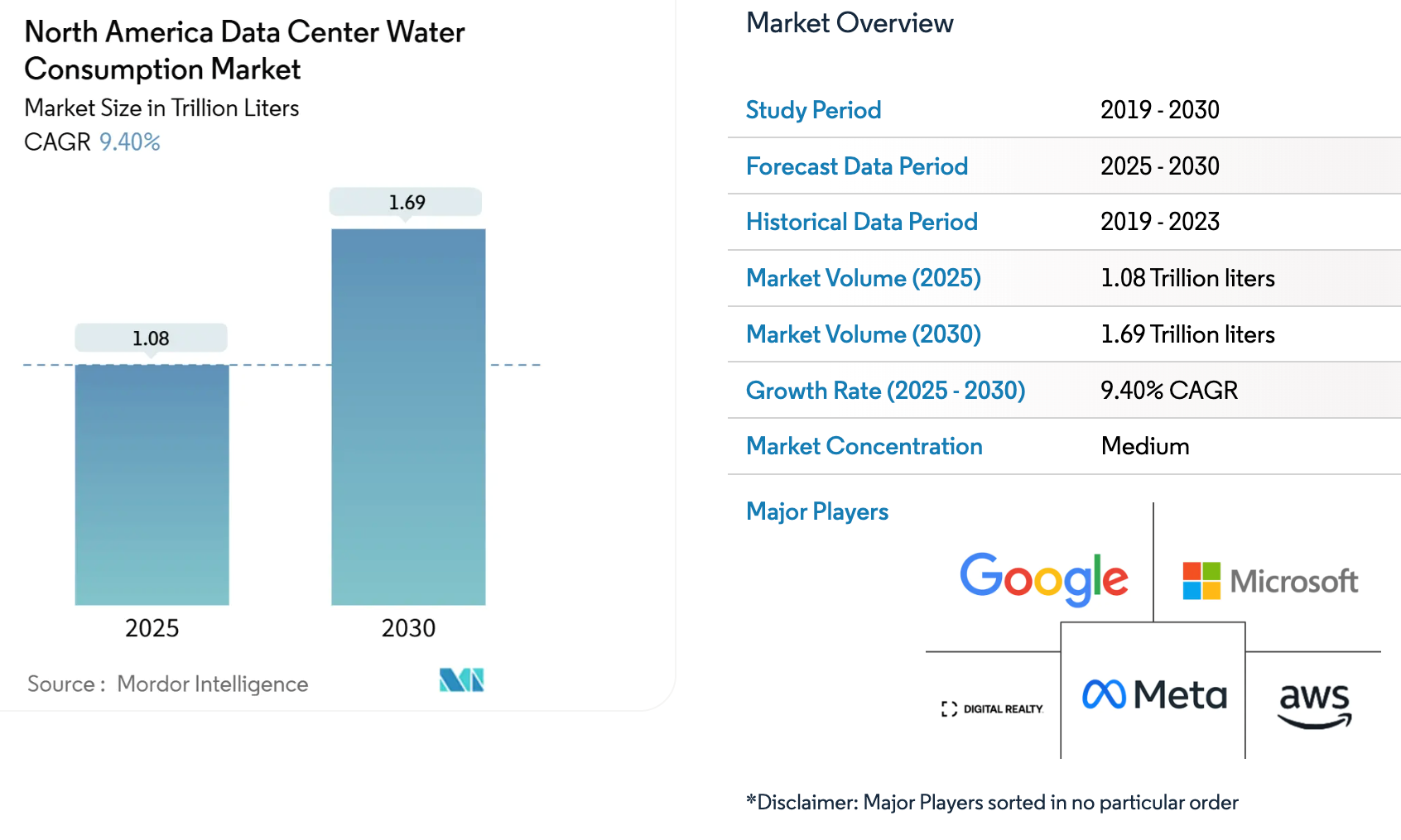
| North American data centers used 1.08 trillion liters of water in 2025 — roughly equivalent to the annual demands of New York City. That usage is expected to reach 1.69 trillion liters by 2030. (Mordor Intelligence) |
|---|
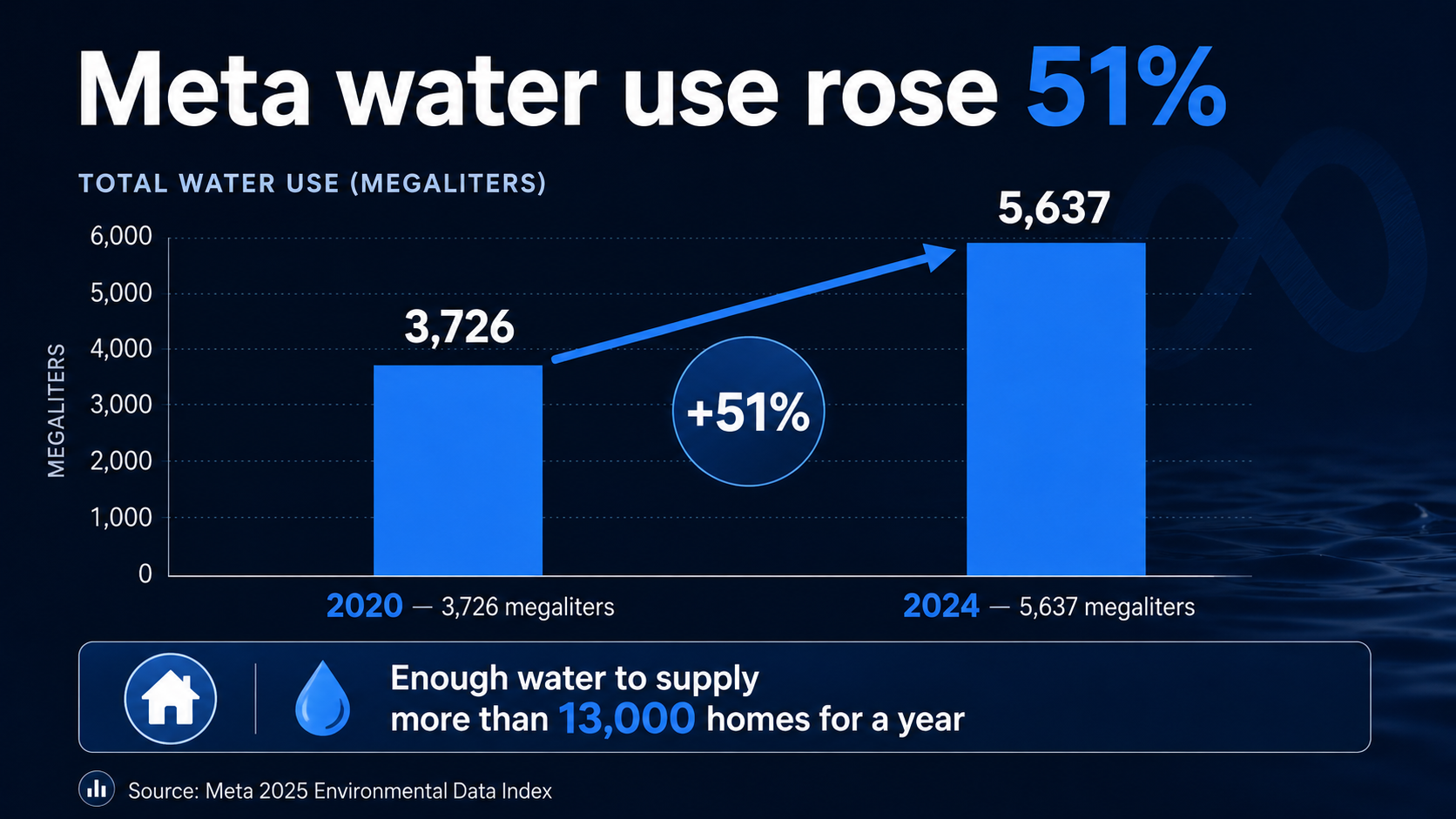
| Meta’s total water usage rose 51%, from 3,726 megaliters in 2020 to 5,637 megaliters in 2024 — enough water to supply more than 13,000 homes for a year. (Meta 2025 Report) |
|---|
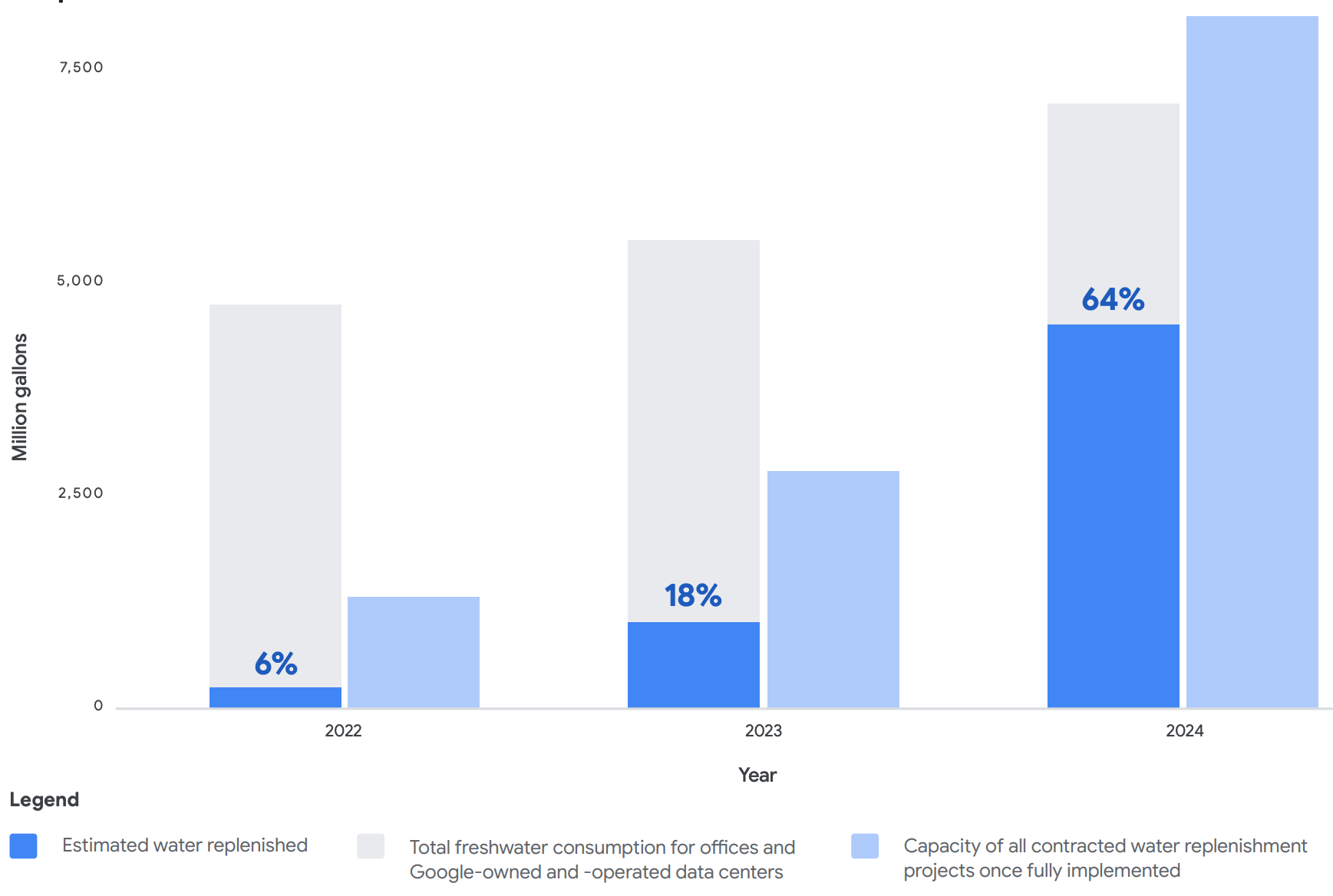
| Google's data centers consumed 8.1 billion gallons of water in 2024, excluding any data centers operated by third parties — enough to irrigate 54 golf courses annually. (Google 2025 Report) |
|---|
To be fair, data centers give back, too.
As seen in the chart above, Google reportedly replenished 4.5 billion gallons of water in 2024, around 64% of its freshwater consumption.
Amazon, which used 40.1 million liters of water in 2025, set a goal to reduce its water consumption by 20% by 2032.
In small communities in Idaho and Louisiana, Meta has invested millions in water and wastewater infrastructure that benefit those communities and even allow them to grow. The company also invests in water restoration projects in the watersheds where its data centers are located, pledging to be “water positive” — meaning, contributing more water than it uses overall — by 2030.
Related Article: AI's Voracious Appetite for Land, Water and Power Is Your Next Big Business Risk
Part of the reason it’s hard to determine how much water data centers plan to use is that data center operators stay tight-lipped.
Google, for example, won't reveal how much water it uses or plans to use for its data centers in The Dalles, Oregon. “Google asserted that information was a trade secret, though other Oregon public utilities routinely disclose companies’ water use,” noted The Oregonian. After a 13-month legal fight that involved suing the newspaper, the tech giant backed down and now reveals its past water use, though not its future water plans.
The same is true for other hyperscalers.
Meta's environmental report shows water usage for the sites it owns, but not ones that are leased or under construction. Similarly, Google's report shows data for the sites it owns and leases, but not for data centers operated by third parties. Microsoft's sustainability report includes total water usage, but not by site.
It’s the secrecy that’s more of an issue for residents. Data centers often cite competitive pressures as the reason they avoid putting their names on legal forms, work through shell companies and don’t reveal water use projections. Yet some citizens see this as a way to evade scrutiny, especially when the public officials they elect and pay sign nondisclosure agreements with those companies.
Organizations such as the NAACP have released playbooks with recommendations for citizens and communities on how to compel AI data centers to be developed responsibly, equitably and without causing environmental harm to black, brown and low-income communities, as well as providing community benefit agreement (CBAs) resources for data center buildouts. CBAs could include commitments to hire locally, establish funds to invest in communities and environmental and accountability protections.
Still, many people do not want a data center in their neighborhood, and not without good reason. According to data from the Pew Research Center, more Americans say data centers have a negative effect — on the environment, home energy costs and quality of life — than those who say they have a positive effect.
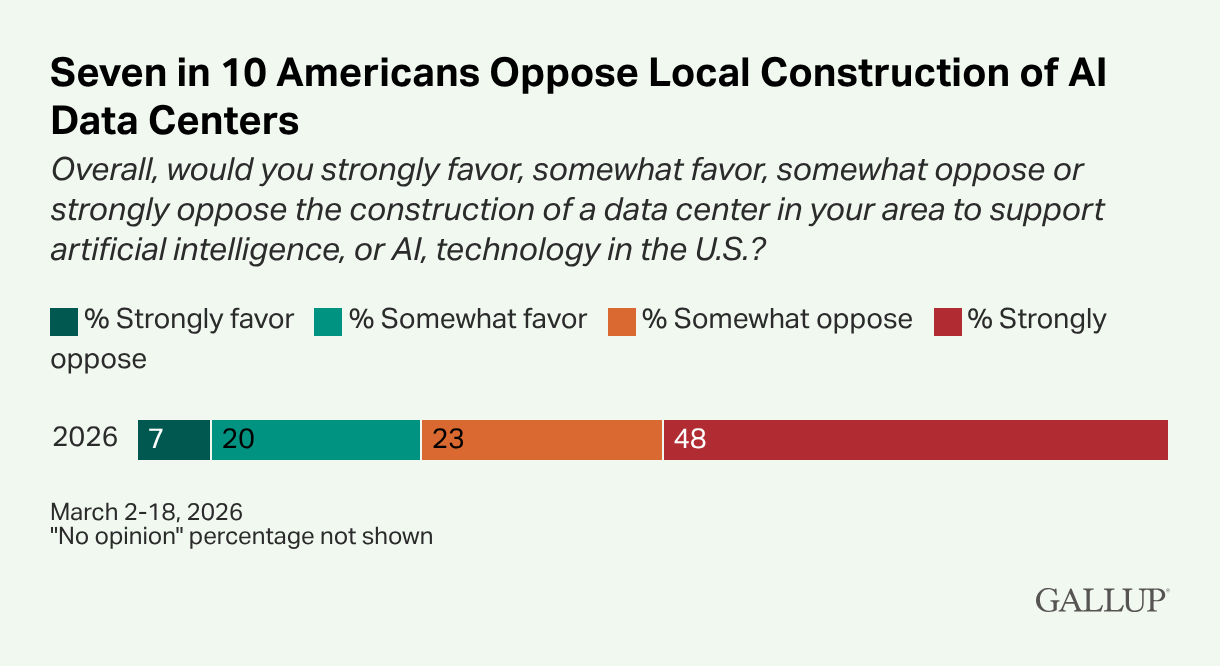
Additional research from Gallup found that 7 out of 10 Americans oppose the construction of data centers in their local area.
"...transparent reporting is essential for measuring progress, managing climate-related risk and holding [NVIDIA] accountable to its target.”
- Giovanna Eichner
Shareholder Advocate for Green Century
Even investors are objecting to data center secrecy.
Green Century Capital Management, an investment adviser to the Green Century Equity Fund, filed a shareholder proposal asking NVIDIA to disclose greenhouse gas emissions from use of its sold products. Taking this action would allow investors to better analyze risks and opportunities that may affect the value of the business and keep the company competitive with peers, the proposal noted.
“As AI adoption accelerates, use of sold product emissions likely makes up the majority and a growing part of NVIDIA’s climate footprint,” Giovanna Eichner, shareholder advocate for Green Century, told VKTR. “Since the company has committed to reducing these emissions by 2030, transparent reporting is essential for measuring progress, managing climate-related risk and holding the company accountable to its target.”
Green Century took this step due to a lack of response from NVIDIA, Eichner said. “We had several dialogues with NVIDIA to work toward an agreement, but the company failed to commit to a timeline for publishing emissions data or sharing additional, forward-looking details on how it intends to achieve its 2030 target,” she said. The resolution is expected to proceed to a shareholder vote at NVIDIA’s 2026 annual meeting of stockholders in June, she said.
The company is particularly interested in NVIDIA partly due to its outsized role in the AI data center market and also because it is not as forthcoming as some of its competitors about its emissions, Eichner said.
“NVIDIA controls the majority of the graphics processing unit market that fuels data center growth,” she explained. “As demand for these technologies accelerates, so does the energy consumption and broader environmental impact of their production and use. Given NVIDIA’s scale and influence, full disclosure of its environmental footprint allows investors, customers and the public to better evaluate the company’s exposure to climate-related risks and assess its sustainability strategy. NVIDIA trails its competitors in publishing the emissions associated with its products, and it has refused to commit to a timeline for disclosure despite already being behind.”
That said, Green Century is following other companies as well. “We are continuing to work with many companies to get better visibility into their progress and plans in the face of AI/Data center build-out,” said Eichner.
Related Article: Who Will Pay for AI's Power Buildout?
For their part, data center operators say they’re unfairly targeted.
“Collectively, the data center industry used significantly less water than other essential industries in 2025, including the food and beverage and semiconductor sectors,” said Dan Diorio, vice president of state policy for the Data Center Coalition.
According to the Joint Legislative Audit & Review Commission (JLARC) report for Virginia, which Diorio said was the world’s largest data center market, 83% of data centers use the same or less water than an average commercial office building.
A recent report from the Kyl Center for Water Policy at Arizona State University showed that data centers in Arizona are estimated to use less acre-feet of water than power generation, semiconductor manufacturing, sand & gravel mining, golf courses and beverage facilities.
Some data center operators also use cooling methods that require less water. Oracle described the primary choices operators have as similar to ones used to cool homes:
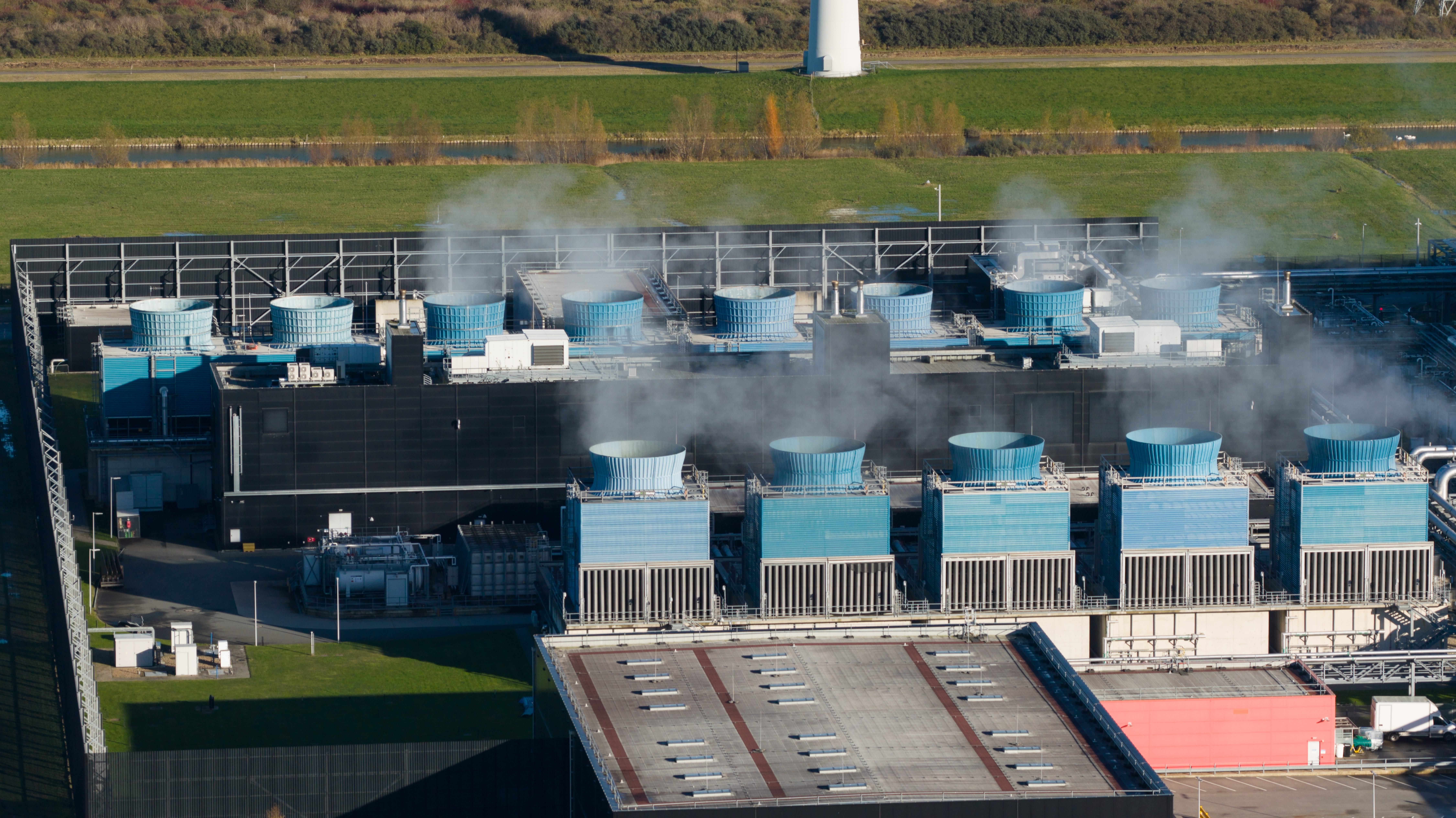
“We plan to deploy a variety of cooling methods like closed-loop cooling that do not rely on continuous consumption of potable water,” Travis Grizzel, architect for Oracle Cloud Infrastructure, wrote in a blog post. In particular, the company plans to use what it calls a direct-to-chip, closed-loop, non-evaporative design, which he equated to a car’s radiator fluid.
“The cooling loop is initially filled using water delivered via tankers and then it operates as a sealed, recirculating system,” Grizzel explained. “There is no evaporation, blowdown or continuous makeup water requirement. That is, day-to-day cooling doesn’t depend on adding water. Top-offs are rare and occur only under abnormal conditions.” The data center uses ongoing water only for the normal functions of an office building such as kitchens, bathrooms and break rooms, he said.
In the meantime, states are taking steps to conserve. A number, including Minnesota, Texas and Idaho, have passed laws restricting data centers’ ability to use water. If data center operators don’t address the issue themselves, regulators may make the choice for them.