News Analysis
Research Report
The AI Transformation 100: Concrete Ideas for Fixing How We Work
OpenAI president Greg Brockman said few people use agents due to excessive token consumption.
AI-powered devices, such as AR glasses, still haven't taken off.
Experts predict that access to Anthropic's Fable and Mythos models will return on July 1.
Held at the Commonwealth Club on the windy Embarcadero in San Francisco, the Big Technology AI Summit was a mix of intimate conversations, accelerated insights and pointed wit and commentary by host Alex Kantrowitz.
The organizing theme throughout was whether the latest AI moment was material or marketing. That moment being, of course, the US government's decision to block access to Anthropic's latest models, Fable and Mythos, via export controls. Access is still blocked, with no end in sight (although prediction market consensus has a July 1 prediction of return). Through the various conversations that touched on this theme throughout the day, there was enough back and forth that the answer felt unsatisfying in the right way:
Now the details.
Kantrowitz opened an infrastructure panel by calling this the biggest buildout of all time, bigger than cable, bigger than the railroads, $700 billion in capex this year. The reporters on the panel then spent twenty minutes on why a lot of that buildout still remains to be seen.
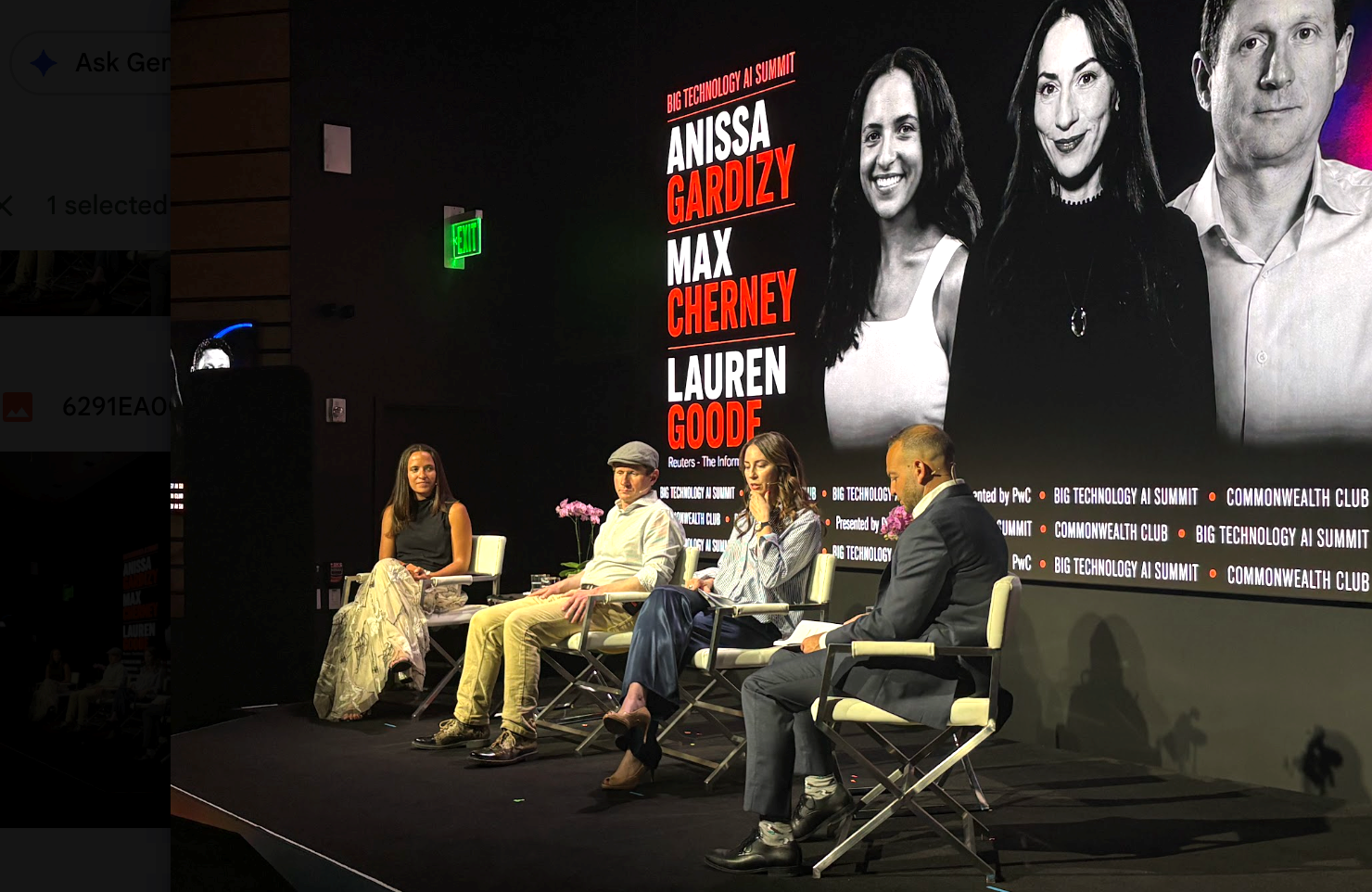
Anissa Gardizy of The Information, soon off to the Wall Street Journal, said she believes in the stat that only about half of announced data centers get built, and the real number is probably worse. "We're not going to see 10 gigawatts in the next couple of years," she said. Right now, so much of the AI market is priced as if the data centers appear, the chips arrive, the power contracts clear and local politics cooperate. Each of those is getting more difficult, especially as US public opinion continues to shift to the negative.
Max Cherney of Reuters added the geopolitical spin: the modern world has put a terrifying amount of its chip supply in Taiwan, and the contingency plan, in his telling, is basically that everyone is in trouble if China moves. Nobody really has a plan for that, which, this writer would argue, is why the US government seems so intent on propping up Intel.
Related Article: Who Will Pay for AI's Power Buildout?
Nvidia came out less as a bubble stock than as the company everyone is still trying to route around.
Lauren Goode of WIRED made the NVIDIA bull case: they have pivoted at the right moment again and again, and inference is the next battlefield. Gardizy called inference the real opening for competition and opportunity for Nvidia consolidation. Even 10% of the workload on non-Nvidia chips would represent a massive market.
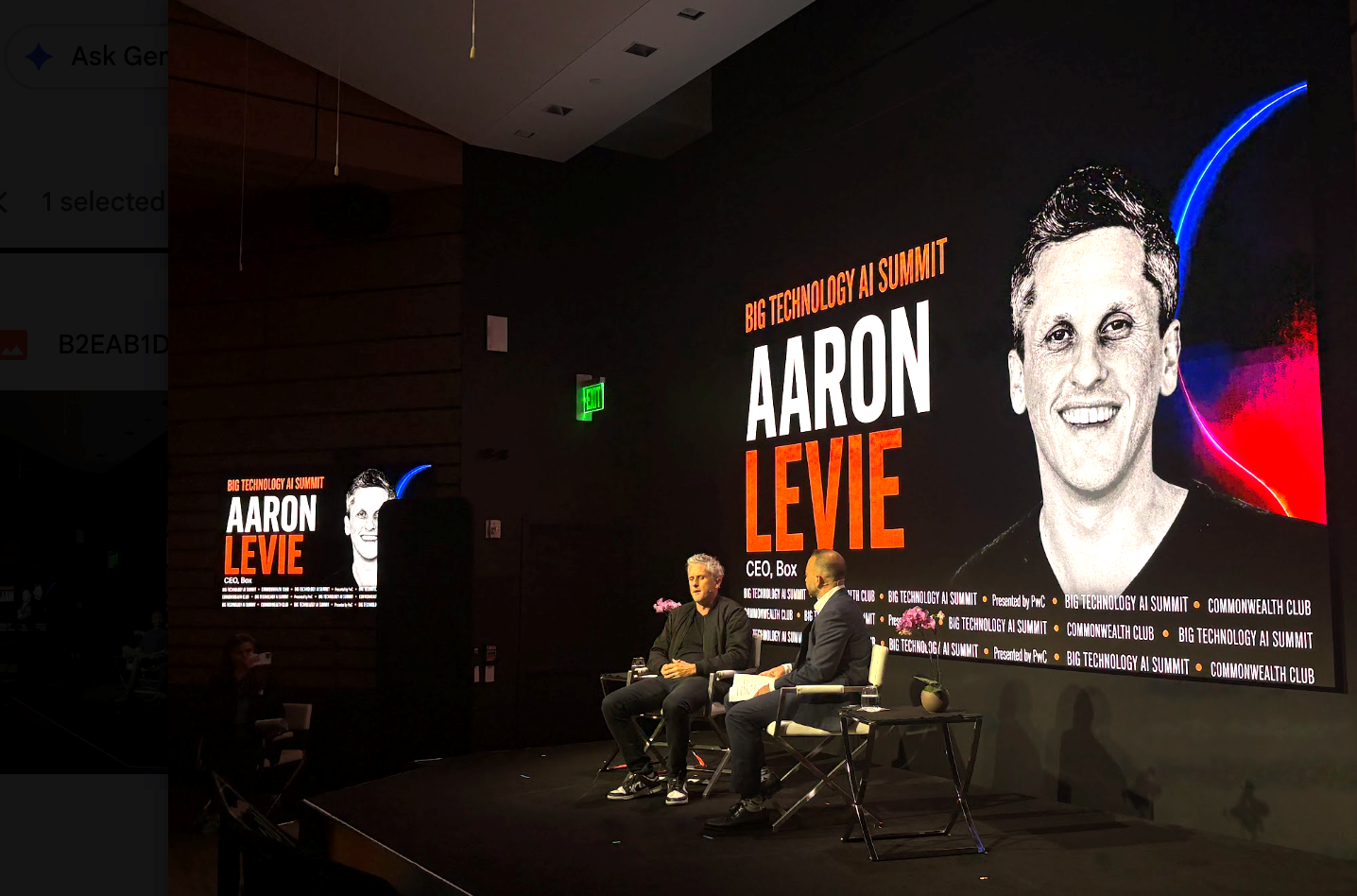
SpaceX's recent IPO was a bellwether and regular talking point. Krieger said he'd come around to data centers in space after talking to someone who launches things. Aaron Levie, CEO of Box, said he had SpaceX shares on Robinhood. "I wanted to be a part of the movement," he said, saying he was up about fifteen bucks a share. SpaceX continues to be volatile in the days after its IPO.
Greg Brockman, OpenAI's president, closed the day and gave compute its frame: We're heading into what he called a “compute-power economy,” where every provider sells out all its compute because there is never enough, and we've barely started. "The number of people using agents is tiny," he said. Most of OpenAI's reported billion users are still chatting, not running agents. Agents use orders of magnitude more tokens than standard chat, given Chain of Thought and other approaches.
Levie put the multiplier in numbers: Box's early AI work might have used 5,000 to 20,000 tokens per task; its latest deployed agents can chew through millions. AI keeps getting cheaper per unit of intelligence and more expensive in total, because solving one task lets you take on a harder one. "We're actually outrunning the efficiency improvements with our appetite," he said.
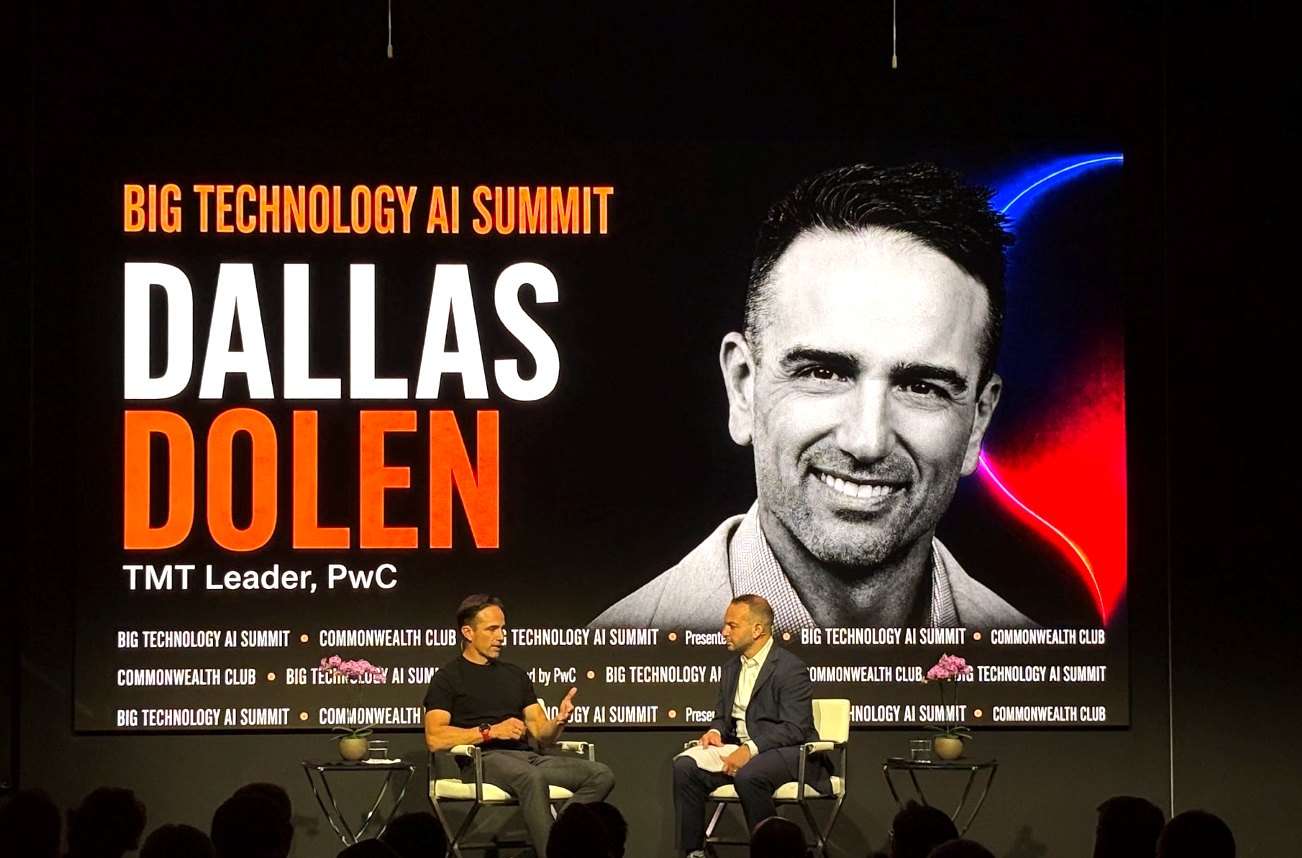
Dallas Dolen, the TMT leader at PwC, had the most useful session on what that appetite costs. The winners in AI, he said, won't be the biggest token spenders ("tokenmaxers") or the stingiest ("tokenminimizers"), it'll be whoever "outcome-maxes." Enterprises are building control planes, governance plus routing plus spend caps. "We're simply not best-suited driving a Lamborghini to go pick up milk." PwC has wired cheaper-model routing into the default for its 350,000 people, yet spend climbs as teams move into production.
Face computers (i.e., AR glasses) were the most-roasted topic of the day, and the roasting happened during the live Friday podcast between Kantrowitz and Ranjan Roy of Margins. Snap had just shown its new Specs listed at the wallet-emptying $2,195. Snap stock fell.
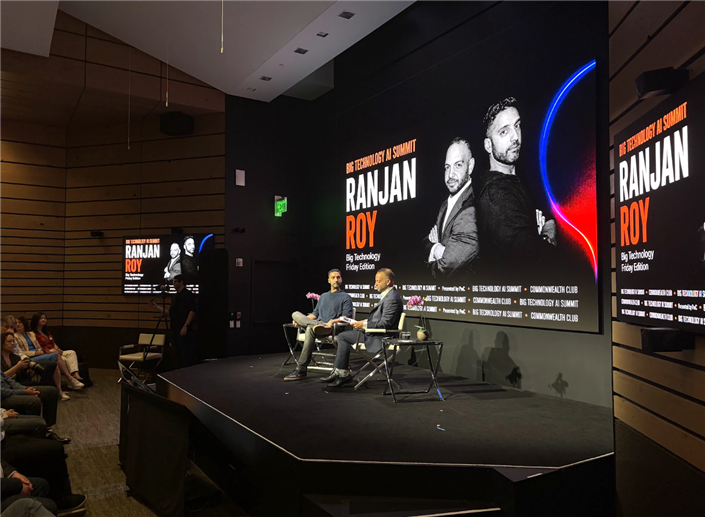
Cohost Roy, who has owned Snap Spectacles since 2021, defended the form factor while conceding nothing on the market has worked yet. The audience Q&A couldn't name a killer use. The best anyone landed on was a shared movie theater on a plane. AR is still "not yet," and the real AI device might be an iPhone with a Siri that works. Siri just got an upgrade, so maybe that is closer than people think.
Ultimately, the room's diagnosis was that Spiegel, an objectively handsome man, made the glasses look bad precisely because he's so cool to begin with. The proposed fix, deadpan: "Be less handsome." The glasses should probably be thinner.
Mike Krieger, co-founder of Instagram, and leader of Anthropic Labs, gave the closest thing to a product roadmap without naming a product: giving Claude “more agency and self-knowledge.”
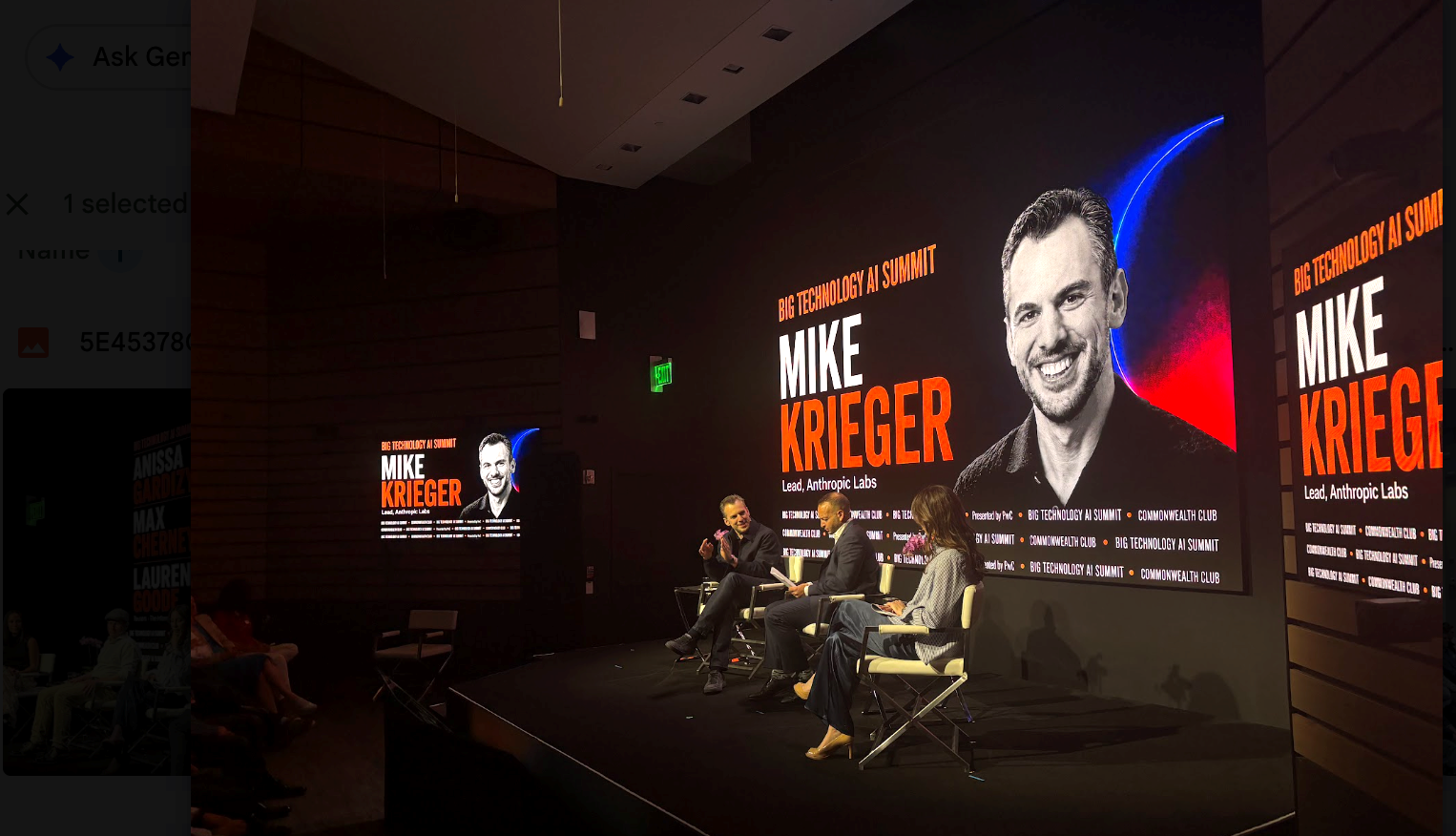
His example was that you often make a file with Claude, ask it to add the file to your project and it tells you to download the thing and drag it back in yourself. He wants that friction gone, and a model that knows enough about its own environment to reason through a stuck moment instead of stalling. The larger goal, in his phrase, is closing the gap between how people understand their work and how the work actually gets done. He also volunteered that Anthropic has a lot of product consolidation to do.
Brockman went all-in on health, highly personal for him given his previous comments of how AI helped his wife navigate health issues. He cited multiple examples of how AI helped with mystery diagnoses, the GitLab CEO beating back cancer by feeding aggressive diagnostics into ChatGPT and Rosie, an Australian dog whose owner ran her tumor mutations through AlphaFold, designed an mRNA vaccine, and watched the tumor shrink. About 230 million people use ChatGPT for health each week, he noted.
Related Article: The AI Device Wars Just Kicked Off In A Big Way
Every conversation bent toward the ban, and Alex Stamos had the sharpest read on it. The former Meta security chief, now chief product officer at Corridor, opened by noting he was bringing down the afternoon's average net worth "by a comma in isolation." His good humor turned when talking about the seriousness of the ban.
His verdict: Mythos is almost certainly the best bug-finding model in the world, and pulling it is an "own goal" by the United States. He commented that it is a notch ahead of Claude Opus 4.x and GPT-5.5, but not in the way the marketing and hype implied. For Stamos, the real line for cybersecurity and AI was crossed over a year ago, with the Opus 4 and GPT-5 generations, when models matched the best human bug-finders. There are a limited number of top end security engineers, but they are expensive and don’t scale. Models do.
Stamos used a metaphor that anchored the audience well. Mythos is the rare, expensive McLaren doing 200 miles per hour. The open Chinese models, Kimi K2 and GLM 5.2, are the commodity F-150 doing 80. The pedestrian is dead either way. So pulling the McLaren off the road mostly hurts defenders, who need to find every bug, while attackers need only one or two they can string together.
The worse own goal, he argued, was the political risk a Friday yank injected into American AI, with CISOs now signing contracts for open-weight backups, often Chinese models on US hosts. "We lost a war this weekend," he said, a line that cut sharper given the tactical ceasefire between the US and Iran that same weekend. "Let's not lose another."
In a parallel analysis earlier, Levie noted the deeper irony that Fable's removal was effective ammunition for multiple AI interest groups. For the AI-safety camp, this was close to a best-case scenario. You can't get Congress to vote a pause into law, so you need a single dramatic event to prove the government can press a button and stop a model. Now there's case law. Meanwhile accelerationists got their own proof in the same stroke, that models are getting stronger and that American AI is politically unreliable. Opposite positions, both supported.
Beyond the back and forth, several other points emerged.
As AI keeps advancing, that may be the question for everyone: what exactly do we have? Marketing or something material? Maybe the next Big Technology conference will have the answer.
Solon Teal is a product operations executive with a dynamic career spanning venture capitalism, startup innovation and design. He's a seasoned operator, serial entrepreneur, consultant on digital well-being for teenagers and an AI researcher, focusing on tool metacognition and practical theory. Teal began his career at Google, working cross functionally and cross vertically, and has worked with companies from inception to growth stage. He holds an M.B.A. and M.S. in design innovation and strategy from the Northwestern University Kellogg School of Management and a B.A. in history and government from Claremont McKenna College. Connect with Solon Teal: 
