Feature
Guide
Is AI Making Your Organization More Productive or More Dependent?


When ChatGPT launched in late 2022, OpenAI appeared to seize an early lead in generative AI. Millions of users adopted ChatGPT as their default entry point into large language models (LLMs), while businesses built AI strategies around the assumption that model leadership would remain relatively stable.
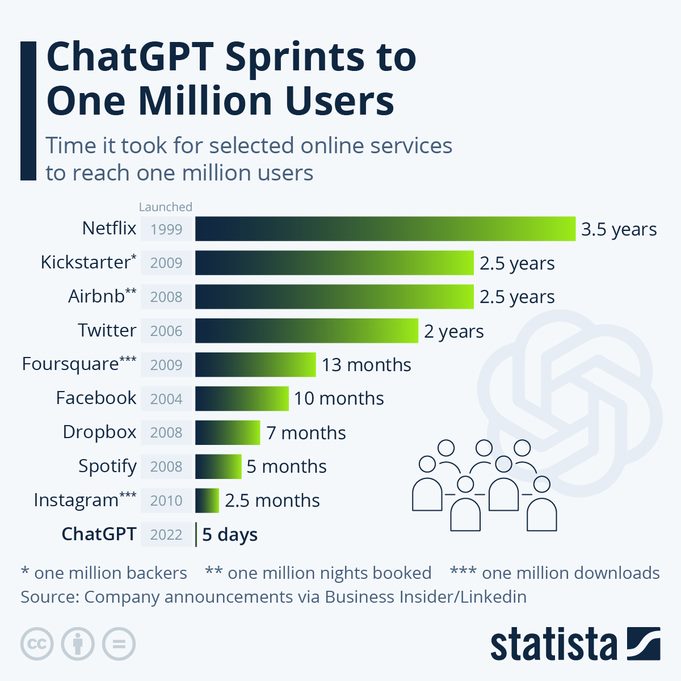
That assumption is already under pressure.
The LLM market has become far more fluid than early adoption patterns suggested. Users and businesses now move between ChatGPT, Claude, Gemini, open-source models and specialized AI tools based on cost, performance, reliability, workflow fit and trust.
OpenAI’s early lead gave ChatGPT scale, visibility and brand recognition. For a time, that looked like the beginning of a durable platform advantage.
Businesses integrated ChatGPT into workflows. Developers built around OpenAI’s APIs. Consumers treated ChatGPT as the default generative AI interface. But LLMs do not behave like traditional enterprise software platforms.
Many AI tools can be tested, replaced or supplemented with relatively little friction. A user can open a different browser tab. A developer can test another API. An enterprise can route certain workloads to a different provider without replacing its entire software stack.
That flexibility weakens traditional platform loyalty. Adoption does not automatically create lock-in.
The rapid rise of Anthropic, Google’s continued push into AI, Meta's open-source model strategy and the growing strength of open models all show how quickly the market can shift. Early dominance still matters, but it may not create the kind of moat once associated with earlier internet platforms.
Related Article: Ciao, Claude: Open-Source AI Closes the Gap on Proprietary Features
LLM loyalty is often transactional. Users tend to stay with a model only as long as it performs well for their specific needs — similar to a person dropping Hulu after binging the latest season of The Bear.
That creates several switching triggers:
| Switching Driver | Why It Matters |
|---|---|
| Performance changes | Users move when another model performs better at reasoning, coding, writing or multimodal tasks |
| Reliability issues | Outages, latency or degraded quality can push users toward alternatives |
| Pricing changes | Subscription costs, API prices and usage limits shape adoption |
| Trust concerns | Data handling, moderation, governance and public controversies affect perception |
| Rapid innovation | Model leadership can shift quickly as new releases arrive |
| Low switching friction | Users can often test or adopt alternatives with little disruption |
One example of this phenomenon is when OpenAI took up a deal with the Pentagon that Anthropic had walked away from due to safety concerns. The move left a sour taste in users' mouths and lead to 1.5 million users quickly making the switch from ChatGPT to Claude.
Additionally, as of April 2026, according to the Ramp AI Index, more businesses now use Anthropic than OpenAI for the first time.
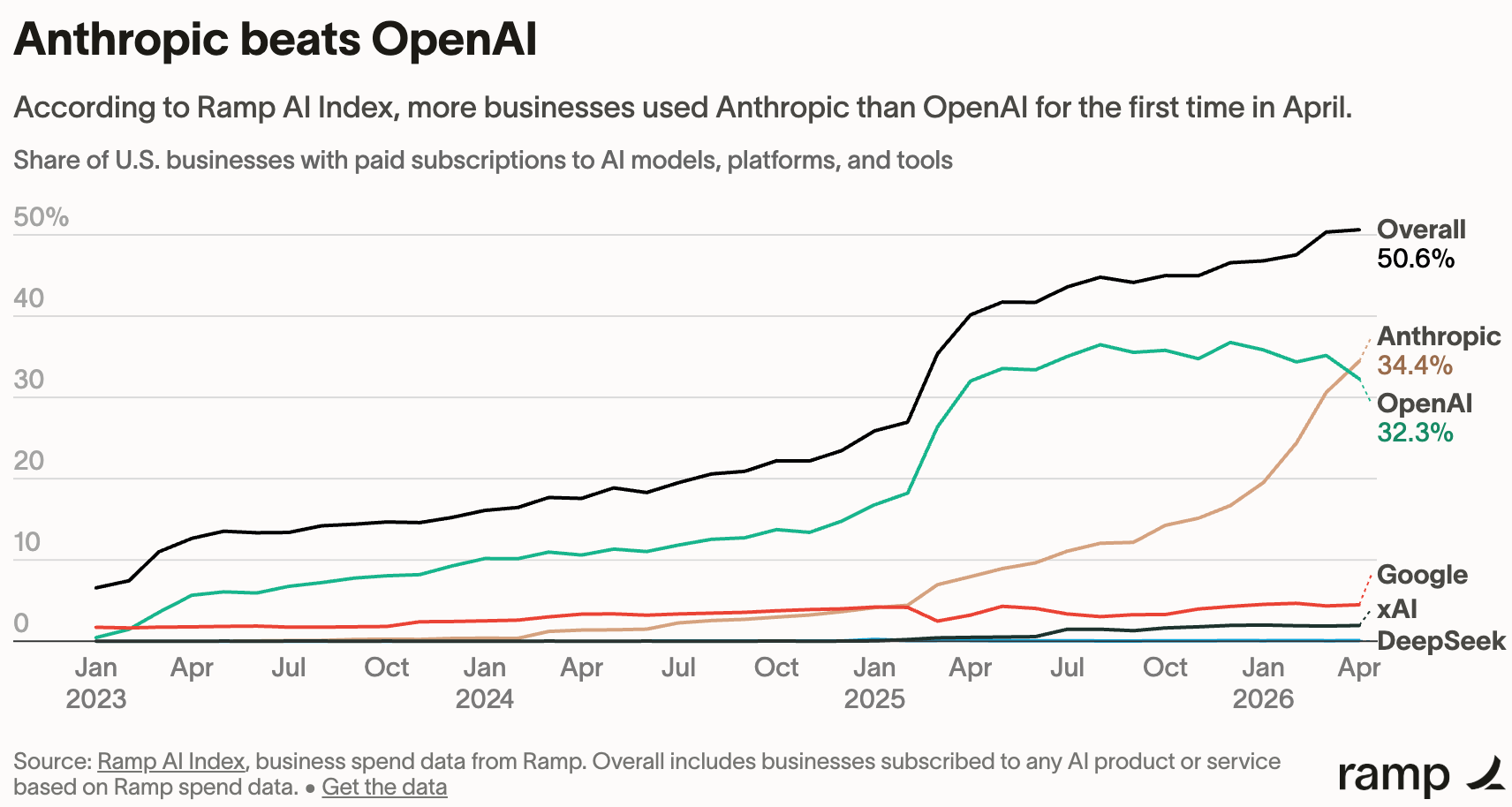
Performance is another major driver. Users now compare models continuously, especially for coding, reasoning, research, writing and multimodal work. A provider viewed as the leader one month can lose momentum the next if another model performs better in a high-value workflow.
Volodymyr Kaminovskyy, co-founder and CEO at Lionwood Software, explained that many LLMs are now viewed less as platforms and more as interchangeable infrastructure.
“Loyalty has been low because many LLMs are seen largely as commodities rather than platforms. As APIs have become more standardized, the technical cost of switching to a new model is insignificant. If a new model has a better price-performance ratio than your current LLM or has much lower latency than your current LLM, it is merely a numbers-based decision that you, as the CEO, must make; there are no benefits to being loyal if the goal is efficiency.”
Technical switching costs are often lower in AI than in traditional enterprise software.
Many businesses interact with LLMs through APIs rather than deeply embedded proprietary environments. In some cases, changing providers requires adjusting endpoints, routing logic or configuration settings, not rebuilding an entire system.
AI gateways, middleware and orchestration frameworks reduce dependency further. These tools allow enterprises to route tasks across multiple models based on:
Ksenia Kobryn, CEO at Symphony Solutions, said the enterprise moat may now sit above the model layer.
“The moat is moving from the LLM to the orchestration layer and proprietary data pipelines. The winner will be determined more by how an enterprise manages ‘Context as a Service’ than by who has the best LLM; if an enterprise builds more sophisticated RAG systems and creates a better user experience where the LLM is under the hood, then that enterprise will become the winner.”
Open-source models have also changed the market. Even when they don't match frontier models across every task, they give enterprises more options for internal workloads, specialized use cases, local deployment, privacy-sensitive applications and cost control. That flexibility makes single-provider loyalty harder to sustain.
Related Article: The Enterprise Case for Open-Source AI
As switching gets easier, durable competitive advantage may come less from raw model capability and more from the systems around the model.
| Potential Moat | How It Creates Stickiness |
|---|---|
| Workflow integration | AI becomes embedded in daily business processes |
| Enterprise distribution | AI reaches users through existing software, cloud and productivity platforms |
| Proprietary data | Unique business context improves relevance and output quality |
| Developer tooling | APIs, monitoring, deployment tools and orchestration create operational familiarity |
| Memory and personalization | Persistent context makes AI systems more useful over time |
| Governance and compliance | Security, auditability and reliability increase enterprise trust |
Workflow integration may be especially important. Businesses are less likely to switch platforms casually once AI is tied to customer support, software development, internal knowledge management, sales operations, compliance workflows or product experiences.
“The differences between models are now much less important than how companies use them: how they apply their own data, integrate them into their products, design the user experience, control output quality and bring everything together into a unified system,” Dmitry Nazarevich, chief technology officer at Innowise, told VKTR.
Enterprise distribution also matters. Providers embedded into cloud platforms, productivity suites and business software may gain advantages that extend beyond model quality. Many companies prioritize vendor relationships, deployment simplicity, security controls and workflow compatibility alongside benchmarks.
Proprietary data may become another strong moat. AI systems that use company-specific context, memory and workflows can become harder to replace, even if the underlying model remains interchangeable.
As AI moves from experimentation into production, enterprises are placing more weight on reliability, governance and operational trust. A powerful model is not enough if it is unreliable, slow, unpredictable or difficult to govern.
Dr. Islam Gouda, global brand ambassador at Revenue Marketing Alliance, said future AI advantage may depend more on the ecosystem than the standalone model.
“The future competitive advantage in AI will likely come less from owning the most powerful standalone model and more from building the most trusted, integrated, adaptable and human-centered ecosystem around it. As foundational model capabilities become increasingly accessible, customer experience, workflow integration and trust may become more defensible than the model itself.”
| Trust Factor | What Enterprises Need |
|---|---|
| Uptime | Stable access with minimal outages |
| Latency | Fast, predictable response times |
| Data Handling | Clear privacy and retention policies |
| Governance | Admin controls, audit trails and compliance support |
| Transparency | Clear communication on outages, model changes and limits |
| Output Reliability | Fewer hallucinations, more consistent behavior |
| Incident Response | Fast disclosure and remediation when systems fail |
Enterprises in regulated industries may value those factors more than marginal improvements on benchmarks.
Reliability problems can quickly weaken loyalty. Outages, rate limits, latency spikes or unexplained changes in model behavior can disrupt business operations and push users toward alternatives.
For many businesses, multi-model AI strategies are becoming an operational safeguard.
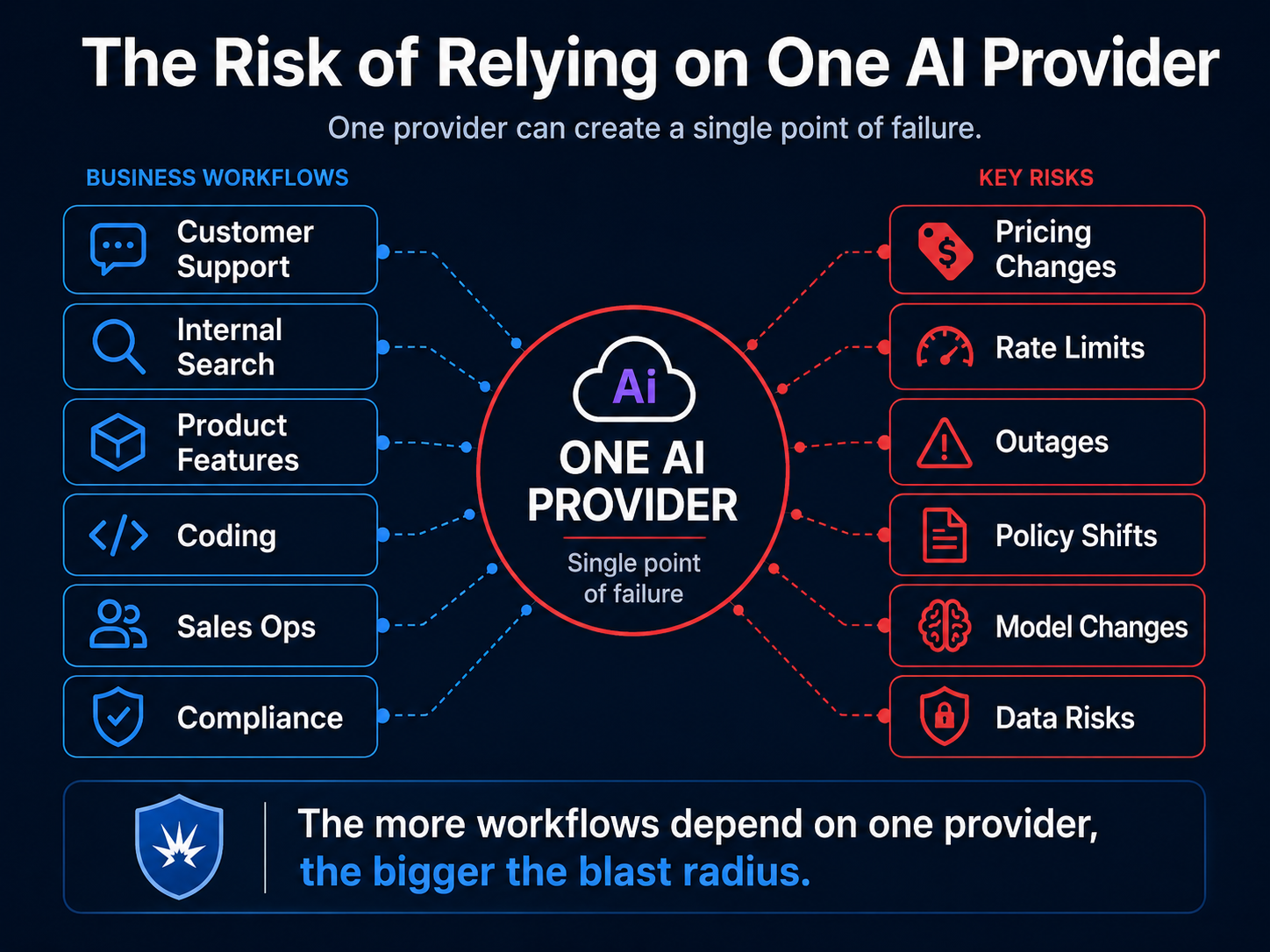
Instead of betting on one provider, enterprises can route different tasks to different models. A company might use one model for coding, another for summarization, another for customer support and a smaller open-source model for internal data extraction. This approach can reduce cost, improve resilience and avoid vendor lock-in.
According to Kaminovskyy, enterprises are moving toward “compound AI systems,” where multiple models handle different parts of a workflow. “In many workflows, there will be multiple models that take care of various tasks, rather than one super large model doing everything.”
Eric Turney, sales and marketing director at The Monterey Company, said businesses should be careful about building too tightly around one provider.
“The market is moving too fast, and the best model for writing may not be the best model for research, analysis, coding or internal support. A multi-model approach gives a company more flexibility and lowers the risk of being stuck if pricing, quality or policy changes.”
Enterprises that build too tightly around one model provider may face growing strategic risk.
Pricing can change. Usage limits can shift. Model behavior can evolve. Moderation policies can alter what systems allow. Outages can disrupt production workflows. Government partnerships, data policies or public controversies can also affect how customers and stakeholders view a provider.
That does not mean enterprises should avoid major AI platforms. But it does mean they need a strategy for flexibility.
The more deeply AI becomes embedded in operations, the more important it becomes to understand where dependency sits: the model, the API, the orchestration layer, the workflow, the data pipeline or the vendor relationship.
Traditional enterprise software often creates lock-in through contracts, data migration costs, employee training, integrations and years of workflow dependency.
LLMs can be easier to replace because many are accessed through APIs, browser interfaces or orchestration tools. If another model becomes cheaper, faster or more reliable, switching may be a relatively simple technical and business decision.
Enterprises should evaluate AI providers on more than benchmark performance. Important criteria include:
Businesses can reduce lock-in by using abstraction layers, maintaining portable prompts (sometimes through prompt management systems) and workflows, documenting model dependencies, testing multiple providers and designing systems that can route workloads across models. They should also avoid building critical products around undocumented model behavior that could change without notice.
Open-source LLMs can be a strong option for certain enterprise use cases, especially internal workflows, privacy-sensitive tasks, cost-controlled deployments and specialized applications. They may not always match the top frontier models, but they can give organizations more control over infrastructure, customization and data handling.
Enterprises should ask about uptime commitments, data retention, model training policies, security controls, compliance certifications, incident response, pricing stability, rate limits, audit logs, support terms and exit options. They should also ask how much notice they will receive before major model, pricing or policy changes.