News Analysis
Guide
Is AI Making Your Organization More Productive or More Dependent?


After weeks of rumors, OpenAI has finally debuted its first branded hardware project, and tech enthusiasts are… mostly confused.
The $230 Codex Micro is essentially a mini light-up keyboard — plus joystick — that OpenAI describes as “your command center for agentic work.”
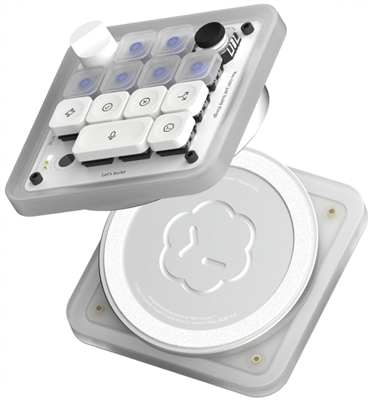
Despite the dubious necessity of such a product, the Codex Micro, made in collaboration with Work Louder, is currently out of stock online (both the “clicky” and silent version).
Visually, the device looks like a mini backlit keyboard — six keys at the top that offer color-coded live feedback on up to six Codex threads: white for idle threads, green for an unread chat, blue for thinking, peach for when Codex requires feedback or human input and red when an error occurs.
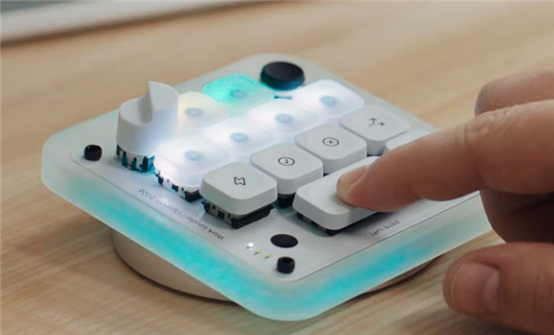
At the bottom of the keyboard are six additional keys linked to common shortcuts, like accepting or rejecting changes, push-to-talk and starting a new chat.
Then you have your joystick, which lets you launch common Codex workflows like reviewing a PR, debugging an error or refactoring a code, plus a dial for adjusting reasoning level.
The Codex Micro is built for the AI-coding power user, the person who wants to monitor and interact with multiple Codex agents on-the-go with just a glance and a couple of clicks.
While that prospect might sound nice in theory — and appeal to a handful of Codex nerds — the device still demands some level of plug-dependency, requiring connection to a computer via Bluetooth or USB-C. As such, it appears to be most useful for those already sitting at a desktop who could… just use a regular keyboard.
On the portability front, ChatGPT’s mobile app already offers Codex monitoring, with some saying the app provides more capabilities than the new Micro keyboard.
Many critics have pointed out that devices similar to the Codex Micro already exist, often at a much lower price point.
“Cursor and Blender have their own… it’s not a new product nor an idea,” one Reddit user commented.
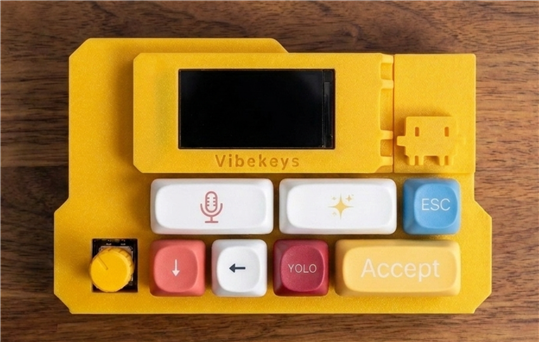
“It’s $230,” another added. “You can get a programmable keyboard, with a knob, for 18 bucks…”
“This comes off as a very expensive side project to create a device that has existed for years,” posted one X user. “Why was R&D wasted on this? It looks cool but I will just stick with my cheaper and well-established Elgato Stream Deck.”
This comes off as a very expensive side project to create a device that has existed for years. Why was R&D wasted on this? It looks cool but I will just stick with my cheaper and well-established Elgato Stream Deck.
— The Noble Simian (@thenoblesimian) July 16, 2026
"I’m dumbfounded that multiple people actually thought this was a good product idea."
The majority of criticism for the Codex Micro focuses on the necessity of the product — or lack thereof.
“I’m dumbfounded that multiple people actually thought this was a good product idea,” one Reddit user wrote, with another adding, “It honestly feels like a prank and not a real product.”
Another user chimed in, “It was one of those moments where they asked AI if this is a good idea and AI said absolutely and here they are.”
One person likened the product to a designer item, where the brand is the product. “Why do people want a Louboutin bag when a $4.99 plastic tote does exactly the same thing? Now apply that logic here.”