News
Guide
Is AI Making Your Organization More Productive or More Dependent?

OpenAI embedded its upgraded Codex coding agent into the ChatGPT app on Thursday, aiming to make the platform a hub for multi-agent development work.
The integration lets engineering teams run parallel coding tasks across projects using built-in cloud environments and worktrees, according to the company.
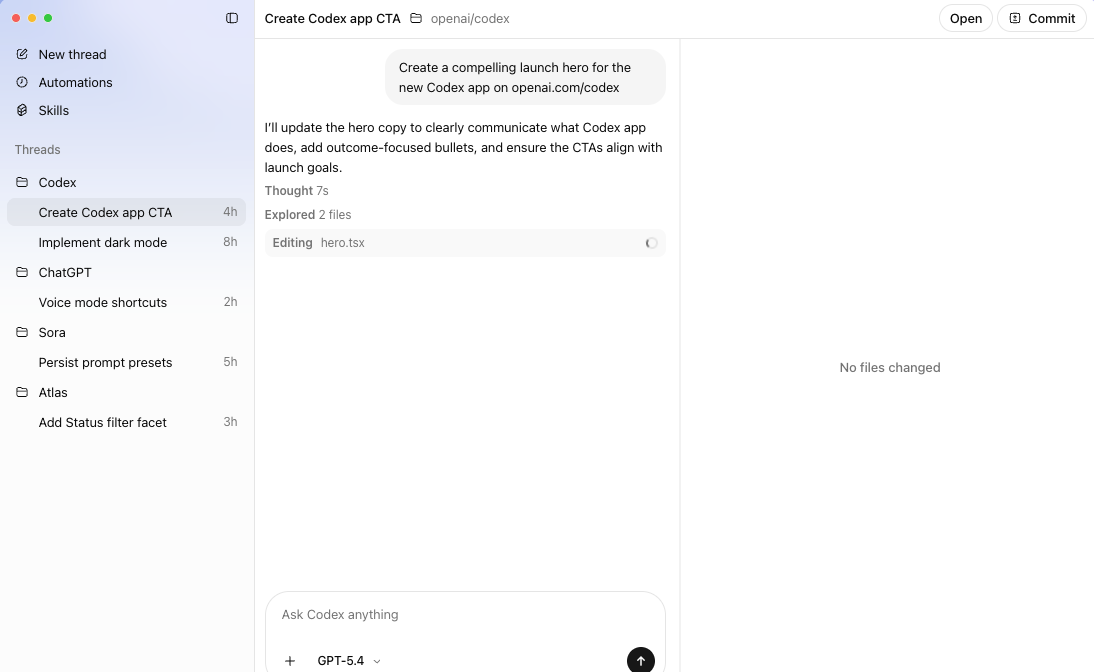
Codex is powered by what OpenAI called its "frontier coding models" and handles end-to-end engineering work, from feature builds and complex refactors to migrations. A new Skills feature lets teams encode their standards and workflows so the agent applies them consistently.
The company also introduced scheduling, enabling Codex to run background tasks such as issue triage, alert monitoring and CI/CD processes. The agent operates across ChatGPT, code editors and the terminal through a single ChatGPT account.
"From routine pull requests to your hardest problems, Codex reliably completes tasks end to end, like building features, complex refactors, migrations, and more, powered by OpenAI's frontier coding models."
- OpenAI Officials
OpenAI’s Codex coding agent, now nestled inside the ChatGPT app, offers various capabilities:
| Key Capability | How It Works |
|---|---|
| End-to-end coding tasks | Handles feature builds, refactors and migrations using frontier models |
| Multi-agent workflows | Parallel agents work across projects via cloud environments and worktrees |
| Skills customization | Teams encode standards and workflows for consistent agent behavior |
| Background scheduling | Automates issue triage, alert monitoring and CI/CD tasks |
| Cross-platform access | Available in ChatGPT, code editors and terminal via one account |
Modern AI coding platforms let developers supervise multiple agents working concurrently across the full software development lifecycle. Open frameworks support dynamic workflows across documents, APIs and enterprise systems — a prerequisite for deploying agentic AI at scale.
The Model Context Protocol (MCP) provides foundational standardization for how AI applications connect to external tools and data. Anthropic created MCP to address integration complexity that limits AI deployment in enterprises.
Native integrations are expanding too. Apple's embedding of the Claude agent SDK into Xcode 26.3 shows how agentic coding tools are becoming first-class features inside developer environments.
Scaling agentic coding requires deliberate AI governance spanning ML and LLM operations, systems architecture, cybersecurity and human-computer interaction to keep agentic systems transparent and aligned with user intent.
Tools like Claude Code's auto mode show the challenge: the feature automates permission handling to reduce interruptions, but configurable controls remain important because automated code generation can drift without adequate human oversight.