News Analysis
Guide
Is AI Making Your Organization More Productive or More Dependent?


The Trump administration’s new executive order on AI exposes growing divisions over how the US should oversee frontier AI systems as models become more powerful, commercially valuable and strategically important.
While the scaled-back order stops short of imposing mandatory government approval requirements, it has already sparked pushback from OpenAI, Anthropic and other AI leaders concerned that expanded federal oversight could slow innovation and complicate deployment, especially as major AI businesses move closer toward potential IPOs.
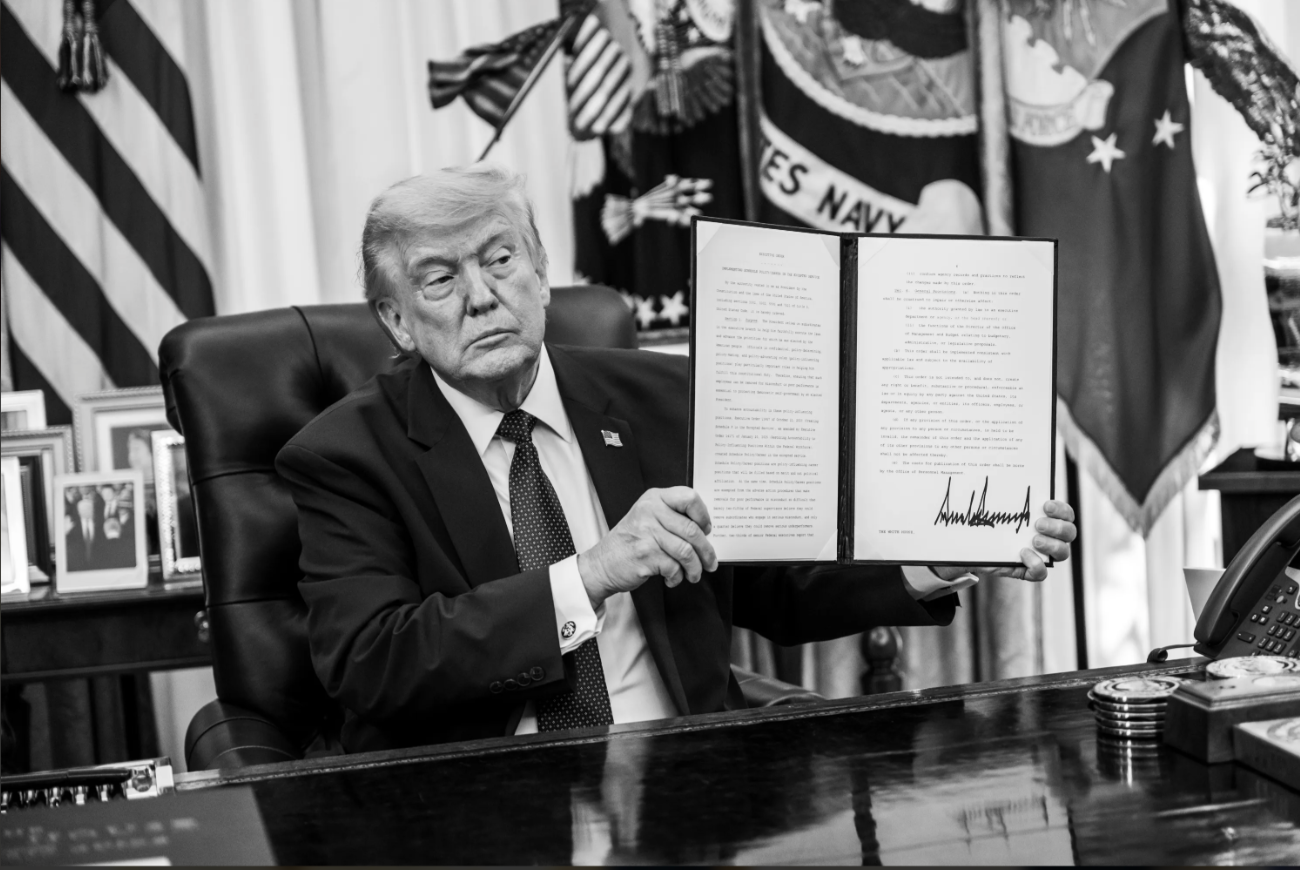
President Donald Trump signed a scaled-back executive order on artificial intelligence this week that establishes a voluntary federal review framework for advanced tAI systems considered potentially capable of posing cybersecurity, infrastructure or national security risks.
The framework directs multiple federal agencies, including the Department of Commerce, Department of Homeland Security, Department of Defense and intelligence agencies such as the NSA, to coordinate on frontier AI risk assessments, cybersecurity protections and infrastructure security standards. The National Institute of Standards and Technology (NIST) is also expected to play a central role in helping establish testing benchmarks and evaluation criteria for advanced AI systems.
While the administration stopped short of imposing mandatory approval requirements for AI model releases, the order remains a significant escalation in how Washington views frontier AI development. Rather than treating advanced AI solely as a commercial technology issue, the administration is increasingly framing powerful AI systems as infrastructure with potential economic and national security implications.
The revised order appears substantially narrower than earlier proposals that reportedly included stronger government oversight mechanisms and broader pre-release review authority. Concerns from AI businesses and competitiveness advocates helped push the administration toward a more voluntary framework amid fears that aggressive regulation could slow US AI development relative to China.
Related Article: How US-China AI ‘Peace’ Becomes a Scorched-Earth War Against Silicon Valley
"This executive order is an important step toward advancing innovation while protecting the security of the American public."
- Brad Smith
Vice Chair & President, Microsoft
Under the framework, AI businesses developing highly capable frontier models are encouraged to share safety testing information with the federal government prior to major releases, as well as participate in a 30-day review process.
Several technology and cybersecurity leaders have cautiously praised the administration’s attempt to balance AI innovation with national security and infrastructure protection concerns.
As OpenAI CEO Sam Altman noted, the US should lead on AI "by continuing to develop the very best models, making sure they're safe, and getting cyber tools into the hands of trusted defenders. The new EO gets the balance right."
Brad Smith, vice chair and president at Microsoft, commented, "This executive order is an important step toward advancing innovation while protecting the security of the American public. We welcome this effort by the Administration."
Reports surrounding the order suggest the administration is exploring additional evaluation frameworks and testing standards for advanced frontier AI systems, particularly in areas involving cybersecurity, critical infrastructure and national security risks.
The new executive order appears substantially narrower than earlier proposals that reportedly included stronger federal oversight mechanisms and broader pre-release review authority for advanced AI systems.
| Earlier Executive Order Proposal | Final Executive Order |
|---|---|
| Mandatory approval | Voluntary framework & information sharing |
| Broader pre-release authority | 30-day review process |
| Stronger federal review powers | No mandatory approval requirement |
Several technology leaders argued that mandatory approval requirements or lengthy review processes could create deployment bottlenecks and discourage investment. These concerns become especially significant as OpenAI, Anthropic and other frontier model developers expand commercial partnerships while moving closer to potential IPO activity.
The administration also faced pressure from businesses and competitiveness advocates who warned that overly restrictive oversight could push AI innovation toward less regulated international markets. As a result, the White House ultimately adopted a more voluntary framework centered around collaboration and information sharing rather than mandatory pre-release authorization requirements.
Even so, the revised order remains a meaningful expansion of federal involvement in frontier AI governance and suggests that stronger oversight proposals could emerge later as advanced AI capabilities continue to accelerate.
Although the administration’s framework remains voluntary for now, OpenAI, Anthropic and other frontier AI businesses appear concerned that the executive order could become the foundation for a far more restrictive approval system later. One of the largest concerns involves the possibility of “approval creep,” where voluntary safety reviews gradually evolve into mandatory authorization requirements capable of delaying model releases.

Deployment speed has become critically important within the frontier AI market as businesses compete aggressively to release more capable models, secure enterprise partnerships and establish dominant positions across both consumer and government markets. Extended review windows or unpredictable oversight requirements could slow product rollouts at a time when AI businesses are under pressure to demonstrate rapid growth.
The timing also creates additional uncertainty as OpenAI and Anthropic become potential IPO candidates. Investors evaluating high-growth AI businesses are likely to pay close attention to regulatory risks that could affect costs and timeline flexibility. Even voluntary federal review systems may introduce uncertainty around how aggressively future administrations could expand AI oversight.
Anthropic’s concerns about government approval structures come even as the company itself has publicly called for coordinated mechanisms capable of slowing frontier AI development under certain high-risk scenarios.
At the same time, many AI leaders worry unclear or evolving regulatory frameworks could create inconsistent standards across agencies or shift rapidly alongside political priorities. For those operating in an environment where model capabilities advance at extraordinary speed, long-term regulatory unpredictability may become almost as disruptive as regulation itself.
Related Article: States vs. Washington: Who Regulates AI Now?
""We believe it would be good for the world to have the option to slow or temporarily pause frontier AI development to enable societal structures and alignment research to keep up with the advance of the technology."
- Jack Clark & Marina Favaro
Co-Founder / Lead at The Anthropic Institute, Anthropic
The debate surrounding the new executive order is part of a much larger policy divide rapidly emerging around frontier AI development.
On one side are policymakers, national security officials and AI safety advocates who argue that increasingly powerful AI systems could eventually create serious cybersecurity, infrastructure, misinformation or even biosecurity risks if advanced models are released without sufficient oversight.
On the other side are AI businesses and competitiveness advocates who fear that aggressive regulation could slow innovation, weaken US leadership and create strategic advantages for geopolitical rivals such as China. Concerns have intensified significantly over the past two years as AI systems become more capable of autonomous task execution, including code execution and scientific analysis.
Anthropic itself added to the debate by publicly calling for the AI industry and governments to establish coordinated mechanisms capable of slowing or temporarily pausing frontier AI development. The company warned that recursive self-improvement, where an AI system becomes capable of fully autonomously designing and developing its own successor, could increase the risk of humans losing control over those systems.
"We believe it would be good for the world to have the option to slow or temporarily pause frontier AI development to enable societal structures and alignment research to keep up with the advance of the technology," wrote Anthropic's Jack Clark and Marina Favaro, adding, "A meaningful slowdown or pause would require multiple well-resourced labs at or near the frontier, in multiple countries, agreeing to stop under the same conditions."
Although the administration’s current framework remains relatively limited and voluntary, many analysts expect pressure for stronger oversight to grow as frontier AI capabilities continue advancing. The executive order may ultimately represent an early step toward a much larger and more formalized federal governance structure for advanced AI systems in the years ahead.