Editorial
Research Report
The AI Transformation 100: Concrete Ideas for Fixing How We Work
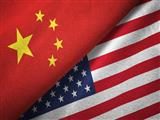

Washington has confused acceleration with strategy, and the mistake may define the next phase of the AI conflict.
The United States now presents deregulation, federal preemption, national supercomputing, nuclear-scale energy planning and diplomatic hotlines as the architecture of AI leadership. That story sounds coherent only from a distance.
Up close, the policy stack reveals a deeper structural failure: the United States is trying to defeat Chinese AI commoditization through a model that makes American AI more centralized, more capital intensive, more dependent on state subsidy and less economically defensible. The result is a scorched-earth price war disguised as industrial policy. Not peace.
The first move was doctrinal. Executive Order 14179 revoked earlier federal AI directives and ordered a new national AI action plan centered on removing barriers to American AI leadership. The order explicitly framed previous safety-oriented approaches as ideological constraints that weakened American competitiveness.
The administration then escalated the campaign in December 2025 through a second order targeting state-level AI regulation, the White House AI Preemption Order, describing state laws as costly interference against national AI priorities.
Washington’s AI doctrine therefore did not merely deregulate. The administration repositioned governance itself as an obstacle to dominance. California, Colorado and other states became political adversaries within a federal race for AI acceleration.
Related Article: Tech Leaders Warn: US Must Act Fast to Win the Global AI Race
That shift carries enormous structural consequences.
State-level AI safeguards may be uneven and politically fragmented, but decentralized governance creates adaptive pressure inside systems evolving faster than federal institutions can realistically evaluate. Those state structures function as experimental barriers, early warning systems and distributed veto points against catastrophic deployment logic.
The administration reframed those safeguards as anti-innovation bureaucracy. Washington therefore gained deployment speed while weakening systemic resilience. The White House consolidated authority around executive control while simultaneously dismantling the pluralistic mechanisms capable of identifying emerging risks before those risks metastasize across infrastructure, education, labor markets, finance and public information systems.
The Genesis Mission Executive Order transformed that doctrine into industrial architecture.
In November 2025, the administration launched a national AI mobilization effort modeled rhetorically after the Manhattan Project. The order directed the Department of Energy to integrate national laboratory supercomputers, federal datasets, scientific research infrastructure, universities and private-sector firms into a centralized AI discovery platform.
The Department of Energy openly described the effort as a coordinated national strategy for scientific AI dominance and energy modernization. The mythology of entrepreneurial frontier AI effectively ended at that moment. Washington nationalized the frontier.
That transition reveals the administration’s underlying panic. Frontier AI has become too expensive, too energy intensive, too geopolitically sensitive and too strategically valuable to remain governed through ordinary market logic. Washington now treats AI infrastructure more like nuclear infrastructure than software development.
The Genesis framework openly links advanced AI development to energy expansion, national security, supercomputing and long-term industrial policy. The administration therefore presents centralized compute concentration as national strength. In practice, such concentration locks American AI into an increasingly monopolistic infrastructure model dependent on federal coordination, national laboratory resources and public subsidy streams that only the state can sustain over time.
Then China detonated the economic assumptions underneath Silicon Valley’s AI economy.
In January 2025, Chinese AI company DeepSeek released the R1 reasoning model and shattered the perception that frontier-level intelligence required American-scale capital expenditure. The company, in a September 2025 Nature article, claimed the R1 model training cost just $294K and used only 512 Nvidia H800 chips (compared to GPT-4's $100 million+ training costs). However, some critics argue that number is inaccurate.
The collapse accelerated through 2026. Reuters reported that DeepSeek launched V4-Pro with a 75% discount and reduced API cache-hit pricing to one-tenth of previous levels. DeepSeek simultaneously optimized the model around Chinese hardware ecosystems including Huawei Ascend infrastructure. Reuters later reported that Chinese technology firms rushed to secure Huawei AI chips following the launch.
China therefore attacked every layer of the American AI scarcity narrative simultaneously: chip dependence, model exclusivity, inference pricing, subscription economics and hardware leverage. Silicon Valley built its valuation structure around controlled access and expensive intelligence. DeepSeek is turning intelligence into utility infrastructure.
Related Article: Why the US and China Are Betting on Different AI Futures
Washington’s answer compounds the trap.
Instead of interpreting DeepSeek as proof that distributed, efficient, lower-cost systems may define the next strategic advantage, the administration doubled down on gigantism. The White House response has centered on larger compute clusters, more centralized federal coordination, greater energy consumption, fewer regulatory barriers and deeper integration between government and frontier-model development.
That strategy may generate larger systems, but larger systems do not solve collapsing economic margins. If China can continually reduce the cost of intelligence faster than American firms can preserve profitability, then every trillion-dollar compute buildout becomes less a moat and more a stranded asset.
The diplomatic theater surrounding US’s Beijing engagement only reinforces the contradiction.
Reuters reported that Trump and Xi Jinping planned discussions spanning artificial intelligence, Iran, Taiwan, trade and nuclear risk. It also reported that executives tied to firms including Apple, Boeing, Tesla and GE Aerospace were associated with the trip. The administration therefore treats AI as inseparable from minerals, chips, aircraft, energy systems, trade negotiations and national-security bargaining. No genuine détente exists. The summit structure reveals managed escalation disguised as diplomacy.
The proposed AI communication channels between Washington and Beijing should not reassure anyone. Hotlines can reduce accidental escalation between nuclear powers because nuclear conflict remains exceptional. AI instability is no longer exceptional. AI instability is operational.
Machine cognition now intersects with procurement systems, education platforms, military modeling, synthetic media, financial markets, logistics networks and political influence architectures. Communication channels may reduce misunderstandings between governments. Communication channels cannot stabilize incentives built around speed, opacity, scale and strategic dependency.
The deeper war concerns diffusion versus concentration. China increasingly treats AI as a low-cost export utility capable of embedding Chinese standards into global infrastructure ecosystems. Beijing does not need permanent benchmark supremacy if Chinese systems become ubiquitous across ministries, universities, startups, hospitals, logistics chains and public-sector systems throughout the Global South.
The United States is pursuing the opposite theory of power: concentrated supremacy through massive compute concentration, federal coordination, nuclear-scale energy expansion and frontier-model dominance. That assumption may already be obsolete. Utility wars are rarely won solely through superior capability. Utility wars are won through default adoption.
That is the structural irony consuming America’s AI strategy.
The administration claims deregulation will preserve private-sector dynamism, yet federal AI centralization increasingly transforms frontier AI into a state-backed utility structure. The administration claims nationalization will secure American leadership, yet China’s commoditization campaign continuously erodes the economic viability of expensive frontier systems. The administration claims diplomacy prevents instability, yet the very existence of AI hotlines acknowledges both governments are deploying systems whose scale and opacity increasingly exceed human governance capacity.
The result will not resemble collapse in the traditional sense. The system will appear abundant. AI tools will become cheaper, faster and permanently embedded across work, education, media, governance and infrastructure. Governments will celebrate productivity gains. Corporations will celebrate transformation. Universities will automate instruction. Agencies will automate judgment.
Underneath that abundance, however, sovereignty erodes. Institutional memory migrates into platforms. Human expertise atrophies. Public infrastructure becomes dependent on centralized machine cognition layers controlled either through state-backed systems or private monopolies operating as quasi-state utilities.
That is why the emerging US-China AI “peace” should be understood as a scorched-earth war.
China is burning the economic margin structure underneath American AI. The administration is burning the decentralized governance structures that once made American innovation adaptive and resilient. Both governments may describe the outcome as stability, because summits continue and markets remain open. The actual outcome is far darker: collapsing intelligence pricing, centralized compute dependence, weakened public oversight, strategic platform lock-in and a global cognitive infrastructure increasingly governed through systems too large, too embedded and too economically essential to refuse.
Related Article: Trump Unveils Massive AI Strategy: ‘We Will Not Allow Any Foreign Nation to Beat Us’
While Washington still seeks to frame AI leadership as a contest to build the most powerful machine. China increasingly treats AI as a contest to become the default cognitive operating system for the world.
One side pursues supremacy through concentration. The other pursues dominance through commoditization. If Washington continues answering commoditized intelligence with gigantism, federal preemption and nuclear-scale infrastructure concentration, the United States will not escape the commodity trap. Washington and US tax payers will finance the trap itself.
 Learn how you can join our contributor community.