Editorial
White Paper
Why Enterprise AI Fails at Scale
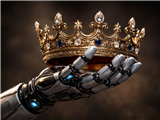
The people sounding the alarm on AI aren't making predictions. They are writing obituaries.
Listen closely. The most terrifying dispatches about the future of work are not coming from academics or futurists. They are coming from the front lines, from the very people you once considered the apex predators of the knowledge economy. And what they are saying, in hushed, urgent tones, is this:
The war is already over. The future isn't a debate; it is a lived reality for a rapidly growing class of people who have already been replaced by a prompt.
I am not talking about automating routine tasks. I am not talking about a chatbot that can answer customer service questions. I am talking about the complete and total abstraction of high-level, creative and technical work — the kind of work you have built your entire career, your entire identity, around.
A recent viral essay by Matt Schumer, the co-founder and CEO of OthersideAI (also known as HyperWrite), contained the single most chilling confession I have ever read from a modern executive. It is a dispatch that should be printed out and nailed to the door of every boardroom. He wrote:
"I'm no longer needed for the actual technical work of my job. I describe what I want built in plain English, and it just appears. Not a rough draft I need to fix. The finished thing. I tell the AI what I want, walk away… and come back to find the work done, done well, done better than I would have done myself."
Read that again. This isn't a story about a tool that makes him more efficient. This is the story of a tool that has made his skills obsolete. The years he spent honing his craft, the deep technical expertise that once justified his salary and his status — all of it has been compressed into a single act of stating his intent in plain English.
This is the death of the knowledge worker.
Related Article: 10 Jobs Most at Risk of AI Replacement (And How to Transition)
For a century, we built our organizations and our careers on a simple contract: invest years of your life to acquire a scarce and valuable skill, and you will be rewarded. That contract has just been rendered null and void.
The source of value is no longer in the execution of complex tasks. The new models from OpenAI, Anthropic and others have crossed a critical threshold. They have moved from assisting with work to subsuming it entirely. What was once your career — a decade of accumulating expertise in coding, legal analysis, financial modeling or even creating — is now a four-hour task for a machine.
The people at the bleeding edge are not warning you about what’s coming. They are confessing what is already happening to them in private. They are admitting that their job has been reduced to one of a "prompter," a "guider," a "describer of outcomes."
As I have warned for years, our bureaucratic management models were designed to turn human beings into semi-reliable robots. Well, the real robots are here now, and they are infinitely reliable. As I detailed in "The Augmented Executive," the only human ground left is in the realm of deep thought and creativity — the very things our organizations have crushed. Now, even that ground is shrinking. These new models aren't just executing instructions; they are exhibiting what feels, for the first time, like judgment. Like taste.
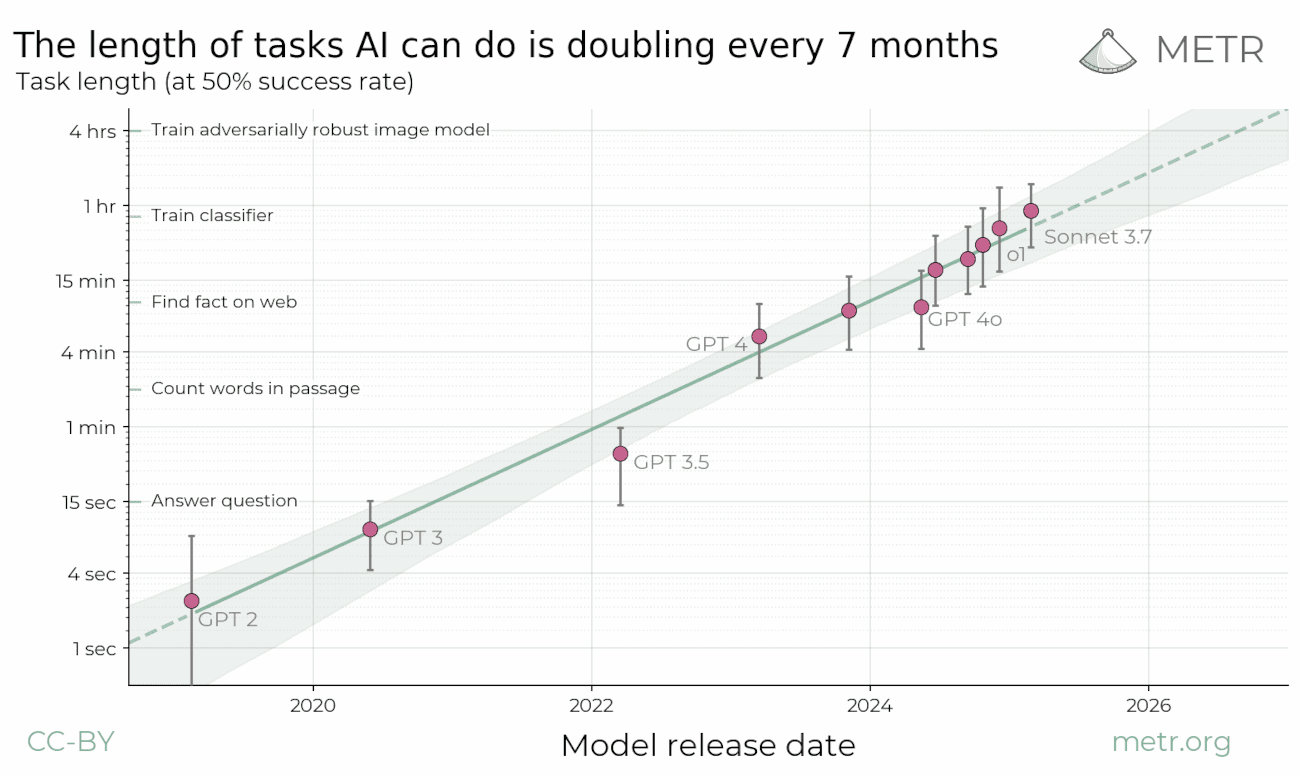
If we plot this on a logarithmic scale, we can see that the length of tasks models can complete is well predicted by an exponential trend, with a doubling time of around 7 months.
I know what many of you are thinking because I hear it constantly. "I tried AI. It hallucinated. It wrote bad code. It wasn't that impressive."
You are right. But the model you tried two years ago, or even six months ago, is a historical artifact. It is ancient history. Judging today’s AI by what you tried in 2024 is like dismissing modern electric cars because you once drove a golf cart. The early version wasn’t built for highways, acceleration or long‑distance travel — it was a toy compared to the machines that came after. What you tested back then wasn’t the revolution. It was the prototype.
The people whose livelihoods are being transformed are not using the free, year-old versions of these AI tools. They are on the front lines, using the latest paid models, and they are telling you that a threshold has been crossed. The machine is no longer just a clever parrot; it is a genuine collaborator that is rapidly becoming a replacement.
As I argued in "What Actual AI Usage Data Tells Leaders," you cannot manage what you do not understand. Leading from a position of obsolete experience is a form of managerial malpractice.
Related Article: The AI Productivity Paradox: Why I'm Working More and Loving It
The industrial revolution automated muscle power, and it took a century for society to adapt. This revolution is automating cognitive power, and the most significant shifts are happening in months, not decades.
The reports from the front lines are not a drill. The work you do, the skills you prize, the very definition of your professional value — all of it is being rewritten by the prompt.
Your job as a leader is no longer to manage a workforce of knowledge workers. It is to architect an organization that can survive — and thrive — when the knowledge itself is a utility, as abundant and cheap as air. This requires a radical rethinking of value. The new premium is not on what you know or what you can do, but on what you can imagine. It is on your ability to ask the right question, to set a worthy direction, to exercise the kind of wisdom and courage that cannot (yet) be summoned by an API call.
Stop planning for a distant future. The future is a foreign country, and your most skilled employees are already living there without you. Your real work is to listen to their warnings and have the courage to abandon the past before it buries you.
 Learn how you can join our contributor community.
Dr. David Priede, Ph. D., is the director of operations, advanced technologies and research at Biolife Health Center and is dedicated to catalyzing progress and fostering healthcare innovation. Connect with David Priede: 