News
Guide
Is AI Making Your Organization More Productive or More Dependent?

Nvidia has entered talks to provide roughly $250 billion in financing guarantees for OpenAI as part of a large-scale data center project, according to the Wall Street Journal. The backstop would help OpenAI lease a 10-gigawatt facility that SoftBank subsidiary SB Energy is developing in southern Ohio, according to the report.
The project is expected to cost more than $500 billion in total, including chips. Nvidia is also reportedly discussing financing of up to $350 billion in chip purchases by OpenAI.
For OpenAI — valued at $852 billion but still unprofitable — the deal would be the first step toward controlling its own infrastructure rather than renting from Microsoft, Amazon and Oracle. For Nvidia, it would lock in chip demand for years.
The first phase, targeting 800 megawatts of power, is expected to finish in 2028.
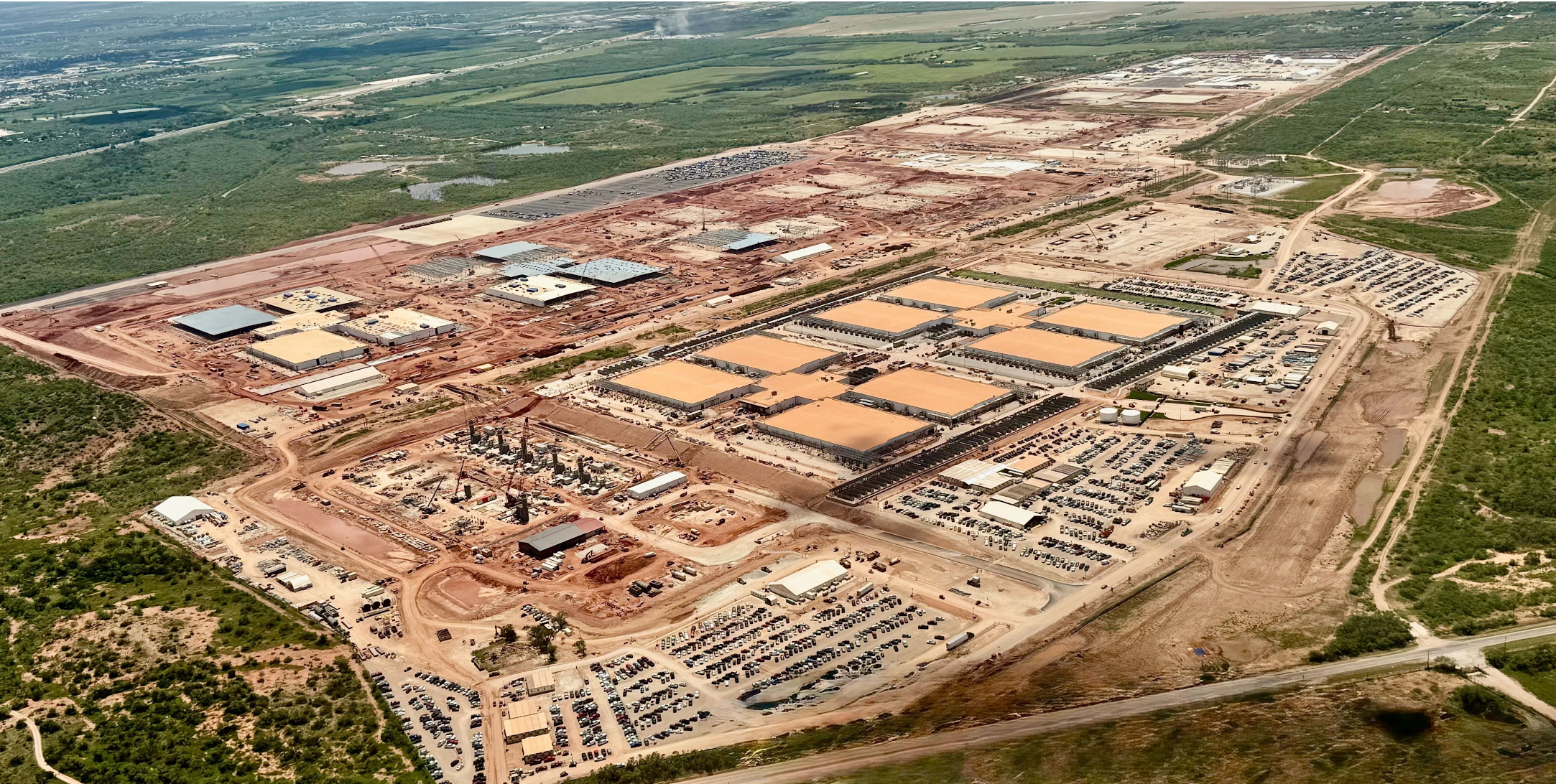
The facility's power supply is controlled by the US government and funded separately by Japan under a recent trade deal tied to Tokyo's pledge to invest $33 billion in a natural gas plant. US Commerce Secretary Howard Lutnick is involved in deciding access, the report said. Anthropic Microsoft and Google have also spoken with Lutnick about the project in recent weeks.
The potential financing arrangement between Nvidia and OpenAI spans several components, from lease guarantees to chip procurement. Here's how the deal breaks down based on details reported by the Wall Street Journal.
| Deal Component | Details |
|---|---|
| Lease guarantee | $250B backstop for data center lease and debt financing |
| Chip financing | Up to $350B in Nvidia chip purchase financing under discussion |
| Total project cost | More than $500B including chips |
| Phase 1 power | 800 megawatts, completion expected in 2028 |
| Power source | US-controlled, funded by Japan's $33B gas plant pledge |
Owning AI training infrastructure rather than renting it from hyperscalers is becoming a deliberate enterprise strategy, driven by governance pressure, cost control and measurable ROI.
The business case is quantifiable. Companies deeply committed to AI and data sovereignty reported roughly 5x higher AI ROI from generative and agentic AI deployments than organizations with weaker infrastructure controls, according to an MIT Technology Review survey of more than 2,000 senior executives. Security and resilience were top drivers for 85% of respondents.
Hyperscaler dependency is a recognized enterprise risk. OpenAI's $38 billion AWS deal — diversifying compute beyond Microsoft Azure — shows even major AI vendors are pursuing multi-cloud strategies.
Enterprises can draw a similar lesson: distributing inference workloads across providers reduces pricing and availability exposure.
Nvidia closed Q1 FY27 with $81.6 billion in revenue, up 85%, driven by $75.2 billion in data center revenue. Last year, Nvidia became the first company to reach a $5 trillion market valuation.
On the M&A front, Nvidia's $20 billion acquisition of Groq's assets brought the Language Processing Unit architecture in-house. The company also committed up to $100 billion in OpenAI while becoming a primary chip supplier, and announced a $500 billion-plus expansion with SK Group covering a 2-gigawatt AI factory in Korea.