News
Guide
Is AI Making Your Organization More Productive or More Dependent?
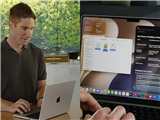

Apple used its WWDC 2026 keynote to present AI as core infrastructure for its software ecosystem, expanding Apple Intelligence across Siri, automation, semantic search, developer tools and multimodal experiences on iOS, macOS and beyond.
Instead of spotlighting AI as a set of standalone features, Apple emphasized deeper integration across the operating system, with on-device models, App Actions, visual intelligence and systemwide orchestration bringing more contextual and agentic capabilities into everyday workflows.
Let's take a look at the most important AI announcements and strategic developments unveiled during Apple’s WWDC 2026 keynote.
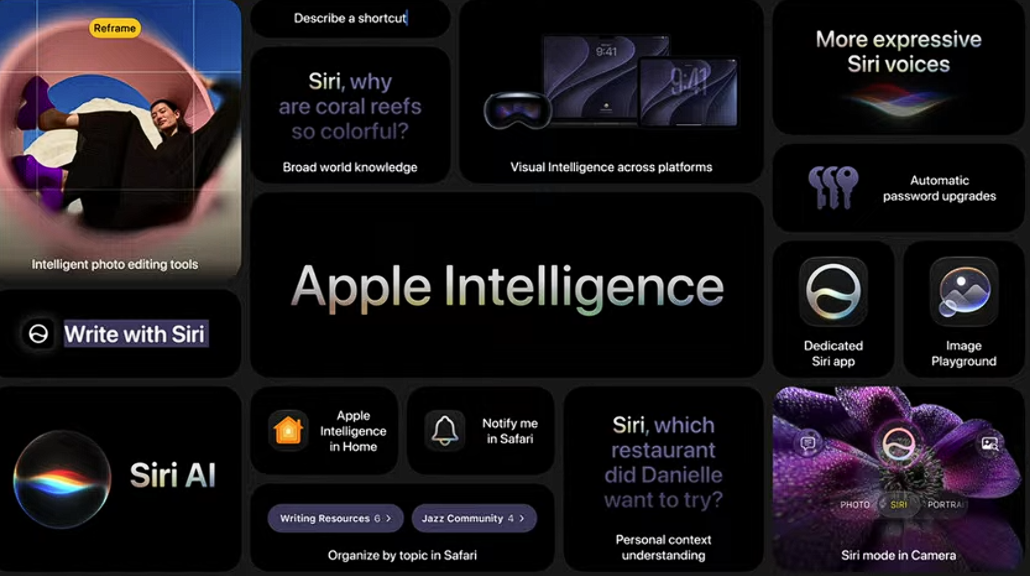
Apple used WWDC 2026 to show how Apple Intelligence is expanding across Siri, Spotlight, Shortcuts, Safari and system-level workflows, featuring a new architecture designed to embed contextual and agentic AI directly into the operating system experience.
Craig Federighi, Apple’s senior vice president of software engineering, described the update as “a big leap forward for Apple Intelligence, with an innovative architecture that unlocks a new Siri across platforms.” He added, “This powerful new architecture unlocks a wide range of helpful experiences, from an all-new Siri to intelligent features across your most used apps.”
At the center of the announcement was a rebuilt Apple Intelligence framework that combines Apple Foundation Models, semantic indexing, App Actions, personal context understanding and on-screen awareness into a unified orchestration layer. Rather than operating as isolated AI tools, these capabilities are designed to work systemwide across iOS, macOS, iPadOS, visionOS and other Apple platforms.
Apple repeatedly said that this architecture is intended to make AI more contextually aware and action-oriented. Siri can now draw information from personal content, understand what is visible on-screen, access broader web knowledge and interact with apps through App Actions to complete multi-step requests. Apple also integrated these capabilities into Spotlight search feature, system-wide writing tools, automation workflows and developer APIs.
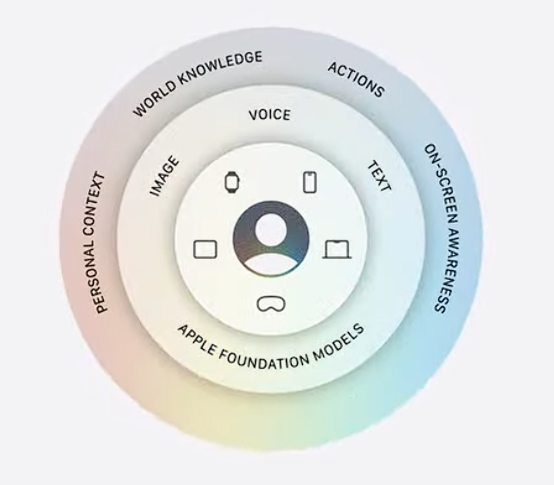
One of the most important architectural details came when Apple explained how these capabilities work together internally. Federighi stated, “Apple Intelligence securely coordinates across them with a new system orchestrator.”
That language strongly implies that Apple is moving toward a more agentic AI model in which the operating system itself can coordinate tools, retrieve context and execute actions dynamically across apps and devices. Rather than functioning as a single assistant interface, Apple Intelligence increasingly appears designed to act as an orchestration layer embedded throughout the broader Apple ecosystem.
Related Article: From Coders to Conductors: The Shift to AI Orchestration
Siri received some of the most substantial AI upgrades announced during WWDC 2026, with Apple repositioning the assistant as a far more contextual, conversational and action-oriented system. Rather than functioning primarily as a voice-controlled interface, Siri is now being integrated more deeply into apps, workflows and device interactions through the broader Apple Intelligence architecture.
“We rebuilt Siri with powerful AI at the core,” Federighi said during the keynote. Apple also described Siri as “a profoundly more capable assistant” that now uses “our new Apple Intelligence capabilities.”
Much of the upgrade centers on contextual awareness. Siri can now understand information displayed on-screen, retrieve details from personal content across apps and maintain conversational continuity across requests and devices.
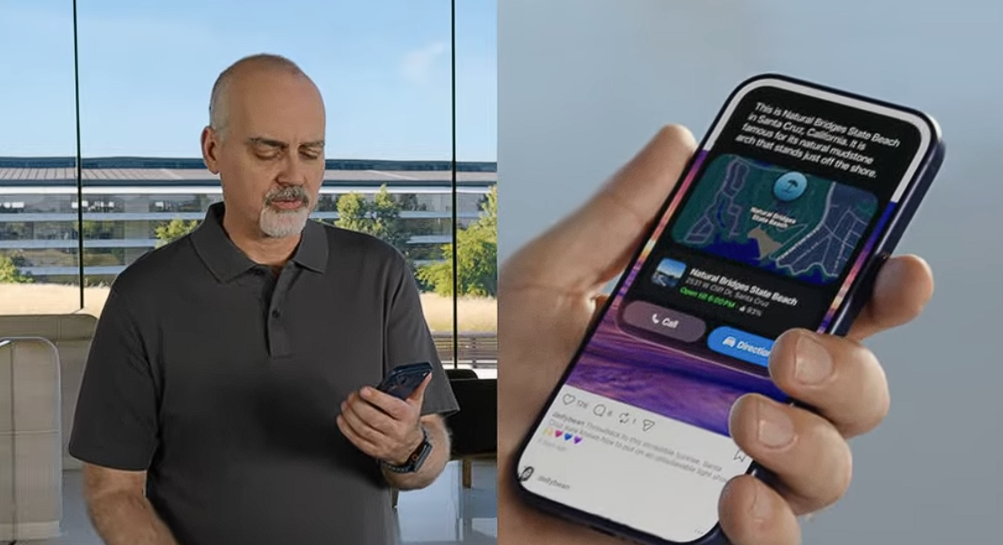
Apple demonstrated how Siri can use personal context understanding to locate information buried within messages, emails, calendars and notes while also combining that information with broader web knowledge.
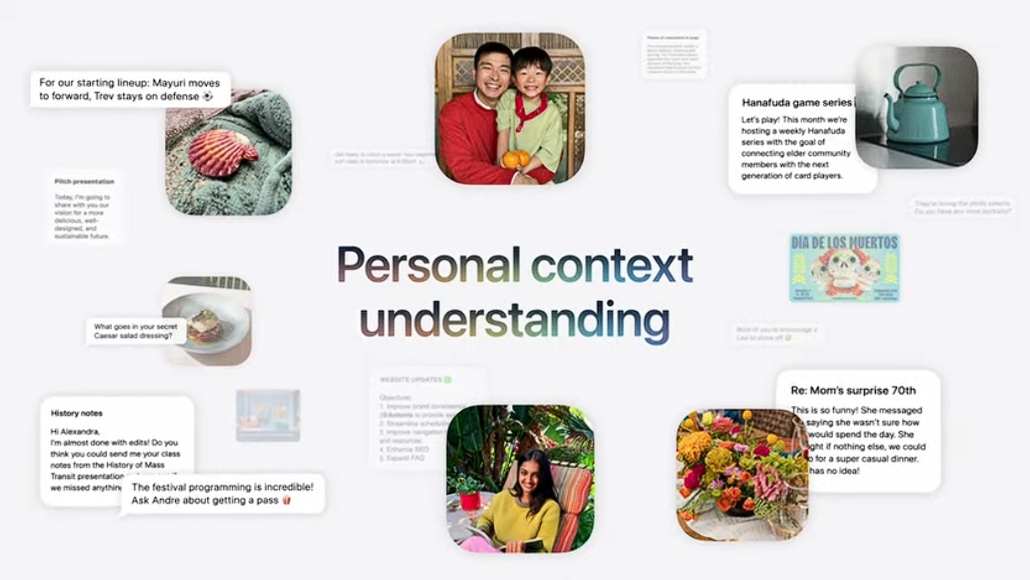
The keynote repeatedly featured Siri interacting with apps through App Actions, allowing the assistant to complete multi-step workflows rather than simply responding to isolated commands. Apple demonstrated conversational scheduling, contextual writing assistance, document retrieval and workflow orchestration across native applications. Siri appears more tightly integrated into Spotlight and macOS navigation systems, allowing AI-generated actions and contextual suggestions to appear directly within system interfaces.
Apple also expanded Siri’s multimodal capabilities. The assistant can now process voice, text and image-based interactions while using visual intelligence features to interpret on-screen content and camera input. Apple also featured a dedicated Siri app experience, synced conversation continuity across devices and more expressive AI-generated Siri voices.
One of the keynote’s most revealing demonstrations involved organizing a watch party using Siri AI. During the demo, Siri coordinated information across multiple apps, retrieved contextual details from messages and calendar data, referenced broader world knowledge and completed a sequence of actions dynamically throughout the interaction. The demonstration displayed several characteristics commonly associated with agentic AI systems, including multi-step reasoning, contextual memory retention and orchestration across applications.
Privacy remained one of the central themes throughout Apple’s AI announcements. During the keynote, Apple repeatedly contrasted its approach against other AI providers that rely heavily on cloud-based data retention and centralized model processing.
“At Apple, we believe privacy in AI is non-negotiable,” Federighi said. He also suggested that while many AI businesses “talk about privacy,” most still retain user interactions by default.
Apple said its new Apple Intelligence architecture relies on a hybrid model that combines on-device inference with Private Cloud Compute, allowing more advanced AI processing to occur without storing or exposing personal data. According to Apple, user information processed through Private Cloud Compute is not accessible to Apple and can be independently verified by outside researchers.
Rather than treating privacy as a standalone feature, Apple appears to be embedding privacy protections directly into the AI infrastructure itself. That approach may become increasingly important as AI systems gain broader access to personal context, app activity and workflow orchestration across devices.
Beyond consumer-facing features, WWDC 2026 also showed Apple expanding developer access to Apple Intelligence across apps, workflows and automation systems. The keynote featured new APIs, App Actions integrations and AI-assisted development tools designed to make Apple’s broader platform more AI-aware.
One of the more important announcements involved App Actions, which allow Apple Intelligence to interact directly with supported applications. Apple explained that “with App Actions, Apple Intelligence can draw on the app toolbox to find the right tools from your apps to complete your request.”
Apple also expanded AI-driven automation capabilities within Shortcuts. According to the keynote, “Shortcuts now uses Apple Intelligence to reason over your natural language description and assemble all the required steps for you.”
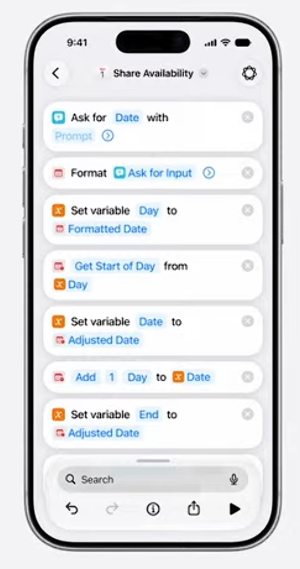
The demonstrations showed Apple Intelligence generating multi-step automations and coordinating actions across Maps, Messages and other apps through natural language instructions. Apple additionally showcased AI-generated Safari extensions, agentic password updating through Safari and Passwords and expanded Image Playground APIs for developers building image-generation features into their own applications.
Together, the announcements suggest Apple is opening broader orchestration hooks into the operating system and developer ecosystem, potentially allowing third-party applications to participate more directly in contextual and agentic AI workflows.
Apple used WWDC 2026 to significantly expand multimodal AI capabilities across its ecosystem, integrating image understanding, speech generation and visual reasoning into Apple Intelligence. During the keynote, Apple said its updated foundation models deliver “state-of-the-art understanding and reasoning and multiple modalities.”
Many of these capabilities are now integrated directly into Siri AI. Apple introduced camera-based visual intelligence features that allow Siri to analyze objects, interpret screen content and answer contextual questions about both digital and physical environments. Siri can now recognize locations, identify products, interpret schedules and combine visual information with personal context and broader web knowledge.
Apple also expanded multimodal AI into creative and productivity workflows. Image Playground received a major overhaul with more advanced image generation, photorealistic rendering and natural language editing tools. Apple additionally introduced “Spatial Reframing,” a new AI-powered photo editing feature that uses spatial models and generative AI to dynamically reposition and reconstruct images after they are captured.
The keynote showcased upgrades to Siri voices, speech generation and system-wide dictation. Apple said its newer on-device models can now understand and generate speech with greater natural language accuracy and more expressive voices. These capabilities will be available on iPhone, Mac, AirPods, CarPlay and visionOS.
Taken together, the announcements suggest Apple is pushing multimodal AI beyond traditional chat interfaces and embedding it directly into device interactions, visual workflows and system-level experiences throughout the Apple ecosystem.
One of the most strategically significant moments in the WWDC 2026 keynote came when Apple revealed that parts of its next-generation Apple Intelligence architecture were developed through collaboration with Google.
“This year, we embarked on a deep collaboration with Google, leveraging the technologies behind their Gemini family of models,” Federighi said.
This seemingly innocent statement offered a rare public acknowledgment that even the world’s largest technology businesses are increasingly relying on partnerships and shared AI infrastructure as model development costs continue to rise. Rather than building every foundational AI capability independently, Apple appears to be combining its own operating system integration, privacy infrastructure and orchestration layers with technologies from Google’s Gemini ecosystem.
This partnership is a great example of the increasingly hybrid nature of the modern AI market. While Apple spent much of the keynote emphasizing its own Apple Foundation Models, contextual orchestration systems and privacy-first architecture, the company simultaneously acknowledged that foundational model innovation is becoming deeply interconnected across the broader AI industry.
Related Article: Trump’s AI Order Tests Big Tech’s Appetite for Oversight
Apple used WWDC 2026 to position AI not as a standalone assistant but as a contextual system layer embedded across apps, workflows, automation and device interactions.
Rather than competing primarily on frontier model branding, Apple appears focused on integrating agentic and multimodal intelligence directly into the operating system experience while maintaining tight control over privacy, orchestration and ecosystem integration.