News
Guide
Is AI Making Your Organization More Productive or More Dependent?
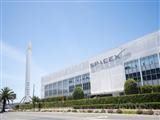

SpaceX has announced a new agreement with Cursor, a San Francisco-based AI coding start-up, that gives the rocket company the option to acquire Cursor for $60 billion later this year.
The announcement, made Tuesday via social media, sent ripples through the AI and tech investment communities, given both the staggering price tag and the unlikely pairing of a rocket company with a code-writing software start-up.
The agreement is structured with two potential outcomes for SpaceX:
| Option | Cost |
|---|---|
| Acquire Cursor outright | $60 billion |
| Pay for the partnership without acquisition | $10 billion |
In its X post, SpaceX said the partnership would "allow us to build the world's most useful" AI models.
SpaceXAI and @cursor_ai are now working closely together to create the world’s best coding and knowledge work AI.
— SpaceX (@SpaceX) April 21, 2026
The combination of Cursor’s leading product and distribution to expert software engineers with SpaceX’s million H100 equivalent Colossus training supercomputer will…
For Cursor, the deal offers something the start-up has openly struggled to secure on its own: computing power. In a blog post Tuesday, Cursor acknowledged that its lack of access to hardware for training AI models had "bottlenecked" its growth.
Through SpaceX, Cursor will gain access to xAI's Colossus supercomputer — described as capable of running 200,000 H100/H200 GPUs — which the start-up says will help it "dramatically scale up the intelligence of our models."
Related Article: The Chips Cold War: How GPUs Became the World’s Most Valuable Political Resource
SpaceX's core businesses — orbital rocket launches and Starlink satellite internet — seemingly have little obvious overlap with tools that help software engineers write code faster.
But the deal makes more sense when viewed through the lens of Musk's broader AI ambitions.
Musk has been explicit about his vision. In a letter to SpaceX employees following the xAI acquisition, he wrote: "In the long term, space-based AI is obviously the only way to scale. To harness even a millionth of our Sun's energy would require over a million times more energy than our civilization currently uses!”
He has argued that becoming a multiplanetary species will only be possible once data centers are deployed in space to harness solar energy at scale.
Founded in 2022 by four MIT alumni — Michael Truell, Sualeh Asif, Aman Sanger and Arvid Lunnemark — Cursor quickly established itself as one of the hottest companies in the AI coding space.
Key milestones include:
But despite its rapid ascent, Cursor has faced mounting pressure from well-funded rivals. Anthropic, the AI safety company, has reported surging revenue from Claude Code, its enterprise-focused coding tool. OpenAI has invested heavily in Codex and has been aggressively courting business customers. For a start-up — however well-funded — competing against two of the most capitalized AI companies in the world is an increasingly steep climb.
Cursor CEO Michael Truell shared his optimism about the deal on X, writing, "Excited to partner with the SpaceX team to scale up Composer. A meaningful step on our path to build the best place to code with AI."
Related Article: As AI Strains Resources, Data Centers Look Beyond the Surface
The deal also patches over a significant gap in Musk's AI portfolio. xAI had been developing its own coding tools but fell behind OpenAI and Anthropic, experiencing what sources described as an employee exodus. In March, xAI hired Andrew Milich and Jason Ginsberg — two former Cursor leaders — in an attempt to reboot those efforts.
Following those hires, Musk posted publicly that "xAI was not built right first time around, so is being rebuilt from the foundations up. Same thing happened with Tesla."
xAI was not built right first time around, so is being rebuilt from the foundations up.
— Elon Musk (@elonmusk) March 12, 2026
Same thing happened with Tesla.
Acquiring Cursor outright, rather than attempting to rebuild from within, would give SpaceX and xAI an immediate and proven product with an established user base among professional software engineers.
The announcement comes as SpaceX is preparing for what analysts expect to be one of the largest initial public offerings in history, potentially arriving as early as June. Whether SpaceX intends to close a Cursor acquisition before or after going public remains unclear — and the $60 billion price tag would rank among the largest tech acquisitions ever recorded if completed.
What is clear is that SpaceX is no longer just a rocket company. With xAI already folded in, and Cursor now in its orbit, Musk is rapidly assembling an AI empire that stretches from orbit to your code editor.