News Analysis
Guide
Is AI Making Your Organization More Productive or More Dependent?


AI may not be triggering the jobs apocalypse that some predicted, but it is beginning to reshape the workforce in measurable ways.
While executives and tech analysts continue to debate the scale of future job loss, hiring patterns, entry-level opportunities and the mix of skills employers seek are already changing.
Recent comments from leaders including Goldman Sachs CEO David Solomon, OpenAI CEO Sam Altman and HSBC CEO Georges Elhedery argue against panic, with Solomon opining the AI jobs crisis is “overblown,” and Altman arguing AI won’t likely lead to a “jobs apocalypse.”
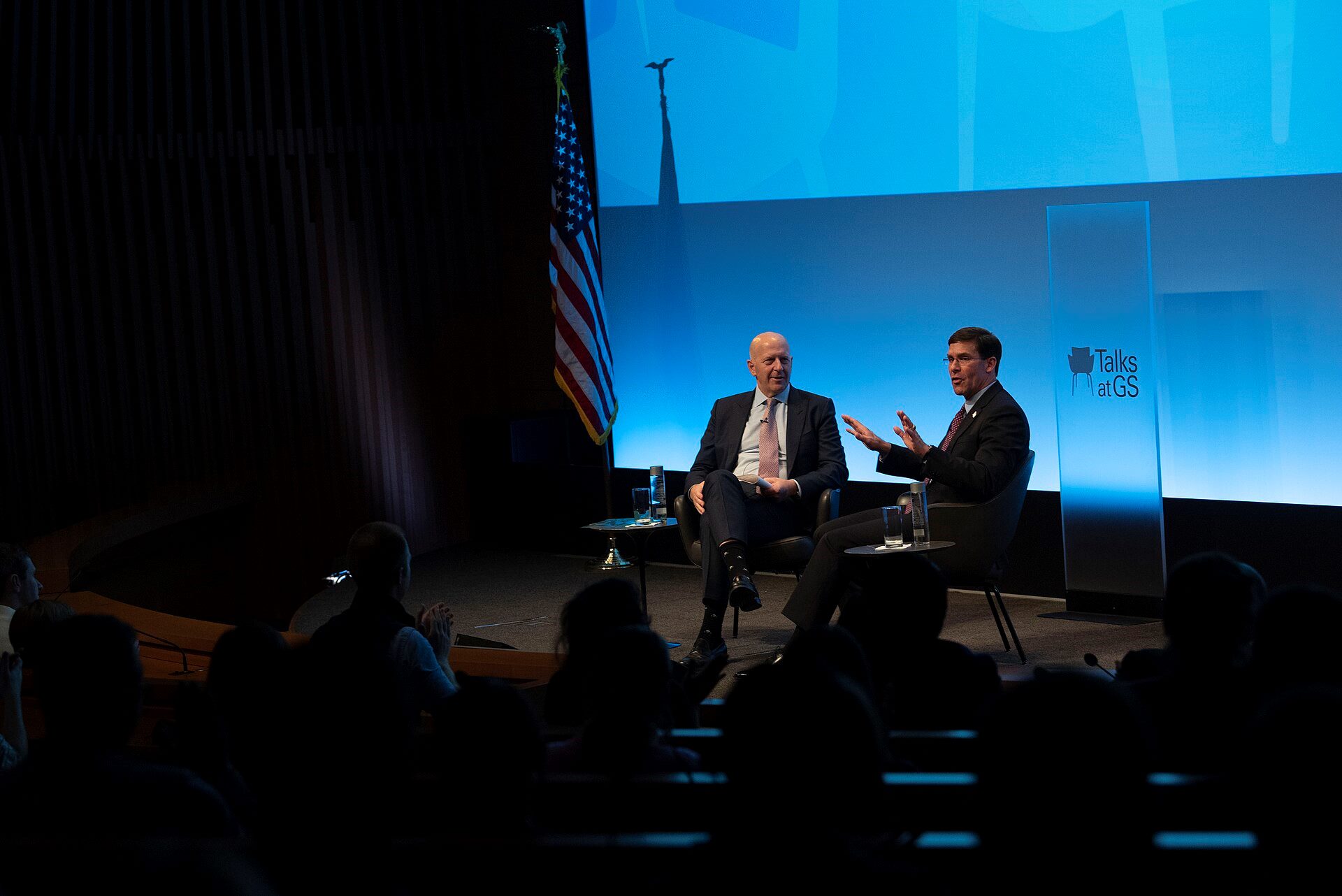
"Will A.I. disrupt the labor market? Absolutely," Solomon wrote for the NY Times. "But the United States has a long track record of creating new jobs in response to disruption, from the electrification of the 1900s to the digital revolution of the 1990s; I don’t see any reason to think this dynamic will stop now."
Others, including Elhedery, acknowledge significant disruption ahead, particularly in roles built around routine knowledge work.
“The perspectives shared by executives are highly curated to address concerns by the media, their boards and their own commitment to make AI models mainstream,” Amy Loomis, group vice president of IDC’s Worldwide Workplace Solutions practice, explained.
The messaging stems in part from the fact that organizations are still figuring out how AI fits into existing operating models — companies are restructuring, experimenting with automation and reassessing hiring plans at the same time, making it difficult to isolate AI’s role from broader economic pressures.
Related Article: Companies Blame AI for Job Cuts. The Data Tells a More Complicated Story.
“AI-washing sounds better than regular layoffs. It implies that your company is so innovative, so ahead of the curve that human employees just aren’t needed anymore.”
- J.P. Gownder
VP & Principal Analyst, Forrester
Uncertainly over the ultimate impact AI will have on the jobs market has fueled another trend: attributing layoffs to AI whether the technology is replacing workers or not.
J.P. Gownder, vice president and principal analyst at Forrester, describes the phenomenon as “AI-washing” — the practice of blaming AI for job losses when, in reality, a company is engaging in practices that are unfriendly to human workers.
“AI-washing sounds better than regular layoffs,” he said. “It implies that your company is so innovative, so ahead of the curve that human employees just aren’t needed anymore.”
Gownder said he regularly speaks with organizations whose leaders claim AI will replace large portions of the workforce despite having no mature AI systems in place to do so. “What would be required for AI to truly replace jobs would be that, the day after a layoff, AI is doing the work done by humans the day before. But that is very rarely the case today.”
The timing of AI’s rise has complicated efforts to measure its labor-market impact. Organizations are still adjusting to higher interest rates, changing consumer demand, post-pandemic workforce shifts and pressure from investors to improve efficiency.
According to IDC, unemployment has remained at historically low levels since generative AI emerged as a major investment category, with no measurable evidence of large-scale displacement attributable directly to AI. The slight increase in unemployment seen since 2024 appears more closely tied to economic cycles and industry realignment than automation.
Forrester’s data, according to Gownder, explains tells a similar story.
Among the firm’s findings:
While the overall employment picture remains relatively stable, specific categories of work are already feeling pressure.
IDC identified several areas where organizations are actively targeting AI deployments:
At the same time, younger workers are encountering a labor market that looks different from the one their predecessors entered.
IDC research found entry-level software development positions and graduate ICT vacancies have declined sharply since late 2022 as AI coding tools allow more experienced employees to absorb work once assigned to junior staff.
Forrester similarly expects disproportionate impact on software developers, technical writers, contact center representatives and junior knowledge workers.
The disruption is showing up first in workforce composition rather than unemployment figures. Companies are becoming more selective about entry-level hiring, investing more heavily in AI-related roles and reevaluating how routine work gets done.
Related Article: Silent Struggles: How AI Is Fueling a Hidden Workforce Crisis
At the same time, IDC’s research suggests organizations are investing heavily in new roles tied directly to AI deployment, oversight and governance. Creating AI-focused positions is now the most common workforce strategy, slightly ahead of retraining existing employees.
Areas seeing increased demand include:
The evidence suggests AI is accelerating a decades-long movement away from routine work and toward non-routine cognitive and interpersonal tasks. By 2026, the firm predicts that 40% of Global 2000 job roles will involve working alongside AI agents in some capacity.
Many organizations are still in the early stages of AI adoption where they face challenges including immature governance models and limited deployment of agentic AI.
Loomis said there will be a lot of performative initiatives that are AI-enabled more in name than at first. “The question of which ones ultimately change in perpetuity will depend as much on habits of work shifting as on the capabilities of the technologies that are driving change."
While the evidence for a jobs apocalypse remains thin, significant changes in how work is organized are becoming harder to ignore.
“Even if you are ready to automate, human employees possess skills, institutional knowledge and judgment that AI doesn’t,” Gownder said. “Your best path is almost always to augment, not replace, human talent.”
A role is more exposed when much of the work is repeatable, text- or data-heavy, rules-based or easy to measure. Jobs that require judgment, relationship-building, cross-functional coordination, physical presence or deep institutional knowledge are generally harder to automate end to end.
Useful skills include:
Workers who can use AI to improve decisions or processes are better positioned than those who only perform repeatable tasks.
AI is creating demand for roles tied to model oversight, governance, security, data quality, workflow automation, AI product management and human-AI orchestration. Many of these jobs focus less on building models from scratch and more on safely applying AI inside organizations.
Companies should map where AI is being used, identify roles likely to change, offer practical training and involve employees in redesigning workflows. Transparency matters because workers are more likely to adopt AI when they understand how it affects their responsibilities and future opportunities.
Leaders should be specific about what AI can and cannot do, avoid using AI as a vague explanation for cuts and explain how roles, workflows or skills are expected to change. Vague messaging only serves to damage trust and fuel fear.