News
Guide
Is AI Making Your Organization More Productive or More Dependent?
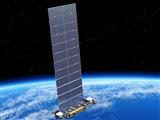

SpaceX has announced Starmind, an AI satellite constellation targeting up to one million orbital compute nodes.
Elon Musk confirmed the name after a trademark filing by xAI surfaced earlier this week. The constellation was described to the FCC as a network of AI satellites designed to process data directly in orbit.
Unlike Starlink, which relays internet traffic between points on Earth, Starmind satellites would function as orbiting servers. Onboard processors powered by large solar arrays would run AI inference, process queries and generate outputs in space, then beam results to users anywhere on Earth within milliseconds, without routing through a terrestrial data center.
According to SpaceX, its Starship launch vehicle can carry 30 to 50 AI1 satellites per flight, delivering the equivalent of dozens of server racks with no land acquisition, power approval or ground cooling required. Two AI1 prototypes are scheduled to launch in early 2027, with volume production targeted for late 2027 at a new facility called Gigasat.
Can low Earth orbit (LEO) solve AI infrastructure's toughest constraint?
Terrestrial AI data centers face compounding pressures. The International Energy Agency projects US electricity consumption will rise roughly 2% annually, more than double the prior decade's rate, with data center expansion as a primary driver. Community resistance in dense markets like Virginia's Loudoun County is compounding the problem with land and permitting bottlenecks.
Orbital data centers address several of these constraints structurally:
Jason Aspiotis, global director of in-space data and security at Axiom Space, noted that 90% of space-acquired data goes unused because it never reaches ground stations or becomes obsolete in transit, a problem on-orbit processing directly addresses.
The orbital model suits inference workloads, not model training. Training demands thousands of tightly coupled GPUs operating at near-zero latency, an architecture that doesn't translate to satellite networks. Inference requests are processed independently, making distributed orbital nodes a viable fit.
On the hardware side, NVIDIA introduced its Vera Rubin Space-1 module in March 2026, integrating IGX Thor and Jetson Orin chips engineered for strict size, weight and power constraints.
Analysts caution that commercial viability remains roughly a decade away. Significant barriers include:
The direction is clear. The timeline for enterprise-grade orbital AI infrastructure is not.
SpaceX capped a transformative stretch by raising $85.7 billion in a record Nasdaq IPO on June 12, 2026, with shares closing up 19% at $160.95 and pushing its market cap above $2 trillion.
The S-1 reported $18.7 billion in 2025 revenue against a $4.9 billion net loss, with Starlink as the sole profitable unit, effectively offset by xAI's $2.47 billion quarterly operating loss. The IPO followed SpaceX's February 2026 all-stock merger with xAI at a combined valuation of $1.25 trillion, folding in the Colossus supercomputer infrastructure.
SpaceX has since moved aggressively to monetize that compute. In May 2026, Anthropic secured access to more than 300 megawatts of capacity at Colossus 1, reportedly paying $1.25 billion monthly through May 2029. On June 16, SpaceX confirmed a $60 billion all-stock acquisition of Anysphere, maker of AI coding tool Cursor.